Disclosure: As an Amazon Associate I earn from qualifying purchases. I also earn a commission from some other retailers, including Anker SOLIX and BLUETTI (through CJ). You pay the same.
The question under every “will this run my fridge?” thread is not which logo to buy. It is whether the box has enough watts to start the load and enough watt-hours to last. A 245 Wh camping brick will not keep a full-size fridge overnight. A ~1 kWh station is roughly one efficient-fridge-day if nothing else is running. None of the six current-generation stations on our Best Solar Generators / Portable Power Stations (2026) hub is whole-home backup, and none of them outputs 240 V split-phase for a well pump or central air.
This page walks the math with named sources, then points at those six verified stations by job. Measure your own loads before you spend. Do not treat brand runtime charts as a lab test from this site.
- Watts vs watt-hours
- Duty cycle and surge
- Fridge: one worked example
- CPAP, with and without extra humidity draw
- Laptop: USB-C PD vs the AC brick
- A 24-hour outage kit (fridge + router + lights)
- Measure before you buy
- Which size maps to which station
- The six verified stations, by role
- Short FAQ
Once you know the size, see Best Portable Solar Panels for Power Stations (2026) for the panels that fit each station’s solar ceiling and connector.
Watts vs watt-hours
Two different numbers get marketed as if they were the same:
- W (watts) is instantaneous power — what the inverter can deliver right now. Can this start a fridge compressor? Can it run a 1500 W space heater?
- Wh (watt-hours) is stored energy — how long it can deliver that power. A 1000 Wh pack at 100 W is about 10 hours before inverter and round-trip losses.
The U.S. Energy Information Administration, part of the Department of Energy, draws the same line: watts measure power at a specific moment; watthours measure electricity used over time. One kilowatthour (kWh) is 1,000 watthours. EIA’s example: a 40-watt bulb for five hours uses 200 Wh, or 0.2 kWh. (EIA, Measuring electricity)
That is the same arithmetic as the old Energy Saver line “100 W × 10 hours = 1,000 Wh = 1 kWh.” Those Energy.gov/energysaver consumer pages (Electric Meters; Estimating Appliance and Home Electronic Energy Use) returned HTTP 404 on August 26, 2026, so this page uses the live EIA explanation instead of quoting a dead URL as if it still loaded.
Daily energy is still (wattage × hours used per day) ÷ 1000 = daily kWh. That is why a fridge that draws several hundred watts while the compressor is on is not “several hundred watts × 24 hours.” The compressor is not on all day. Use a kWh/day figure, or measure.
Inverter and round-trip losses mean usable AC energy is less than the nameplate Wh. Do not plan as if 1024 Wh of battery is 1024 Wh at the wall outlet. Size up.
Duty cycle and surge (why fridge math is not 150 W × 24)
A refrigerator is a motor load. Two things trip small stations:
- Surge / inrush. The compressor needs more watts to start than to run. A 300 W inverter will not start many household appliances even if the running watts look “small.”
- Duty cycle (how often the compressor is actually on). Once started, the compressor cycles on and off. Treating it as a constant 150 W load for 24 hours invents a kWh number this site has not measured.
Oak Ridge National Laboratory / DOE Building Technologies Office material on a representative U.S. household refrigerator lists on/off cycling as one of the real energy-loss buckets (alongside compressor, defrost, and door openings). That is the physical reason a nameplate running-watt figure is the wrong input for overnight runtime. (ORNL / DOE BTO PDF)
We have not timed a compressor cycle. If a brand page claims “X hours on a fridge,” that is their claim, not a test from this site. The honest inputs are: (a) daily kWh from a named source or from a meter on your fridge, and (b) whether the station’s continuous and surge watts can start the compressor at all.
Fridge: one worked example
Use published kWh/day, not a guessed running watt.
- A Department of Energy FEMP (federal efficiency purchasing) ENERGY STAR residential-refrigerator example is 363.5 kWh/year ≈ 1.0 kWh/day. (DOE FEMP, Purchasing Energy-Efficient Residential Refrigerators; table updated December 2023)
- The same ORNL / DOE BTO peer-review PDF puts a representative U.S. fridge at 1.5–2.0 kWh/day, with a tested ENERGY STAR Samsung at 1.68 kWh/day (611 kWh measured vs 625 kWh/year OEM rating). (ORNL / DOE BTO PDF)
Using those named figures only, and ignoring inverter losses and surge:
- A ~1 kWh station (EcoFlow DELTA 3, Anker SOLIX C1000 Gen 2, Jackery Explorer 1000 v2) is roughly one efficient-fridge-day if nothing else is running.
- A ~2 kWh station (Jackery Explorer 2000 v2, BLUETTI Elite 200 V2) is closer to one typical older-fridge day.
- A 245 Wh EcoFlow RIVER 3 is not a fridge battery. 245 Wh is about a quarter of the FEMP ENERGY STAR day’s energy before losses, and a 300 W / 600 W X-Boost inverter is the wrong tool for starting a household compressor.
The $500-class / 245 Wh pack will not run a full-size fridge overnight. If that is the job, you are in the ~1 kWh class at minimum, and you still need the inverter to survive the start pulse. A mini-fridge is a different appliance; measure it.
CPAP, with and without extra humidity draw
Do not use a made-up “30 W CPAP” figure. ResMed’s AirSense 11 user guide (Americas) lists a 65 W AC adaptor, typical power consumption 56.1 W (111.5 VA), and peak 73.2 W (137.6 VA). (ResMed AirSense 11 user guide, Technical specifications — 65W power supply unit)
Eight-hour arithmetic from those Watts:
- 8 h × 56.1 W ≈ 449 Wh
- 8 h × 73.2 W ≈ 586 Wh
The guide’s typical and peak numbers are for that 65 W supply. Climate Control (heated humidity) is only available when both the HumidAir 11 tub and ClimateLineAir 11 heated tubing are attached. Running the humidifier and heated tube pulls more than a dry setup; size toward the peak 73.2 W × hours if you sleep with humidity on, and still leave margin for inverter losses. This site has not metered an AirSense 11 on a station.
RIVER 3 (245 Wh) cannot cover a typical 8-hour AirSense 11 night at the guide’s typical 56.1 W, even before humidifier headroom. The ~1 kWh class can, with margin, if AC output is a clean household-style wave (pure sine — these six all invert to household 120 V) and the claimed UPS transfer (how fast the station picks up when the wall dies) is fast enough for your machine. Claimed transfer on the hub units ranges from <10 ms (DELTA 3) to under 20 ms (the Jackerys and RIVER 3); the Elite 200 V2 is listed at 15 ms or less. Those are manufacturer figures, not measurements from this site. Check the CPAP manual.
This page sizes a battery you can buy today. If you want a downloadable DIY plan instead, see Energy Revolution System plans. Read the file before you buy parts. A homemade setup is not a house breaker-panel job unless an electrician is running it.
Laptop: USB-C PD vs the AC brick
EnergySage puts laptops around 30–70 W. (EnergySage, How many watts does a computer use?, updated Nov 22, 2024) Eight hours at a mid-range 50 W is about 400 Wh.
If the laptop charges over USB-C Power Delivery, use the USB-C port. Several of the ~1 kWh and ~2 kWh stations here have 100 W USB-C; Anker SOLIX C1000 Gen 2 lists USB-C2/C3 at 140 W. Going USB-C avoids converting battery DC → AC inverter → laptop brick DC. The AC route still works. It just wastes more of the pack on conversion. A 245 Wh RIVER 3 can cover a work block on USB-C. It is the wrong size for fridge-plus-laptop overnight.
A 24-hour outage kit (fridge + router + lights)
Stack the named loads. Do not add HVAC, a well pump, or a range — those are a different class of equipment.
| Load | What we can cite | 24-hour energy (order of magnitude) |
|---|---|---|
| Full-size fridge | DOE FEMP ENERGY STAR example 363.5 kWh/year; ORNL representative 1.5–2.0 kWh/day | ~1.0 kWh (efficient) to ~1.5–2.0 kWh (typical older) |
| A few lights | ENERGY STAR: most popular certified 9 W LED replaces a 60 W incandescent. DOE FEMP Table 2: 800 lumens LED is 5.9–10.5 W; FEMP ENERGY STAR column for 800 lumens is 11 W. | Example only, EIA arithmetic: 3 × 9 W × 8 h = 216 Wh (0.22 kWh). Your hours will differ. |
| Wi-Fi router | Always-on, small next to a fridge. This page does not invent a router wattage. | Measure yours. It will not dominate the kit unless the fridge is off. |
| Inverter / round-trip losses | Usable AC Wh < nameplate Wh | Size up. Do not spend the last 10% of the pack on paper. |
Sources for that table: DOE FEMP refrigerators; ORNL / DOE BTO PDF; ENERGY STAR LED lighting technical bulletin; DOE FEMP light bulbs Table 1 and Table 2; EIA measuring electricity.
Add it up without fake precision: an efficient fridge already wants about 1 kWh. Lights for an evening are a couple hundred watt-hours if they are LEDs. The router is extra. Losses are extra. A ~1 kWh station is a fridge-only day, not a 24-hour house kit. For fridge + router + lights with margin, look at the ~2 kWh class (Explorer 2000 v2 or Elite 200 V2), and plan solar or a second day of charging if the outage runs longer. Neither ~2 kWh pick takes add-on batteries. If you already know you will outgrow 2 kWh, the DELTA 3 is the expandable one (claimed toward 5 kWh with EcoFlow extra batteries).
Hurricane-season version of the same kit is still food-safety first: keep the fridge closed, skip the space heater, skip central air. A 120 V suitcase will not run a 240 V well pump. If that is the job, stop shopping this class.
Want a number for your own list? Try our portable power station size calculator: pick your devices, and it does the watt-hour math for you.
Measure before you buy
The cheapest way to stop guessing is a plug-in energy monitor (Kill A Watt–style, or a similar kWh-counting outlet). Put it between the wall and the fridge for a full day, including door openings. Read watt-hours, not a one-second watt spike. Then size the station above that day’s Wh, plus everything else you will run, plus inverter loss.
The same meter will tell you whether a CPAP night is closer to ResMed’s typical 56.1 W or the 73.2 W peak, and what your router actually draws. We are not linking a specific monitor here: Amazon ASINs for these plugs shuffle, and a listing we opened redirected to a different ASIN than the URL. Buy any decent 120 V / 15 A energy-monitor plug that displays kWh, not just instantaneous watts.
Which size maps to which station
These six are the current-generation LiFePO4 (LFP) stations with a verified U.S. Amazon listing on August 25, 2026. Full spec tables live on the 2026 solar generators hub. This page only uses them as capacity rungs.
| Job | Capacity class | Role pick on the hub | Will not do |
|---|---|---|---|
| Phones, camera batteries, laptop via USB-C, a small fan | 245 Wh / 300 W | EcoFlow RIVER 3 | Full-size fridge; all-night humidifier CPAP |
| One efficient-fridge-day, or overnight CPAP with margin, or a mix of 120 V plus USB-C | ~1 kWh / 1500–2000 W | DELTA 3 (overall), C1000 Gen 2 (compact high output), Explorer 1000 v2 (value) | Multi-day fridge + HVAC; 240 V well pump or central air |
| 24-hour fridge + router + lights with margin; heavier surge headroom | ~2 kWh / 2200–2600 W | Explorer 2000 v2 (lighter, sealed), Elite 200 V2 (heavier, sealed, 1000 W solar in) | Still not whole-home; still not 240 V split-phase |
None of these six is documented here as NMC. Cycle ratings are not interchangeable (Jackery publishes 4000 cycles to 70%+; EcoFlow DELTA 3 and Anker C1000 Gen 2 publish 4000 cycles to 80% / ≥80%). See the FAQ.
The federal Residential Clean Energy Credit (the 30% ITC) is not available for property placed in service after December 31, 2025. IRS: 30% for qualified property installed 2022 through that date; battery storage had to be at least 3 kWh when the credit applied. Do not budget a 30% discount on a 2026 portable power station. Unused 2025 credit can still carry forward on a tax return — that is not the same as a new 2026 purchase qualifying. (IRS, Residential Clean Energy Credit)
The six verified stations, by role
Official manufacturer photos. Amazon visible text is exactly “Check price on Amazon.” Specs are manufacturer claims unless noted. This is not whole-home backup.
Best overall (~1 kWh): EcoFlow DELTA 3
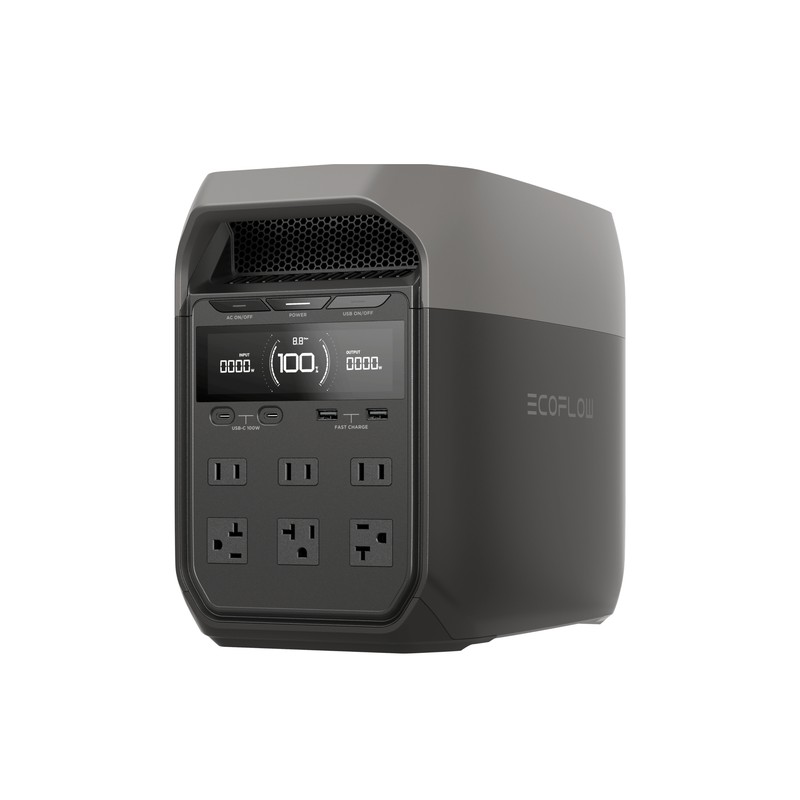
1024 Wh, 1800 W continuous AC (3600 W surge; X-Boost up to 2200 W), LFP, about 27.6 lb, solar in 500 W max, claimed expansion to 5 kWh, UPS <10 ms, 4000 cycles to 80+%. (EcoFlow DELTA 3 specs)
This is the most complete mid-size box in the hub if you want one ~1 kWh station for a short outage, camping, and a mix of AC plus USB-C. It is still roughly one efficient-fridge-day. 1800 W / 120 V will not run a 240 V well pump or central air.
Check price on Amazon · EcoFlow product page · Full spec table
Best compact high output (~1 kWh): Anker SOLIX C1000 Gen 2
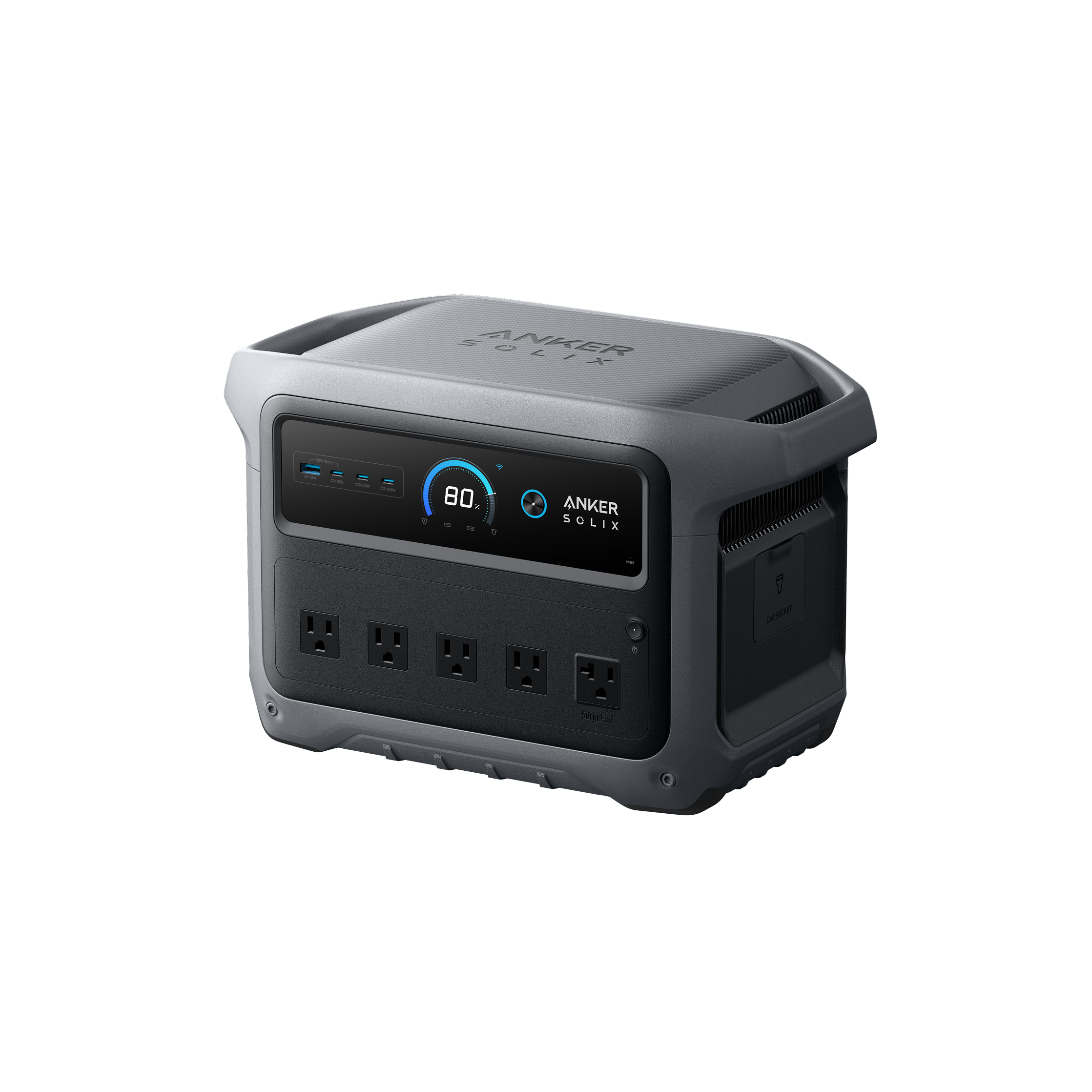
1,024 Wh, 2,000 W continuous AC, 600 W solar max (highest in this size class), 24.9 lb, UPS 10 ms, 4,000 cycles to ≥80%. Product page / Amazon title: 3,000 W peak. User guide separately: SurgePad up to 2,400 W — different claims; this site cites both. Amazon title states LiFePO4; fetched manufacturer spec tables did not print that word. Not expandable (manufacturer comparison table). (Anker SOLIX C1000 Gen 2; A1763 user guide)
~1 kWh is a hard ceiling. Same fridge-day math as DELTA 3, with more inverter headroom and no extra-battery path.
Check price on Amazon · Check price at Anker · Full spec table
Best LiFePO4 value (~1 kWh): Jackery Explorer 1000 v2
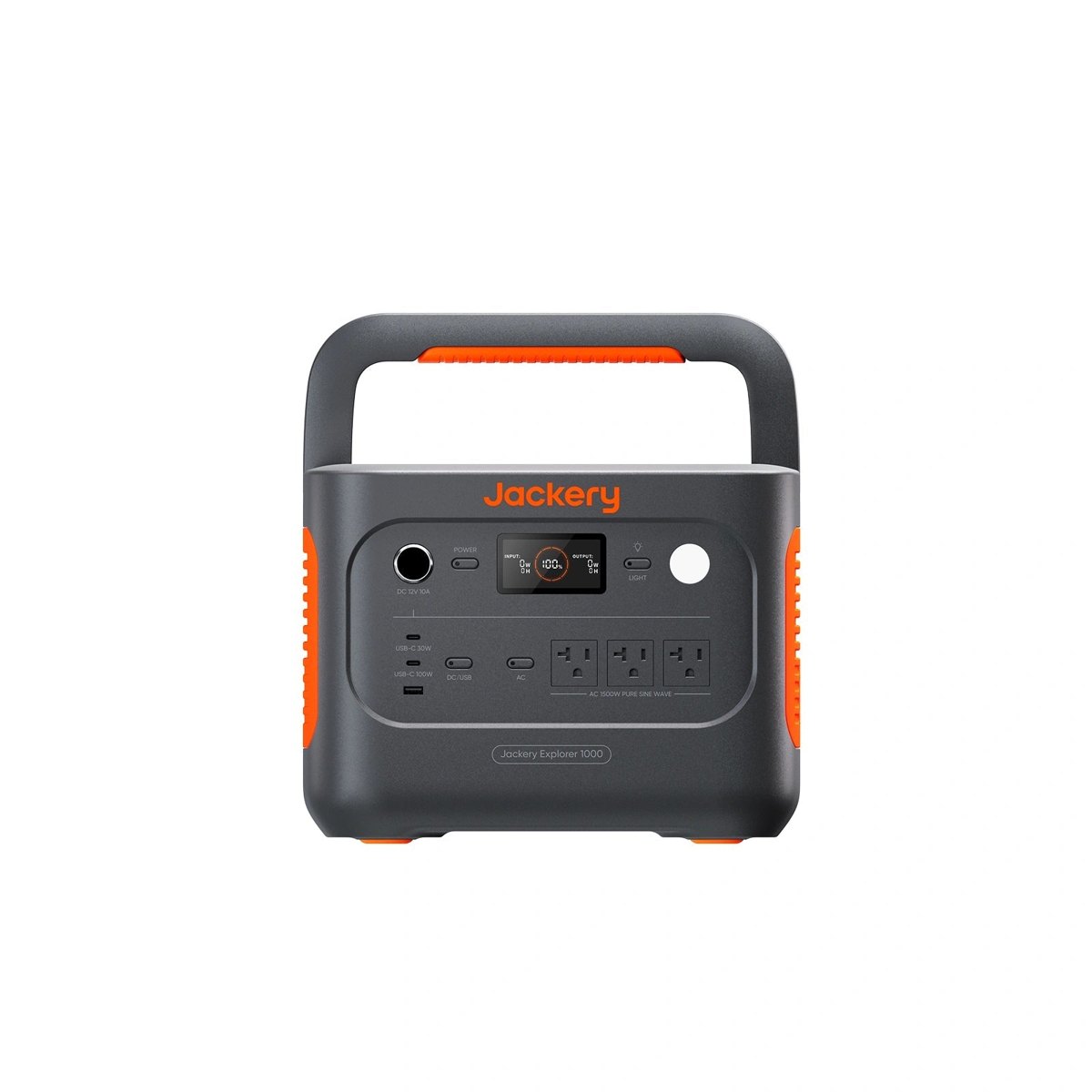
1070 Wh, 1500 W continuous / 3000 W surge, LiFePO4, about 23.8 lb (lightest of the three 1 kWh picks), solar 400 W max, 4000 cycles to 70%+ — not 80% — UPS ≤20 ms, not expandable. (Jackery Explorer 1000 v2 tech specs)
Same ~one-efficient-fridge-day energy class. Lower AC and solar headroom than DELTA 3 or C1000 Gen 2. Amazon title notes solar panel optional.
Check price on Amazon · Jackery product page · Full spec table
Best small / budget: EcoFlow RIVER 3
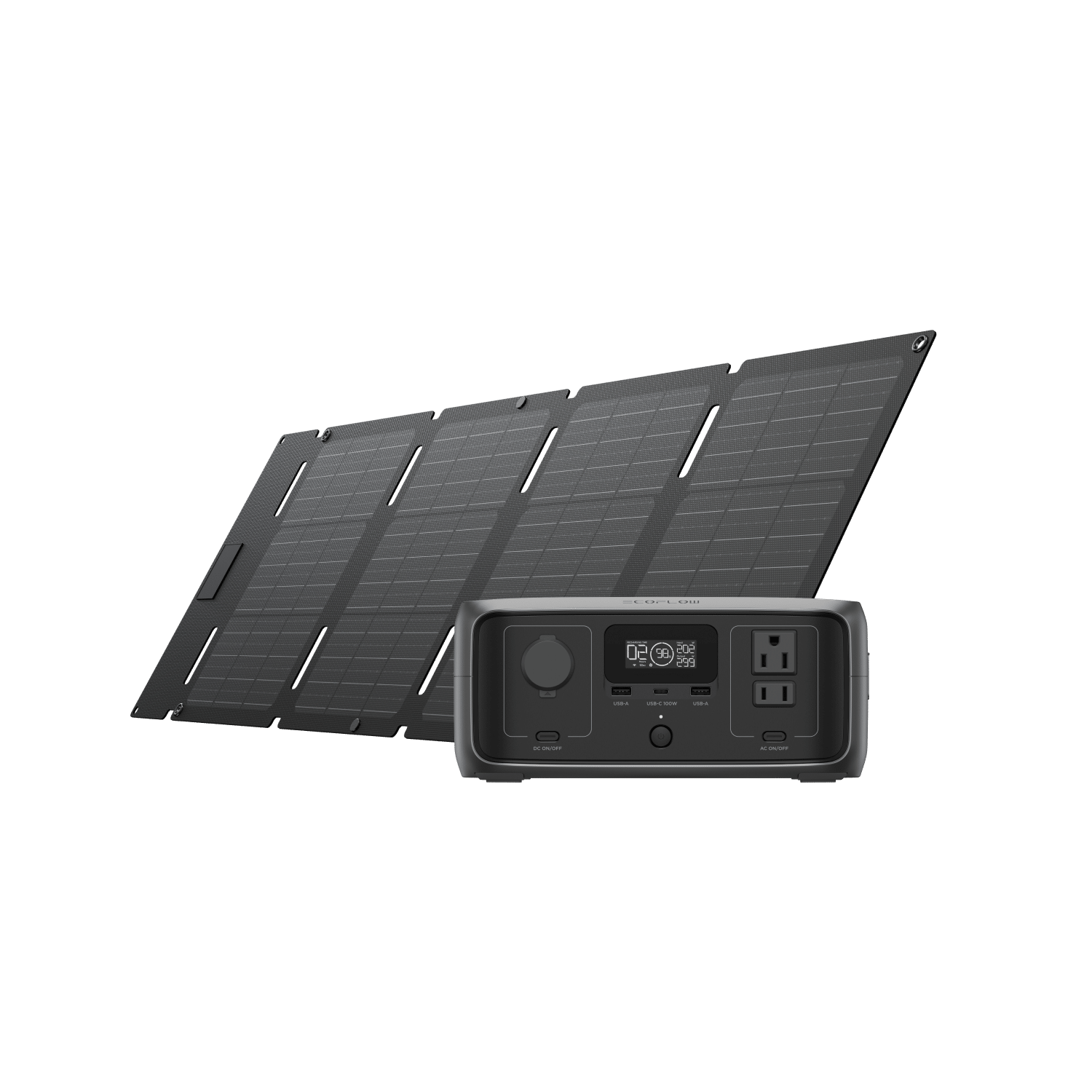
Manufacturer numbers, not the garbled Amazon title: 245 Wh capacity, 300 W continuous AC, surge / X-Boost 600 W, LiFePO4, 7.8 lb, solar 110 W, 3000 cycles to 80%. (EcoFlow RIVER 3 specs)
245 Wh will not run a household fridge or an all-night humidifier CPAP, and a 300 W inverter will not start many appliances. This is phones, a laptop via USB-C, a small fan — not kitchen coverage. EcoFlow’s U.S. store has shown sold out / coming soon while Amazon still listed Add to Cart, so availability can flip.
Check price on Amazon · EcoFlow product page · Full spec table
Best lightweight 2 kWh: Jackery Explorer 2000 v2
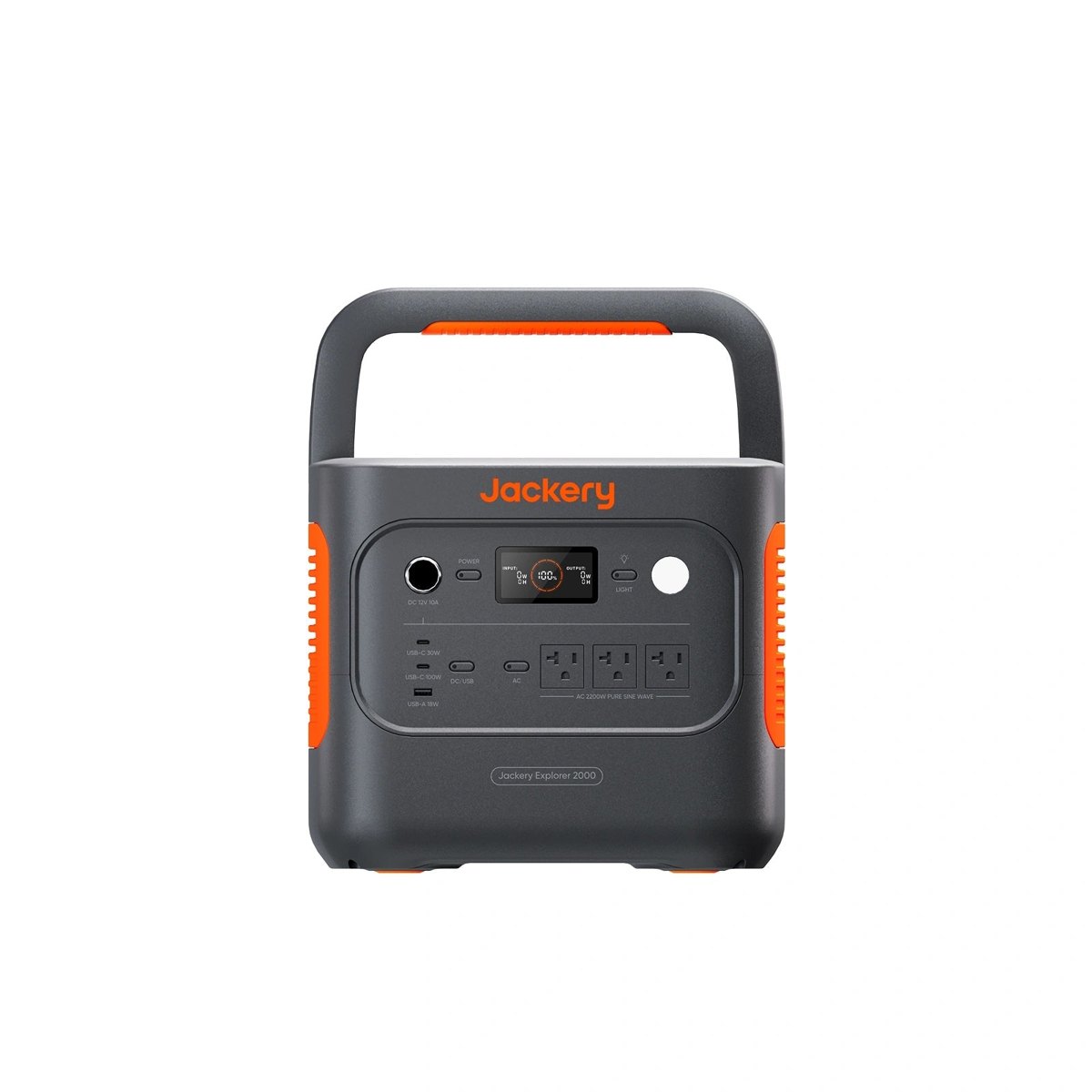
2042 Wh, 2200 W continuous / 4400 W surge, LiFePO4, about 39.5 lb, solar still 400 W max, 4000 cycles to 70%+, UPS <20 ms, not expandable (manufacturer FAQ). (Jackery Explorer 2000 v2 tech specs and FAQ)
This is the 24-hour fridge-plus-essentials rung if you want ~2 kWh without jumping to 53.4 lb. Closer to one typical older-fridge day than to multi-day backup. 400 W of solar is modest for a 2 kWh pack. Still 120 V only.
Check price on Amazon · Jackery product page · Full spec table
Best home backup / solar input: BLUETTI Elite 200 V2
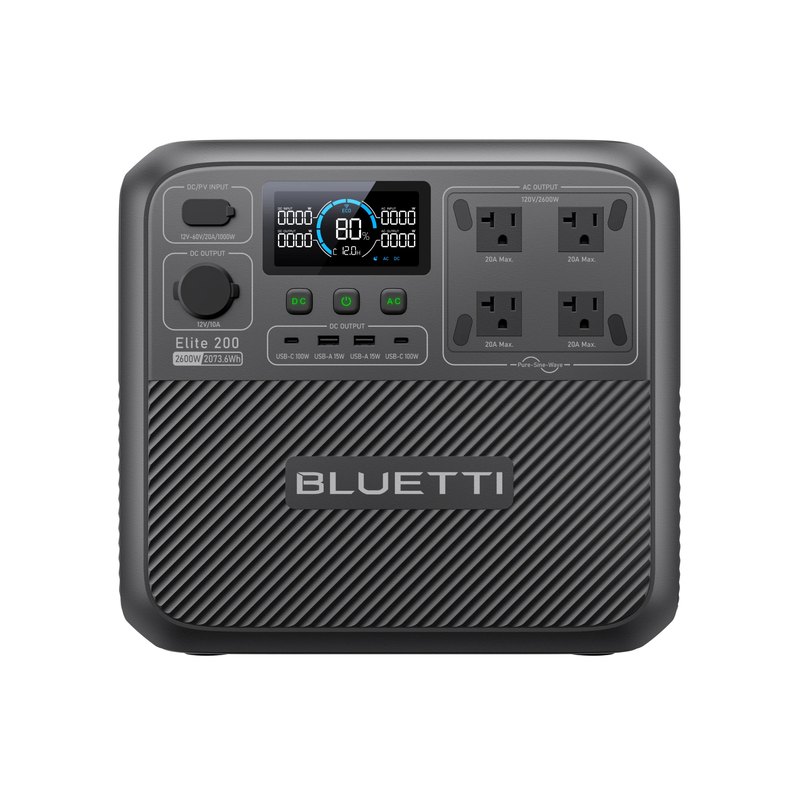
2073.6 Wh, 2600 W continuous AC (120 V only; no TT-30 RV outlet), Power Lifting 3900 W for heating loads only, solar 1000 W (12–60 V, 20 A max; highest in this lineup), LiFePO4, 53.4 lb, UPS 15 ms or less, 6,000+ cycles to 80%, not expandable (BLUETTI FAQ). BLUETTI’s U.S. page does not print a surge figure. No 240 V. (BLUETTI Elite 200 V2 specs and FAQ; user manual PDF)
This is the 24-hour kit pick if you want more inverter and more solar input than the Jackery. At 53.4 lb it is not grab-and-go, and it takes no add-on batteries; the DELTA 3 above is the expandable one. The U.S. product page and the U.S. Amazon listing (In Stock) were checked on October 17, 2026.
Check price on Amazon · Check price at BLUETTI · Full spec table
Short FAQ
Will any of these run a 240 V well pump or central air?
No. Every unit here inverts to household 120 V. The BLUETTI Elite 200 V2 lists 120 V AC output only. A 120 V camping station is the wrong tool for a 240 V compressor. That job is a split-phase / hybrid inverter project, not an Amazon suitcase.
Do the solar panels come in the box?
No. Jackery’s Amazon titles for both Explorer models say solar panel optional. The other four listings are power stations, not kits. Match panel Voc and current to the station’s input window. Manufacturer solar-input ceilings: Elite 200 V2 1000 W; C1000 Gen 2 600 W; DELTA 3 500 W; both Jackerys 400 W; RIVER 3 110 W. A 400 W-max station will clip a 600 W array. Panel STC watts are not field output.
Are the LiFePO4 cycle ratings interchangeable?
No. Do not copy “4000 cycles to 80%” onto a Jackery. Published lines:
- EcoFlow DELTA 3: 4000 cycles to 80+%
- Anker SOLIX C1000 Gen 2: 4,000 cycles to ≥80%
- Jackery Explorer 1000 v2 and 2000 v2: 4000 cycles to 70%+
- EcoFlow RIVER 3: 3000 cycles to 80%
- BLUETTI Elite 200 V2: 6,000+ cycles to 80%
Jackery’s 70%+ end-of-test is not the same claim as EcoFlow/Anker 80%. For an independent chemistry/cycle comparison of LFP vs NCA vs NMC 18650 cells (not a blog “3,000 vs 500” table), see Preger et al., Journal of The Electrochemical Society (Sandia National Laboratories): https://iopscience.iop.org/article/10.1149/1945-7111/abae37.
Can I use the 30% federal solar tax credit on one of these in 2026?
Not for a new system placed in service after December 31, 2025. The IRS page is explicit. Even when the credit existed, battery storage had to be at least 3 kWh. A 245 Wh or 1 kWh power station was never that. Do not copy older “eligible for 30% IRA” language onto a 2026 portable station. (IRS Residential Clean Energy Credit)
Station specs and Amazon.com listings checked August 25, 2026. EIA, DOE FEMP, ORNL PDF, ResMed user guide, ENERGY STAR, EnergySage, and IRS pages opened August 26, 2026. This page does not include prices. Confirm the live listing and the current manufacturer spec table before you buy.
How we sourced this
This is a spec hub, not a hands-on review. We have not lab-tested these stations, timed a fridge compressor, or lived through an outage with them. Capacities, outputs, solar limits, weights, and cycle claims come from manufacturer spec pages (and, where the maker’s table is silent, from the live Amazon.com title). Amazon.com listings for the six stations were checked as live U.S. product pages on August 25, 2026. Arithmetic on this page uses named sources opened August 26, 2026. Re-open any listing before you buy — stock and titles change. No prices on this page.
Disclosure: As an Amazon Associate I earn from qualifying purchases. I also earn a commission from some other retailers, including Anker SOLIX and BLUETTI (through CJ). You pay the same.