Disclosure: As an Amazon Associate I earn from qualifying purchases. Some links are affiliate links. You pay the same.
A dead fridge is a food-safety problem after a few hours, not a “will it run my TV” problem. FDA, CDC, and USDA FSIS all print the same core rule: an unopened refrigerator keeps food cold about 4 hours; discard perishable food that has been above 40°F for two hours or more. The battery’s job is to keep the compressor cycling so the box never sits unpowered for those 4 hours. Pair that with a Wi-Fi router so you can still get the outage map, and you have EnergySage’s Level 1 portable backup (updated March 13, 2026): plug-in suitcase, no installer, fridge / router / lights. This is not whole-home backup, not a rooftop battery, and not a 240 V well-pump kit.
The lithium suitcase is the indoor-safe half of a hybrid plan. CPSC (May 27, 2026) says never run a fuel generator inside a home, garage, basement, crawlspace, shed, or other enclosed area, even with doors or windows open — outdoors only, at least 20 feet from the building, exhaust away from openings. This Old House notes lithium stations have no emissions and are safe to use inside. Gas, if you still want it for night two or a 240 V motor, stays 20 feet out. This page sells the battery half on Amazon.
Full station spec tables live on Best Solar Generators / Portable Power Stations (2026). Fridge kWh/day, duty cycle, and “measure before you buy” live on How Much Solar Generator Do I Need? Voc, connectors, and first-choice foldables live on Best Portable Solar Panels for Power Stations (2026). Brand × job, including the 240 V workshop, lives on Jackery vs EcoFlow vs BLUETTI vs Anker (2026). A 2026 portable placed in service in 2026 does not get a 30% Residential Clean Energy Credit — see the ITC note below.
- 12-hour vs 24-hour vs 48-hour kits
- Quick comparison
- Food-safety first (the 4-hour / 40°F rules)
- Fridge math (named kWh/day — not a compressor test)
- Router math
- Indoor-safe vs gas
- Best 12-hour overnight (expandable ~1 kWh): EcoFlow DELTA 3
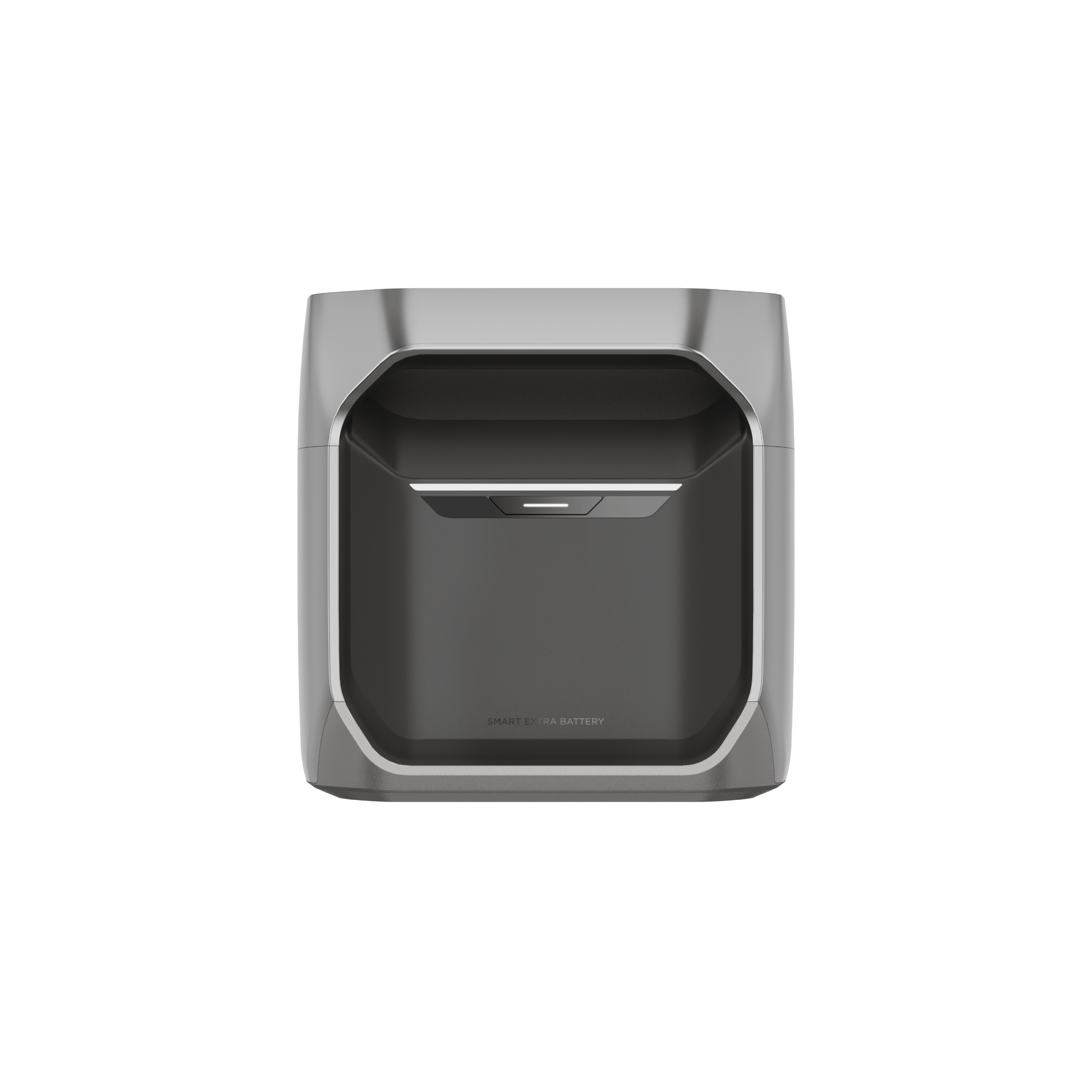
- Best extra battery: EcoFlow DELTA 3 Series Smart Extra Battery
- Best 24-hour sealed ~2 kWh: Jackery Explorer 2000 v2
- Best 48-hour path (expandable 120 V): BLUETTI AC200L
- Best 4 kWh suitcase (not whole-home): EcoFlow DELTA Pro 3
- 12-hour alts (not the pick)
- Day-2 solar (pair, don’t restaff the panels hub)
- Hurricane season (same kits, not a separate URL)
- Transfer switch / Smart Home Panel = electrician later
- No 30% ITC on 2026 portables
- What this page will not do
12-hour vs 24-hour vs 48-hour kits
Arithmetic uses named kWh/day figures already on How Much Solar Generator Do I Need? — a DOE FEMP ENERGY STAR fridge example of ≈ 1.0 kWh/day, and an ORNL representative 1.5–2.0 kWh/day (tested Samsung 1.68 kWh/day). Router watts from EnergySage: typical 5–20 W, with 10 W as their “safe average.” This site has not timed a compressor or metered a router. Inverter losses and surge are not included. The labels are kit classes, not a promise that your fridge will run that many hours.
| Kit | What the named math supports (before losses) | Pick | Will not do |
|---|---|---|---|
| 12-hour overnight — keep the fridge cycled so you stay inside the USDA/FDA 4-hour unpowered food-safety window; plus a router | Half of a FEMP ~1.0 kWh fridge-day is ~0.5 kWh if the day’s energy were even (it is not — duty cycle). Router at EnergySage 10 W × 12 h = 120 Wh. A ~1 kWh station has paper margin for an efficient fridge + router overnight | EcoFlow DELTA 3. Add the extra battery if you already know you will outgrow 1 kWh | Typical older fridge for 48 h; HVAC; 240 V well pump |
| 24-hour — fridge + router + a few LEDs | Efficient fridge ~1.0 kWh + router 10 W × 24 h = 240 Wh + lights. Typical older fridge 1.5–2.0 kWh already fills a 2 kWh pack before losses | Jackery Explorer 2000 v2 (sealed), or AC200L if you want to grow | Still not whole-home |
| 48-hour — two fridge-days + router, doors mostly closed | Efficient: ~2.0 kWh fridge + router 480 Wh ≈ 2.5 kWh before losses. Typical older: 3.0–4.0 kWh fridge + 480 Wh router → 4 kWh class | AC200L + proprietary extras (claimed 4.1–8.2 kWh), or DELTA Pro 3 4096 Wh as a single 4 kWh box | 120 V suitcase as a 240 V well pump. Hardwired transfer switch without an electrician |
The hurricane-season version of the same kits is still this table. Atlantic hurricane season runs June 1–November 30 (NOAA / CPSC). Do not treat a separate “hurricane generator” URL as a different product class — see Hurricane season.
Quick comparison
Numbers are manufacturer claims unless noted. No prices — check the live Amazon listing. None of these is a whole-house hardwired system.
| Role | Model | Capacity | AC continuous | Solar max | Weight | Expandable? |
|---|---|---|---|---|---|---|
| 12-hour overnight (expandable ~1 kWh) | EcoFlow DELTA 3 | 1024 Wh | 1800 W | 500 W | 27.6 lb | Yes (to 5 kWh claimed) |
| Extra battery for that 12-hour kit | EcoFlow DELTA 3 Series Smart Extra Battery | +1024 Wh (combined with DELTA 3 = 2048 Wh, arithmetic) | Does not add inverter watts (still 1800 W) | Recharges through the station | Not printed on the US PDP/JSON fetch 28 Aug 2026 — omitted | This is the extra |
| 24-hour sealed ~2 kWh | Jackery Explorer 2000 v2 | 2042 Wh | 2200 W | 400 W | 39.5 lb | No |
| 48-hour path (expandable 120 V) | BLUETTI AC200L | 2048 Wh | 2400 W | 1200 W | 62.4 lb | Yes (to 8192 Wh claimed) |
| 4 kWh suitcase (48-hour typical class; not whole-home) | EcoFlow DELTA Pro 3 | 4096 Wh | 4000 W | 2600 W total | 113.54 lb | Yes (12 / 36 / 48 kWh footnotes — do not collapse) |
Sources: EcoFlow DELTA 3 specs, DELTA 3 Series Smart Extra Battery, Jackery Explorer 2000 v2, BLUETTI AC200L specs, EcoFlow DELTA Pro 3 specs. Extra-battery weight is omitted because the US manufacturer page did not print it on August 28, 2026 — do not import a UK size line as a US spec.
Food-safety first (the 4-hour / 40°F rules)
Cite the agencies. Do not invent hold times. This site has not timed how long any of these packs held 40°F.
- FDA — Power Outages: Key Tips for Consumers About Food Safety: keep doors closed; the refrigerator will keep food cold for about 4 hours if it is unopened; refrigerators should be kept at 40°F or below; refrigerated food should be safe if the power was out no more than 4 hours; discard perishable food (meat, poultry, fish, eggs, leftovers) that has been above 40°F for two hours or more. (FDA power-outage food safety)
- CDC (page dated Nov. 24, 2025, fetched August 28, 2026) — if doors stay closed, food stays safe up to: 4 hours in a refrigerator, 48 hours in a full freezer, 24 hours in a half-full freezer. Fridge target 40°F or below; freezer 0°F or below. When in doubt, throw it out. (CDC, Keep food safe after an emergency)
- USDA FSIS — Keep Your Food Safe During Emergencies: refrigerator keeps food safe up to 4 hours; full freezer approximately 48 hours (24 hours if half full); appliance thermometer in both boxes; never taste to decide. (USDA FSIS emergencies)
- DOE FEMP user tips on the same refrigerator-buying page used for kWh/day: set the fresh-food compartment 36°F–40°F (above 40°F increases spoilage risk). (DOE FEMP residential refrigerators)
Hub implication (logic, not a lab test): a station that is too small, or that cannot start the compressor (surge), drops you back onto ice, a cooler, or discard. Keep the door closed. Skip the space heater and the range. A full freezer is the 48-hour thermal battery if it stays shut — that is USDA/CDC, not a solar-generator claim.
Fridge math (named kWh/day — not a compressor test)
Copy the honesty already on the sizing hub. Link there for the full calculator; this page only needs the fridge + router worked example.
Watts vs watt-hours
W = can it start/run right now. Wh = how long. EIA: watts measure power at a moment; watthours measure electricity used over time. Example: 40 W bulb × 5 hours = 200 Wh = 0.2 kWh. (EIA, Measuring electricity, live August 28, 2026. The old Energy.gov/energysaver consumer URLs 404’d on August 26 — the sizing hub already swapped to EIA.)
Inverter and round-trip losses mean usable AC energy is less than the nameplate Wh. Do not plan as if 1024 Wh of battery is 1024 Wh at the wall outlet. Size up.
Duty cycle and surge (why 150 W × 24 is wrong)
A refrigerator is a motor load. Two separate problems:
- Surge / inrush. Starting watts > running watts. A 300 W inverter is the wrong tool for a household compressor even if “running watts look small.” This Old House: if starting wattage is not listed, they suggest tripling running watts as an estimate — that is their rule of thumb, not a measurement from this site. (This Old House, All About Portable Power Stations)
- Duty cycle. The compressor is not on for 24 hours. An ORNL / DOE BTO peer-review PDF lists on/off cycling loss ~14.3%–24.7% among real energy buckets, with compressor loss 30%–40%, defrost 17.7%, door-open 7%–13%. That is why a nameplate running-watt × 24 invents a kWh number. (ORNL / DOE BTO PDF)
BLUETTI says the same thing on the AC200L FAQ (opened August 28, 2026): their runtime formula “is NOT suitable for inductive loads with compressors, like refrigerator, air conditioner, etc.” Do not paste BLUETTI’s microwave-hour example onto a fridge. If a brand page claims “X hours on a fridge,” that is their claim, not a test from this site.
Named kWh/day figures
- DOE FEMP ENERGY STAR residential-refrigerator example: 363.5 kWh/year. Arithmetic: 363.5 ÷ 365 ≈ 0.996 kWh/day ≈ 1.0 kWh/day. Table updated December 2023; page live August 28, 2026. (The “Best Available” column on that table shows a garbled
$362in the Annual Energy Use cell — do not use that cell. Use the ENERGY STAR 363.5 kWh.) (DOE FEMP residential refrigerators) - ORNL / DOE BTO PDF: “A representative US household refrigerator consumes 1.5–2.0 kWh electricity per day.” Baseline Samsung test at ORNL PICARD Lab: Electricity use/day = 1.68 kWh (611 kWh measured vs 625 kWh/year OEM rating). (ORNL / DOE BTO PDF)
Using those named figures only, ignoring inverter losses and surge:
| Station class | Verified boxes on this page | Paper fit vs named fridge-days |
|---|---|---|
| 245 Wh | EcoFlow RIVER 3 — not a fridge kit on this page | Not a fridge battery. ~¼ of a FEMP ENERGY STAR day before losses; 300 W / 600 W X-Boost inverter is the wrong start tool. Specs live on the generators hub, not as a kitchen pick here. |
| ~1 kWh | DELTA 3 (pick). Alts: C1000 Gen 2, Explorer 1000 v2 | Roughly one efficient-fridge-day if nothing else is running. Overnight / 12-hour class for an efficient fridge + router, not a guarantee |
| ~2 kWh | Explorer 2000 v2, AC200L, DELTA 3 + extra battery | Closer to one typical older-fridge day (ORNL 1.5–2.0). 24-hour fridge+router kit with thin margin |
| ~4 kWh | DELTA Pro 3 4096 Wh; AC200L + 1×B230 claimed 4096 Wh | Closer to two typical older-fridge days, i.e. the 48-hour class for a typical fridge + router on paper |
Usable AC Wh < nameplate Wh. Size up. Measure the fridge with a kWh-counting plug for a full day of door openings before you spend — same “measure before you buy” note as the sizing hub. This page does not ASIN a Kill-A-Watt: those ASINs shuffle / redirect. Buy any 120 V / 15 A kWh-counting plug.
Router math
The live sizing hub deliberately did not invent a router wattage. This fridge+router page needs a named range.
EnergySage — How many watts does a wifi router use? (updated Dec 6, 2023, fetched August 28, 2026):
- Typical 5–20 W, depending on the model.
- “Ten watts is a safe average” for modern Wi-Fi routers from top manufacturers.
- Always-on table: 10 W × 8,760 h/year = 87.6 kWh/year.
(EnergySage, How many watts does a wi-fi router use?)
Arithmetic from that 10 W average (not a meter reading):
| Outage length | Router energy at 10 W |
|---|---|
| 12 hours | 120 Wh (0.12 kWh) |
| 24 hours | 240 Wh (0.24 kWh) |
| 48 hours | 480 Wh (0.48 kWh) |
At 20 W (top of EnergySage’s range): 240 / 480 / 960 Wh. Still small next to a fridge-day. A mesh system or a cable-modem + router stack can be higher — measure yours. The router will not dominate the kit unless the fridge is off. Keep the fridge on AC (pure sine). If the router has a USB-C / DC path, that avoids an extra inverter hop; this site has not tested a specific router SKU on these stations. EnergySage’s own FAQ about whole-home batteries to back up Wi-Fi is a different product class — ignore it for this Amazon suitcase page. The 5–20 W / 10 W average is the usable line.
Indoor-safe vs gas
This is the contrast Wirecutter / This Old House / r/preppers sell. Keep it to CO + indoor use. This site has not metered fans, so there is no brand dB shoot-out here.
CPSC — CPSC Warns of Generator, Carbon Monoxide and Fire Hazards Ahead of Hurricane Season (release May 27, 2026, fetched August 28, 2026):
- 2026 Atlantic hurricane season begins June 1.
- Never use a portable (fuel) generator inside homes, garages, basements, crawlspaces, sheds or other enclosed areas, even if doors or windows are open.
- Outdoors only, at least 20 feet from homes and buildings, exhaust away from windows/doors/vents.
- CO is colorless/odorless and can kill in minutes.
(CPSC May 27, 2026 generator-CO release)
This Old House — All About Portable Power Stations: lithium stations have no emissions and are safe to use inside; quiet enough for a bedroom; no gas/oil maintenance. Cons they print: can cost about seven times a comparable gas generator; needs expansion batteries and solar to match gas runtime; slow to recharge on sun alone. Transfer switch: an electrician wires a secondary switch box. (This Old House, portable power stations)
Hub line: quiet battery in the kitchen for the fridge + router; gas outdoors, 20 ft out, if you still want a motor for night two or a 240 V load. That hybrid sentence is the honest answer. This page sells the battery half. A dedicated “portable vs gas” URL is later content, not this cart.
IP / indoor caveats (do not flatten):
- DELTA 3: IP65 battery pack (generators hub).
- DELTA Pro 3: battery pack IP65; main unit IP20 — EcoFlow FAQ: indoor or sheltered outdoor (brand-comparison hub, August 27).
- AC200L: manufacturer FAQ “Is it waterproof? No.”
- Indoor-safe ≠ fire-proof. No exhaust CO is the CPSC contrast, not a UL-9540 whole-home claim.
Condo / HOA / no-gas-on-the-balcony buyers are exactly this indoor lithium kit. Do not promise whole-building backup.
The station keeps the fridge and the router. You still need a light that works if USB is empty. Dual-fuel AA and a D-cell Maglite that can sit in a closet for a year: Best Flashlight for a Power Outage.
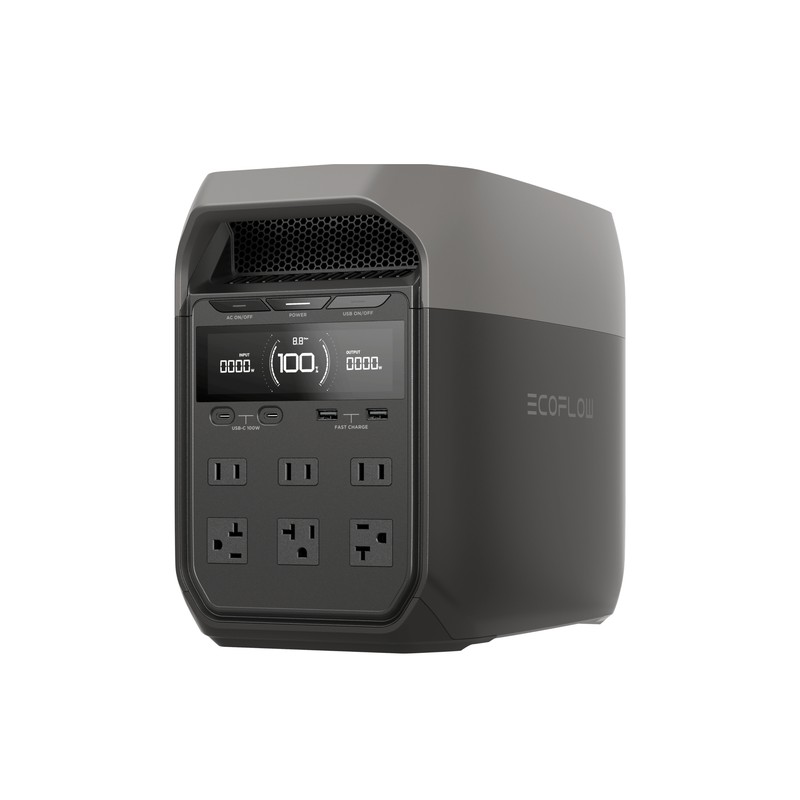
Best 12-hour overnight (expandable ~1 kWh): EcoFlow DELTA 3

If the job is an efficient household fridge plus a router overnight — stay inside the 4-hour unpowered food-safety window, then wake up with a still-cold box — DELTA 3 is the expandable ~1 kWh pick already on the generators hub. EcoFlow’s U.S. spec table lists 1024 Wh, 1800 W continuous AC (six outlets), a 3600 W surge, and X-Boost up to 2200 W. Solar input tops out at 500 W (DC 11–60 V). The pack is LFP, rated 4000 cycles to 80+%, with a claimed <10 ms UPS transfer and expansion to 5 kWh using extra EcoFlow batteries. Weight is about 27.6 lb (12.5 kg). IP65 battery pack; 5-year warranty. U.S. Amazon /dp/B0DCBYMC9D was live August 25, 2026 and still showed Add to Cart on August 28. (EcoFlow DELTA 3 specs)
~1 kWh is one efficient-fridge-day on the FEMP arithmetic if nothing else is running — the 12-hour class for an efficient fridge + a 120 Wh router night, not 48 hours on a typical older fridge. 1800 W / 120 V will not run a 240 V well pump or central air. Not whole-home. Pair with EcoFlow NextGen 220W for day-two sun. Grow with the extra battery in the next section if you already know 1024 Wh is a ceiling you will hit.
| Claim | Number | Source |
|---|---|---|
| Chemistry | LFP (LiFePO4) | EcoFlow specs |
| Capacity | 1024 Wh | same |
| AC output | 6 outlets, 1800 W continuous, 3600 W surge; X-Boost up to 2200 W | same |
| Solar input | DC 11–60 V, 500 W max | same |
| AC charge | 1500 W; claimed 0–100% in 56 min | same |
| Weight / size | ~12.5 kg / 27.6 lb; ~15.7 × 8.0 × 11.2 in | same |
| Ports | 13 total: USB-A 2×18 W, USB-C 2×100 W, car 12.6 V/10 A/126 W, DC5521 2×12.6 V/3 A, plus AC | same |
| Cycle rating | 4000 cycles to 80+% | same |
| UPS / transfer | <10 ms | same |
| Expandable | Claimed to 5 kWh with extra EcoFlow batteries (DELTA 3 / Plus / Pro 3 / DELTA 2 / DELTA 2 Max extras, as listed on the manufacturer page) | same |
| Other | IP65 battery pack; 5-year warranty | same |
Check price on Amazon · EcoFlow product page
Best extra battery: EcoFlow DELTA 3 Series Smart Extra Battery

This is the only new Amazon product on this page: a live U.S. /dp/ verified August 28, 2026 (HTML title, JSON asin B0DCC1QR9F, marketplace ATVPDKIKX0DER, Add to Cart present). EcoFlow US bullets: “Increase the capacity of DELTA 3 Plus/DELTA 3 with an extra 1024Wh.” Combined with a 1024 Wh DELTA 3 that is 2048 Wh — arithmetic, not a second nameplate on the extra pack. That combined figure is a 24-hour class for a typical fridge, not 48 hours. The extra does not add inverter watts (still 1800 W). Chemistry: LFP (US bullets); Amazon title LiFePO4. Plug-and-play into the station’s extra-battery port; EcoFlow app monitor. Recharge through the station from AC, portable solar, or EcoFlow Smart Generator (US body). Warranty (US bullets): 5-year. (EcoFlow DELTA 3 Series Smart Extra Battery)
Cycle conflict on the US page itself — cite both. Bullets: “Embrace 3000+ charging cycles” enabled by LFP, “10 years of daily use until it hits 80%.” Body: “Lifespan of 4000 complete cycles until 80% capacity.” Do not flatten 3000+ and 4000.
Amazon compatibility sentence: “Expansion Battery only for Power Station Delta 2/Delta 3/Delta 3 Plus/Delta 3 1500 – Not for other models.” Do not sell this ASIN as a DELTA Pro 3 extra (Pro 3 extras are a different SKU family). Shopify JSON (August 28, 2026): extra-battery-only variant SKU EFDELTA3P-EB. Other variants on the same PDP are bundles (DELTA 3 Plus+extra, DELTA 3+extra) — do not use those bundle SKUs as this listing.
Weight / size: not printed on the US PDP/JSON fetch August 28, 2026. This hub omits them rather than importing a UK line as a US spec. Stock split the same day: US PDP fetch mixed sold out / preorder / add to cart language; Amazon /dp/ had Add to Cart. Same pattern as DELTA Pro 3 on August 27. Proprietary EcoFlow extras only.
| Claim | Number | Source |
|---|---|---|
| Chemistry | LFP (US bullets); Amazon title LiFePO4 | EcoFlow US + Amazon title |
| Extra capacity | 1024 Wh added to DELTA 3 / DELTA 3 Plus. Combined with a 1024 Wh DELTA 3 = 2048 Wh (arithmetic) | US bullets |
| Inverter watts added | None (station stays 1800 W) | same |
| Cycle rating | US bullets 3000+ to 80%; US body 4000 complete cycles until 80% — conflicting manufacturer figures, both cited | same page |
| Warranty | 5-year | US bullets |
| Compatibility (Amazon) | Delta 2 / Delta 3 / Delta 3 Plus / Delta 3 1500 only — not for other models | Amazon title |
| Weight / size | Not printed on the US PDP/JSON 28 Aug 2026 — omitted here | US fetch |
| Recharge path | Through the station from AC, portable solar, or EcoFlow Smart Generator | US body |
Check price on Amazon · EcoFlow extra-battery page
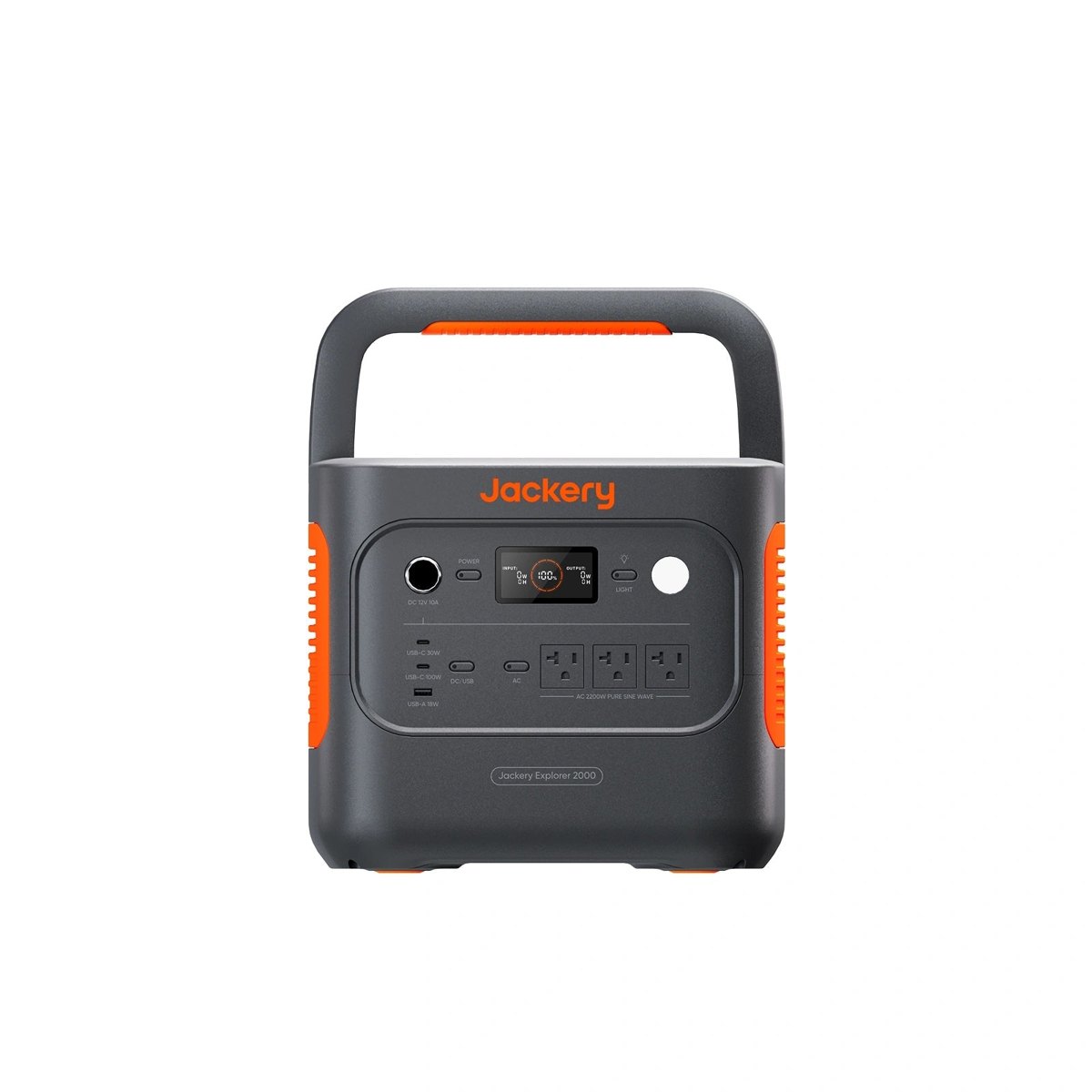
Best 24-hour sealed ~2 kWh: Jackery Explorer 2000 v2

Explorer 2000 v2 is the lighter of the two verified ~2 kWh boxes: 2042 Wh, 2200 W continuous / 4400 W surge, LiFePO4, about 39.5 lb (vs AC200L 62.4 lb). Paper fit: one typical older-fridge day (ORNL 1.5–2.0 kWh) plus a 240 Wh router-day with little margin after losses. That is the 24-hour fridge + router + a few LEDs class, not a 48-hour typical-fridge kit. Manufacturer FAQ: not expandable. Cycle rating 4000 cycles to 70%+ — not 80%. UPS <20 ms. Jackery copy: indoor-friendly, <30 dB quiet mode / 45 dB full load at 1 m (PDP Data Note — not metered here). (Jackery Explorer 2000 v2 tech specs and FAQ)
Solar (Tech Specs re-opened August 27, 2026): dual DC 8 mm, 400 W max. Working voltage 11–16 V and 16–60 V, dual to 21 A / 400 W. Same 400 W ceiling as Explorer 1000 v2 — more battery, not more solar headroom. First-choice panel: Jackery SolarSaga 200W, one or two. The Amazon title flags solar panel as optional — panels are not in the box.
Jackery.com showed Sold Out / Notify Me on August 27, 2026; the Amazon listing was live August 25. Stock can flip — re-open the Amazon link before you buy. Still 120 V only. Not a well-pump box. Not whole-home.
| Claim | Number | Source |
|---|---|---|
| Chemistry | LiFePO4 | Jackery tech specs |
| Capacity | 2042 Wh | same |
| AC output | 2200 W continuous / surge 4400 W | same |
| Solar input | Dual DC 8 mm, 400 W max. Working voltage: 11–16 V and 16–60 V, dual to 21 A / 400 W | Tech Specs re-opened 27 Aug 2026 |
| Weight / size | ~39.5 lb / 17.9 kg; 13.2 × 10.4 × 11.5 in | Tech specs |
| Ports | USB-C 30 W + 100 W; USB-A 18 W; car 12 V/10 A; plus AC | same |
| Quiet (mfr Data Note, not metered here) | <30 dB quiet mode; 45 dB full load at 1 m | Product page Data Note |
| Cycle rating | 4000 cycles to 70%+ | Tech specs |
| UPS / transfer | <20 ms | same |
| Expandable | No | Manufacturer FAQ |
Check price on Amazon · Jackery product page
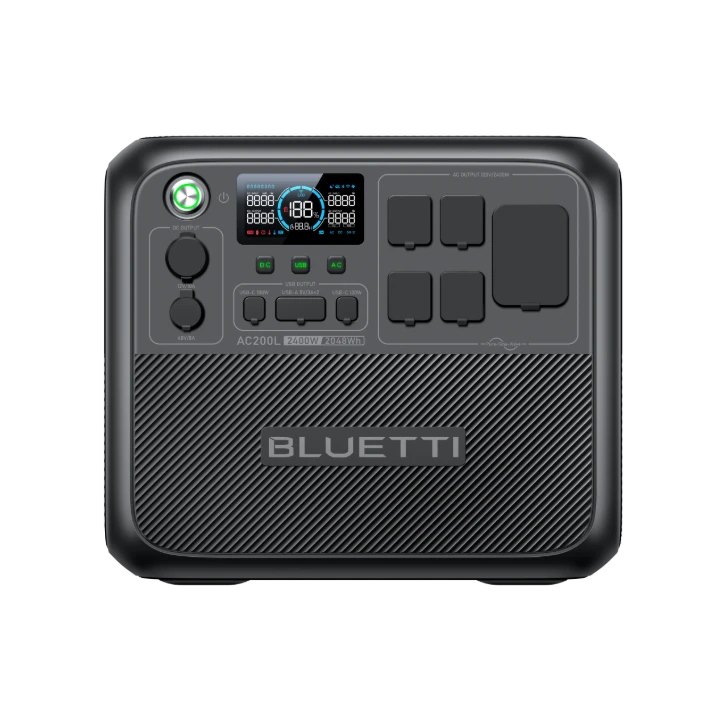
Best 48-hour path (expandable 120 V): BLUETTI AC200L

AC200L is the expandable 120 V path toward a 48-hour typical-fridge class: 2048 Wh and 2400 W now, with claimed expansion AC200L + 2×B210 = 6,348 Wh; + 1×B230 = 4,096 Wh; + 2×B300 = 8,192 Wh (FAQ Q2, live August 28, 2026). That 4–8 kWh band is the 48-hour typical-fridge class on paper. Base 2048 Wh without extras is a 24-hour kit, not 48 hours on a typical fridge. Highest solar-in on the 120 V hubs: 1200 W, VOC 12–145 VDC, 15 A. Native MC4 — BLUETTI 350W. TT-30 is 120 V. Manufacturer: no 240 V split-phase. Power Lifting 3600 W. AC in 2400 W; claimed 0–80% in 45 minutes. LiFePO4. Cycle rating 3000+ cycles to 80%. UPS 20 ms (FAQ). Pass-through yes. Weight on the Specs table is 62.4 lb / 28.3 kg (a comparison table listed 61.6 lb; use Specs). Warranty table: AC200L/AC200P L = 60 months. U.S. manufacturer pages and the U.S. Amazon listing were live August 25, 2026; EU pages have said discontinued. Manufacturer expansion FAQ re-opened August 28 with the same numbers. (BLUETTI AC200L specs; solar-generator-ac200l specs)
Surge figures conflict on BLUETTI’s own pages. pages/ac200l lists 7200 W surge; the solar-generator-ac200l Specs table lists 4800 W. This hub cites both and does not pick one. If surge headroom matters for a motor start, confirm the current spec sheet.
Fridge FAQ honesty: Q12 formula is not for compressor loads. Do not turn their microwave hours into a fridge runtime. Extra-battery Amazon ASINs for B210 / B230 / B300 / B300K are not picks on this page — cite the claimed expansion on the AC200L page; do not invent a BLUETTI extra ASIN. ~62 lb is garage/cabin. Expansion is proprietary BLUETTI. Waterproof FAQ: No.
| Claim | Number | Source |
|---|---|---|
| Chemistry | LiFePO4 | Amazon listing + manufacturer pages |
| Capacity | 2048 Wh | pages/ac200l |
| AC output | 2400 W continuous (4×120 V/20 A + 1×120 V/30 A NEMA TT-30); Power Lifting 3600 W | same |
| Surge | 7200 W on pages/ac200l; 4800 W on solar-generator-ac200l Specs — conflicting manufacturer figures, both cited | pages/ac200l; solar-generator-ac200l |
| Solar input | 1200 W, VOC 12–145 VDC, 15 A | Manufacturer specs |
| AC in | 2400 W; claimed 0–80% in 45 min | same |
| Weight / size | 62.4 lb / 28.3 kg (Specs table); 16.5 × 11 × 14.4 in | Specs table (not the 61.6 lb comparison-table figure) |
| Ports | USB-C 2×100 W; USB-A 2×18 W; 48 V/8 A RV; 12 V/10 A car; plus AC including TT-30 | Manufacturer specs |
| Cycle rating | 3000+ cycles to 80% | same |
| UPS / transfer | 20 ms | Manufacturer FAQ |
| Expandable | 2×B210 = 6348 Wh / 1×B230 = 4096 Wh / 2×B300 = 8192 Wh (as claimed). Extra-battery Amazon ASINs are not picks on this page. | Manufacturer FAQ Q2, live 28 Aug 2026 |
| Warranty | 60 months (AC200L/AC200P L row) | BLUETTI Product Warranty Period |
| Other | No 240 V split-phase; pass-through yes; FAQ “Is it waterproof? No.” | Manufacturer pages |
Check price on Amazon · BLUETTI AC200L page
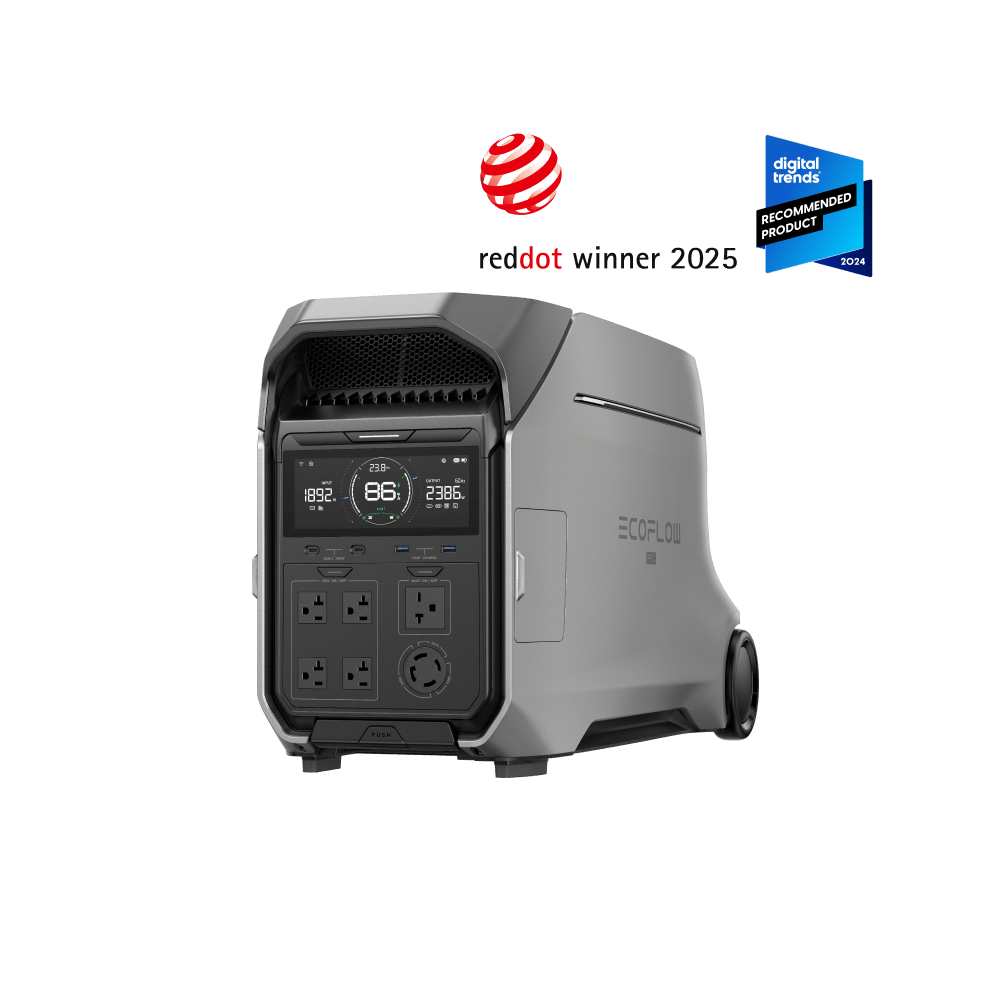
Best 4 kWh suitcase (not whole-home): EcoFlow DELTA Pro 3

4096 Wh is the only verified ~4 kWh single box in the prior briefings — paper-close to two ORNL typical fridge-days + router. That is the 48-hour typical-fridge class as one suitcase, not a hardwired house. Fridge and router are 120 V loads: use the 5-20R / TT-30 bank. Do not tell a fridge buyer they need 240 V mode. Live U.S. Amazon /dp/B0D14FMFZD was verified August 27, 2026 (HTML title, JSON asin, marketplace ATVPDKIKX0DER, Add to Cart). (EcoFlow DELTA Pro 3 specs and FAQ)
240 V is on the box but not for this URL’s job. L14-30 + 6-20R. EcoFlow FAQ: 120 V and 240 V are not simultaneous — two AC buttons; pressing 120 V powers the 5-20R + TT-30 and turns 240 V off; pressing 240 V powers L14-30 + 6-20R and turns 120 V off. A well-pump inrush is unmeasured here. If the actual job is a 240 V motor, that comparison lives on the brand-comparison hub, not as this page’s hero. Smart Home Panel 2 footnotes = electrician — see Transfer switch.
AC: 4000 W continuous, 6000 W with X-Boost, surge 8000 W, 120/240 V ~ 16.7 A 60 Hz, 4000 W total. Solar: 2600 W total, 2 ports — High-PV 30–150 V, 15 A, 1600 W max; Low-PV 11–60 V, 20 A, 1000 W max. NextGen 220W (Voc 21.5 V) sits in the low window electrically; confirm the actual cable (XT60i vs high-PV connector) before stating a native pair. This page does not invent a DELTA Pro 3 panel SKU and does not reuse Anker PS400 as a Pro 3 native kit (Voc 57.6 V is tight on a 60 V low port). Cycle rating: 4000 cycles to 80%. UPS 10 ms. Weight 51.5 kg (113.54 lb). Battery pack IP65; main unit IP20 (FAQ: indoor or sheltered outdoor).
Expandable — do not collapse 12 / 36 / 48 kWh. Specs table: single unit 12 kWh (2 × DP3 Extra Battery). System* 36 kWh (6 × DP3 Extra Battery); up to 48 kWh**. Footnotes: *pair 3 inverters with Smart Home Panel 2; **requires 3 × DELTA Pro 3, 3 × extra batteries, 3 × Smart Generator 4000, 1 × Smart Home Panel 2 — sold separately. Extra-battery FAQ: DELTA Pro Smart Extra Battery is compatible with DELTA Pro 3 (firmware). DELTA Pro 3 Extra Battery is not compatible with original DELTA Pro. The DELTA 3 Series extra on this page is a different family — do not mix them.
Warranty conflict — cite both. U.S. Limited Warranty Policy table (updated 20 Oct 2025, fetched August 27, 2026): DELTA Pro 3 | 5 years. Product page hero: “Includes 3-year standard warranty and 2-year extended warranty available upon EcoFlow App registration.” Specs line: “5-year warranty.” Stock split August 27, 2026: EcoFlow US PDP said preorder / ships early September; Amazon /dp/ had Add to Cart. EcoFlow still prints a §25D educational disclaimer on this product page — do not copy it as a 2026 buyer benefit; see ITC. ~114 lb with wheels. Not whole-home from one suitcase.
| Claim | Number | Source |
|---|---|---|
| Chemistry | LFP | EcoFlow US Specs |
| Capacity | 4096 Wh | same |
| AC output | 4000 W continuous; 6000 W with X-Boost; surge 8000 W; 120/240 V ~ 16.7 A 60 Hz, 4000 W total | same |
| 120 V outlets (this page’s job) | 4 × NEMA 5-20R 20 A + 1 × NEMA TT-30R 30 A | same |
| 240 V outlets (on the box, not this URL’s fridge job) | 1 × NEMA 6-20R 16.7 A; 1 × NEMA L14-30R 16.7 A (120/240 V) | same |
| Simultaneous 120 V + 240 V | No (two AC buttons; one bank on, the other off) | Manufacturer FAQ |
| Solar input | 2600 W total, 2 ports. High-PV 30–150 V, 15 A, 1600 W max. Low-PV 11–60 V, 20 A, 1000 W max | Specs |
| Cycle rating | 4000 cycles to 80% (FAQ: 4000 cycles at 0.5C/0.5C / 25 °C, over 80% SoH) | Specs + FAQ |
| UPS / transfer | 10 ms | Specs |
| Weight / size | 51.5 kg (113.54 lb); 16.16 × 13.43 × 27.28 in | Specs |
| IP | Battery pack IP65; main unit IP20 (indoor or sheltered outdoor) | Specs + FAQ |
| Expandable | Single unit 12 kWh (2 × DP3 Extra Battery). System* 36 kWh; up to 48 kWh**. Footnotes on the Specs table — do not collapse 12 / 36 / 48 | Specs table footnotes |
| Warranty | Policy table 5 years; PDP also 3 + 2 upon app registration — conflicting manufacturer figures, both cited | US Limited Warranty Policy + product page |
Check price on Amazon · EcoFlow product page
12-hour alts (not the pick)
Same ~one-efficient-fridge-day energy class as DELTA 3. Neither grows. Neither is the 12-hour pick on this page because the overnight fridge kit that can add a battery later is DELTA 3.
- Jackery Explorer 1000 v2 — lightest verified ~1 kWh at 23.8 lb, 1070 Wh / 1500 W / 3000 W surge, dual DC 8 mm 400 W solar, 4000 cycles to 70%+ (not 80%), UPS ≤20 ms, not expandable. Native SolarSaga DC8020 path. Full spec card on the generators hub. Check price on Amazon
- Anker SOLIX C1000 Gen 2 — 1,024 Wh, 2,000 W continuous, 600 W solar, 24.9 lb, UPS 10 ms, not expandable (manufacturer comparison table). Amazon title LiFePO4; fetched manufacturer spec tables did not print that word. Peak 3,000 W on the product page / Amazon title is not the same number as SurgePad up to 2,400 W in the A1763 user guide — cite both. Full spec card on the generators hub. Check price on Amazon
EcoFlow RIVER 3 is not a fridge kit on this page. 245 Wh / 300 W. The sizing hub already: not a household-fridge battery. Do not shop it for this job. Specs, if you need the small-pack numbers, are on the generators hub.
Day-2 solar (pair, don’t restaff the panels hub)
The panel is how you survive day two. Charge the station from the wall before the outage. Solar is how you recover if the sky is actually usable — hurricane rain/cloud is not a lab STC day. STC watts ≠ field watts. First-choice pairings already on Best Portable Solar Panels for Power Stations (2026). Do not leave foldables in standing water (check each panel’s printed IP).
| Station | First-choice panel | Do not |
|---|---|---|
| DELTA 3 (500 W, 11–60 V, XT60i) | EcoFlow NextGen 220W | Series three 220 W (Voc ~64.5 V over 60 V) |
| Explorer 2000 v2 (400 W, Jackery DC 8 mm) | Jackery SolarSaga 200W, one or two | MC4 panels without a DC8020 adapter |
| AC200L (1200 W, 12–145 V, 15 A, MC4) | BLUETTI 350W | Parallel two ~11–12 A panels (Isc sum can exceed 15 A). Voc 33 vs 46.5 — cite both |
| DELTA Pro 3 | No new panel ASIN on this pass. NextGen 220W sits in the low PV window electrically (11–60 V); confirm the cable | Do not reuse Anker PS400 as a Pro 3 native kit without re-checking the high/low port connector. Voc 57.6 V is tight on a 60 V low port. Do not invent a DELTA Pro 3 panel SKU |
Jackery SolarSaga 200W (for Explorer 2000 v2)

Jackery-native 200 W bifacial foldable. Tech Specs: peak power 200 W ±5%, Voc 22 V ±5%, Isc 12.5 A ±5%, Vmp / Imp 18 V ±5% / 11.5 A ±5%, weight 14.33 lb ± 0.66 lb, waterproof IP68. Connector is proprietary: package list = 3 m multi-functional cable + DC8020 to DC7909 adapter. Not MC4. One or two panels at Explorer 2000 v2’s 400 W ceiling. Page says Topcon monocrystalline, up to 25% conversion; Amazon feature bullets separately claim IBC and 26.7% — do not flatten those. Warranty (mfr): 3+2 years. (Jackery SolarSaga 200W tech specs)
Check price on Amazon · Jackery SolarSaga page
EcoFlow NextGen 220W Bifacial (for DELTA 3)

EcoFlow-native ~220 W foldable. Specs: rated power 220 W (±5 W) front / 175 W rear, Voc 21.5 V (Vmp 18.4 V), Isc 12.4 A front, weight about 15.4 lb, IP68, N-Type TOPCon, efficiency 25.00%. What’s in the box includes an XT60i charging cable. One panel: 21.5 V / 220 W inside DELTA 3’s 11–60 V / 500 W window. Two in parallel: ~440 W, still under 500 W. Two in series: Voc ~43 V, still under 60 V. Three in series: Voc ~64.5 V over 60 V — do not. Rear-side 175 W is extra only with reflected light — do not add 220 + 175 and call it a 395 W panel. US spec-table warranty: 12 months. (EcoFlow NextGen 220W specs)
Check price on Amazon · EcoFlow NextGen page
BLUETTI 350W / PV350 (for AC200L)

BLUETTI-native high-watt foldable with industry-standard MC4. Rated power 350 W. Amazon feature bullets list AC200L among compatible stations. Voc conflict — cite both: live US product copy “33 V open-circuit voltage (Voc)”; Amazon technical details 46.5 V. Both sit inside AC200L’s 12–145 V window. Imp / amperage on the Amazon table: 9.2 A (< 15 A). IP rating conflict: body copy IP67; FAQ on the same US page “IP65 water-resistant… splash… do not leave it in the rain”; Amazon title IP67. Cite all three; do not pick one. Weight / folded size were not printed on the 2026-08-26 US PDP fetch; Amazon technical details: 30.6 lb, folded 35.6 × 24.1 × 2.5 in — label those as Amazon-table. What’s-in-the-box conflict: US PDP lists a 20 A MC4→XT60 cable; Amazon included-components lists the solar panel — do not assume the Amazon carton includes the XT60 lead. Three in series at 46.5 V = 139.5 V (tight to 145 V). Parallel two ~11–12 A panels can put Isc over 15 A — series, not parallel. (BLUETTI 350W product page)
Check price on Amazon · BLUETTI 350W page
Hurricane season (same kits, not a separate URL)
NOAA NWS outlook (May 21, 2026): “the 2026 Atlantic hurricane season, which runs June 1 to November 30.” CPSC’s May 27, 2026 generator-CO release uses the same June 1 start. (NOAA 2026 Atlantic outlook; CPSC) One landfalling storm is enough. This hub does not recap NOAA’s storm-count forecast as shopping advice, and it does not clone brand “Florida hurricane kit” blogs. The kits are still fridge + router. The season dies as a standalone post in December — that is why hurricane is a section, not the URL.
- Food-safety first. FDA/CDC/USDA 4-hour fridge / 48-hour full freezer. Keep doors closed. Put an appliance thermometer in both boxes before the storm.
- Kit = fridge + router (+ LEDs). Skip central air, the well pump, and the range. A 120 V suitcase will not run a 240 V well pump.
- Charge from the wall before the outage. Solar is how you survive day two if the sky is actually usable. Pair panels from the panels hub. Do not leave foldables in standing water. BLUETTI 350W IP67 vs FAQ IP65 — cite both; treat rain as a “do not leave it out” problem either way.
- Gas generator, if you own one: CPSC 20-foot outdoor rule. Do not run it in a garage, porch, or carport.
- Flooded appliances: CPSC — do not touch wet appliances still plugged in; a qualified professional / the utility inspects gas valves and wiring that went underwater. USDA FSIS: a fridge/freezer submerged even partially must be discarded.
- Transfer switch / Smart Home Panel: electrician after the storm plan, not an Amazon how-to in this URL. See the next section.
Condo / HOA / no-gas-on-the-balcony buyers are this indoor lithium kit. Do not promise whole-building backup.
Transfer switch / Smart Home Panel = electrician later
Not an Amazon CTA. Amazon links on this page stay on the suitcase, the extra battery, and the foldable panel.
- This Old House: tying a station into the house means an electrician wires a secondary switch box near the main panel so you can flip critical circuits. “As with a gas generator… only with some models.” (This Old House)
- EcoFlow DELTA Pro 3 Specs footnotes (August 27, 2026): 36 kWh / 48 kWh system numbers require Smart Home Panel 2 (and, for 48 kWh, 3× DELTA Pro 3 + extras + 3× Smart Generator 4000). EcoFlow copy requires a qualified electrician. 120 V and 240 V on this SKU are mode-switched, not simultaneous.
- EnergySage “5 levels of home backup” (updated March 13, 2026): this URL is Level 1 — portable, no installer, fridge/router/lights. Level 4 rooftop+battery and VPP are later lead-gen, not this cart. (EnergySage, 5 levels of home backup power)
If you already know you need hardwired circuits or a 240 V well pump, stop shopping this Amazon suitcase page and talk to an electrician. The brand-comparison hub covers 240 V workshop boxes as a different job.
No 30% ITC on 2026 portables
IRS Residential Clean Energy Credit (opened August 28, 2026): 30% for qualified property installed 2022 through December 31, 2025. “The credit is not available for any property placed in service after December 31, 2025.” Battery storage (when it applied) had to be at least 3 kilowatt hours. Claimed for the year installed, not merely purchased. Used property is not eligible. (IRS Residential Clean Energy Credit)
EnergySage (updated March 23, 2026): §25D expired for customer-owned systems; unused 2025 credit can carry forward; leases/PPAs may still use commercial §48E. (EnergySage, solar tax credit explained)
Implication: a 2026 portable placed in service in 2026 does not get 30% off. 1 kWh and 2 kWh stations were under 3 kWh even when the credit existed. DELTA Pro 3 is ≥3 kWh on paper — still not a 2026 §25D CTA. Do not copy EcoFlow’s §25D disclaimer onto a 2026 buy button.
What this page will not do
- No fake fridge runtimes. This site has not timed a compressor. BLUETTI’s own AC200L formula is not for fridges. Brand “hours on a fridge” charts stay attributed to the brand.
- No 120 V suitcase as whole-home or as a 240 V well-pump how-to. DELTA Pro 3 240 V is a mode, not a hardwired house. Use 120 V outlets for the fridge and router.
- No EcoFlow RIVER 3 as a fridge kit. 245 Wh / 300 W.
- No invented extra-battery ASINs for BLUETTI B210 / B230 / B300 / B300K. Claimed expansion numbers are from the AC200L page. A live Amazon B300 title that lists AC300 / AC200MAX / AC200P / EB240 and omits AC200L is not attached here. A live Amazon B500K title that claims AC200L is not picked until the AC200L spec table names B500K.
- No Kill-A-Watt ASIN. Measure with any 120 V / 15 A kWh-counting plug; those listings shuffle.
- No prices. Manufacturer cart stickers are not the Amazon buy-box.
- No UK extra-battery weight published as a US spec.
For capacity / output / weight across six current-generation stations, see Best Solar Generators / Portable Power Stations (2026). For the fridge kWh/day worked example and “measure before you buy,” see How Much Solar Generator Do I Need? For Voc and connectors, see Best Portable Solar Panels for Power Stations (2026). For brand × job, including 240 V workshop, see Jackery vs EcoFlow vs BLUETTI vs Anker (2026).
Specs and Amazon.com listings checked August 25–28, 2026 as noted above. This page does not include prices. Confirm the live listing and the current manufacturer spec table before you buy. 12-hour / 24-hour / 48-hour labels are kit classes from named kWh/day figures, not lab runtimes from this site.
How we sourced this
This is a spec hub, not a hands-on review. Labeled untested. We have not lab-tested these stations, timed a fridge compressor, metered a router, or lived through an outage with them. Capacities, outputs, solar limits, weights, and cycle claims come from manufacturer spec pages (and, where the maker’s table is silent, from the live Amazon.com title). 12-hour / 24-hour / 48-hour labels are kit classes built from named kWh/day figures — not lab runtimes from this site. Amazon.com listings for EcoFlow DELTA 3, Jackery Explorer 2000 v2, and BLUETTI AC200L were checked as live U.S. product pages on August 25, 2026 (DELTA 3 sanity-checked still Add to Cart on August 28). EcoFlow DELTA Pro 3 was checked August 27. EcoFlow DELTA 3 Series Smart Extra Battery was checked August 28. Portable-panel ASINs were checked August 26. Re-open any listing before you buy — stock and titles change. No prices on this page.
Disclosure: As an Amazon Associate I earn from qualifying purchases. Some links are affiliate links. You pay the same.