Black Friday Portable Power Station Deals (2026): When to Buy, What Size, and How to Spot a Real Deal
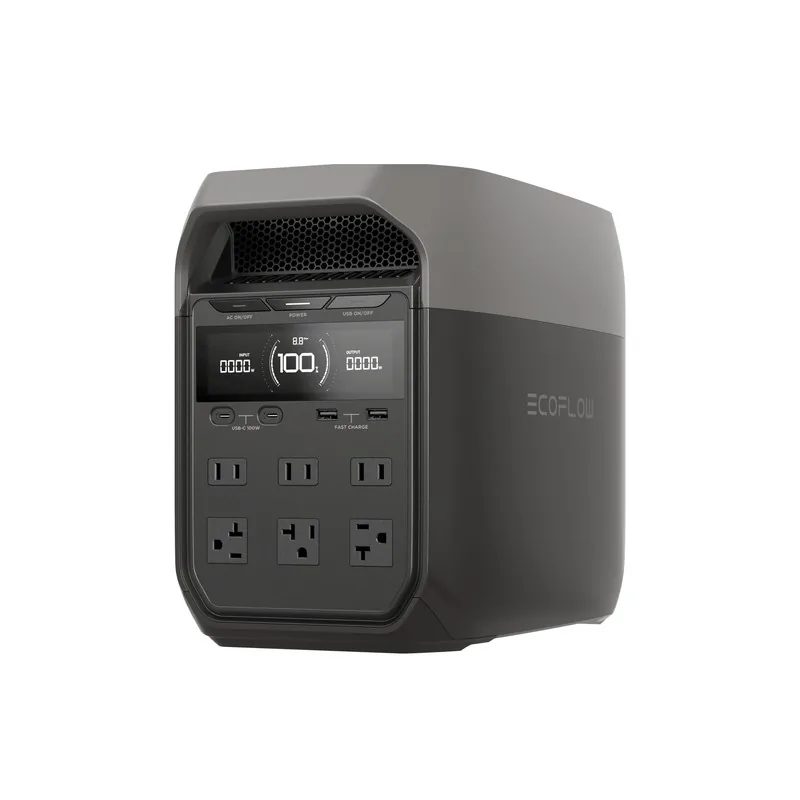
Disclosure: As an Amazon Associate I earn from qualifying purchases. I also earn a commission from some other retailers, including Anker SOLIX, BLUETTI, and EcoFlow (through CJ). You pay the same.
Black Friday is Friday, November 27, 2026. Cyber Monday is November 30. Here’s when power station sales have shown up before, what size to buy, and how to tell a real deal from a dressed-up one.
Thinking about a portable power station (some brands call it a “solar generator”) for the holidays? Smart timing. November is when the big brands run their biggest sales. But the best price doesn’t always land on Black Friday itself, and the price with a line through it isn’t always the real “before” price.
We won’t guess what this year’s sale prices will be. Nobody knows that yet. And you won’t see Amazon prices on this page, because they change too often to print. Instead, every “Check price on Amazon” button opens the live listing, so you see today’s price.
The short answer
- Pick your size now, before the rush. Use our portable power station size calculator. It takes about two minutes.
- Start watching in early November. In 2025, brand sales opened between November 4 and November 12, and some brands went lower again from about November 20 (BackupPowerHub).
- Compare price per watt-hour, not the “was” price. More on that below.
- Need it for winter storms? Don’t wait on a sale if an outage is on the way. See our winter storm power station checklist.
When to buy: what happened last year
Past years are a clue, not a promise. Each brand sets its own sale dates, and they change every year. Here’s what deal trackers recorded for 2025:
| When (2025) | What happened | Source |
|---|---|---|
| Early November (Nov 4 to Nov 12) | Early brand sales opened. Anker’s “doorbusters” landed November 5. | BackupPowerHub; WattStationHQ (citing Electrek) |
| Mid November (from Nov 15) | BLUETTI’s sale ran November 15 to 28. | WattStationHQ (citing Gearbrain) |
| Around November 20 | EcoFlow and Anker cut prices again. EcoFlow’s sale ran November 20 to 26. | BackupPowerHub; WattStationHQ |
| Black Friday through Cyber Monday | Jackery kept one price level from November 5 through Cyber Monday. Jackery and Anker prices held through Cyber Monday. | BackupPowerHub |
| Early December | Some sales ran on until December 3 to December 8. | BackupPowerHub |
What does that mean for you? Two plain-English takeaways:
- The deal may come before the day. In 2025, several brands hit their low prices in early to mid November, not on Black Friday itself (WattStationHQ).
- Check the end date on each offer. Last year’s brand sale windows differed by more than two weeks, so don’t assume a sale runs through the holiday weekend (WattStationHQ).
What size do you actually need?
A sale on the wrong size isn’t a deal. Size is measured in watt-hours (Wh), which is how much energy the battery holds, like the size of a gas tank. The AC output in watts (W) is how much it can push at once, like how hard you can press the pedal. You need enough of both.
Here’s the napkin math we use in our winter storm checklist:
Runtime in hours ≈ battery Wh × 0.85 ÷ the watts you’re drawing
The 0.85 covers energy lost turning battery power into wall-style power. So a fridge averaging about 100W runs roughly 8.5 hours on a ~1,000Wh station and roughly 17 hours on a ~2,000Wh station. Those are estimates. Your fridge may use more or less.
| Your main job | Size class to look at | Read next |
|---|---|---|
| Phones, router, lights, a CPAP, camping | ~1,000Wh | Best portable power stations under $500 |
| Keep the fridge going overnight | ~1,000 to 2,000Wh | Best solar generators |
| A full day of essentials, or several days with solar | ~2,000Wh and up | Best solar generator for home backup |
| Not sure? Choosing a brand? | Run the numbers first | Size calculator · Jackery vs EcoFlow vs Bluetti vs Anker |
How to spot a real deal (and a fake “was” price)
That big crossed-out number is the seller’s reference price. It isn’t proof of what the station really sold for last month. One Black Friday tracker puts it bluntly: ignore the struck-through price and compare with the lowest price actually seen (BackupPowerHub). Here’s how to check a deal yourself:
- Work out price per watt-hour. Divide the sale price by the Wh. Do it for every station on your list. The lowest number gets you the most battery for your money. It also works across sizes, so a big station and a small one can be compared fairly.
- Write down today’s price. Click a button below, note the price, and check again in November. Your own notes beat any “was” price.
- Make sure it’s the same model. Names are close on purpose. The EcoFlow DELTA 3 and DELTA 3 Classic are different stations (see our under-$500 guide). Anker says the C1000 Gen 2 had its expansion feature removed to save weight, while the older C1000 can expand. Check the “v2,” “Gen 2,” “Plus” or “Classic” in the title.
- Check what’s in the box. A “solar generator” bundle includes a panel. A bare station doesn’t. Compare bundle to bundle and station to station.
- Read the cycle rating, and the cutoff. “4,000 cycles” means little until you see “to what?” Jackery rates the two v2 stations below to 70% capacity. The EcoFlow and Anker stations below are rated to 80%. Same number, different finish line.
The watch list: six stations worth a sale price
We refreshed this list on Nov 19, 2026, right as the early sales got going. Two boxes from last month’s list are gone: the Jackery Explorer 1000 v2 was sold out at Jackery, and the EcoFlow DELTA Pro 3 was unavailable on Amazon and sold out at EcoFlow. Everything below could be ordered the day we checked.
A quick way to judge any deal: divide the price by the watt-hours. A 1,024 Wh box at $450 is about 44 cents per Wh. Anything well under 50 cents per Wh for a name-brand LiFePO4 box is a good holiday price right now.
| Station | Capacity | Rated AC | Price check (Nov 19, 2026) | Verdict |
|---|---|---|---|---|
| Anker SOLIX C1000 Gen 2 | 1,024 Wh | 2,000 W | Under $500 on Amazon | Buy |
| EcoFlow DELTA 3 Classic | 1,024 Wh | 1,800 W | $459 at EcoFlow | Buy |
| DJI Power 1000 V2 | 1,024 Wh | 2,600 W | Under $400 on Amazon | Buy (wall charging) |
| EcoFlow DELTA 3 | 1,024 Wh | 1,800 W | $599 at EcoFlow | Wait for a dip |
| Jackery Explorer 2000 v2 | 2,042 Wh | 2,200 W | $999 at Jackery | Buy if you need 2 kWh |
| BLUETTI Elite 200 V2 | 2,073.6 Wh | 2,600 W | $899 at BLUETTI | Buy (from BLUETTI) |
Store prices are what each maker’s U.S. store showed on Nov 19, 2026. Amazon prices change too often to print, so we give a range there and the button shows today’s number.
Anker SOLIX C1000 Gen 2: the strongest deal under $500
On Nov 19, 2026, Amazon had it under $500, which is a strong price for this much output. You get 1,024 Wh, 2,000 W steady, and a full recharge in under an hour with the app’s fast mode on.
Who it’s for: Anyone who wants one strong 1 kWh box for outages.
Who should skip it: People who’ll want to add batteries. Gen 2 can’t expand.
Cons: No expansion port. Charge it indoors in winter, since Anker lists 32°F as the low end for charging.
Verdict: Buy. At this price it’s the best value among the 1 kWh boxes.
Check price on Amazon · Check price at Anker
EcoFlow DELTA 3 Classic: the cheapest good 1 kWh box
Same 1,024 Wh as the Anker with a little less steady output (1,800 W). EcoFlow had it at $459 on its own store. The app’s Storm Guard mode switches it into backup mode before bad weather, which is handy if you forget to plug it in.
Who it’s for: Budget buyers who want a full-size outage battery.
Who should skip it: Anyone set on adding batteries later. Check EcoFlow’s compatibility list for this exact model first.
Cons: The five-year warranty needs app registration (three years without it).
Verdict: Buy. It’s the lowest cost per Wh on this list.
Check price on Amazon · Check price at EcoFlow
DJI Power 1000 V2: big output, odd price gap
DJI’s own store lists $699 and showed it sold out, yet Amazon had it under $400. For that you get 1,024 Wh and 2,600 W steady, the most output on this list, and it’s quiet while charging.
Who it’s for: Folks who’ll charge from the wall and want the most watts per dollar.
Who should skip it: Solar-first buyers. Solar and car charging need a separate DJI adapter.
Cons: About 31 lb. The full warranty terms depend on where you buy, so read them.
Verdict: Buy if you charge from the wall. A gap that big may not last.
EcoFlow DELTA 3: wait for a better number
Still our favorite 1 kWh box you can expand, but $599 at EcoFlow on Nov 19 isn’t much of a sale. Since the Classic above costs $140 less for the same capacity, only pay this if you really want the add-on battery option.
Who it’s for: Buyers who know they’ll add an extra battery later.
Who should skip it: Everyone else. The Classic or the Anker gives you the same capacity for less.
Cons: Heavier than the Anker at 27.6 lb. The matching extra battery was out of stock on Amazon when we checked.
Verdict: Wait for a dip. Buy only if expansion is the whole point.
Check price on Amazon · Check price at EcoFlow
Jackery Explorer 2000 v2: a full day in one box
2,042 Wh and 2,200 W in about 39.5 lb. Jackery’s store had it at $999 on Nov 19, 2026, which works out to under 50 cents per Wh. It’s the lighter way to get about a day of fridge and router backup.
Who it’s for: Households that want 2 kWh without a 50 lb box.
Who should skip it: Solar-heavy setups. It only takes 400 W of solar.
Cons: Sealed, so 2 kWh is the ceiling. Jackery rates the battery to 70% after 4,000 cycles, a lower finish line than the 80% most rivals quote.
Verdict: Buy if you need 2 kWh. Watch for it to drop under $900 during the sale week.
BLUETTI Elite 200 V2: the long-outage box
2,073.6 Wh, 2,600 W steady and 1,000 W of solar input, so it can refill fast from a set of panels. BLUETTI’s store had it in stock at $899 on Nov 19, 2026, while Amazon was quoting January delivery. That makes BLUETTI the place to buy it this year.
Who it’s for: Homes that lose power for a day or more and have room for panels.
Who should skip it: Anyone who can’t lift 44.5 lb.
Cons: Heavy and sealed. 120 V only.
Verdict: Buy, from BLUETTI’s store. At $899 it’s the cheapest 2 kWh box here.
Removed in this update: Jackery Explorer 1000 v2 (sold out at Jackery), EcoFlow DELTA Pro 3 (unavailable on Amazon, sold out at EcoFlow) and Anker SOLIX F3800 (unavailable on Amazon). We’ll add a big home-backup box back when one is reliably in stock.
Buy now or wait?
- Buy now if a storm or outage season is already here, or you rely on power for medical gear. A month of waiting isn’t worth a cold, dark night. Charge it indoors and keep it topped up.
- Buying a gift or for camping? The sales are on now. Pick your size first, then compare today’s price per watt-hour with the table above before you click buy.
- Either way, there isn’t enough multi-year price history to say one sale day is always cheapest, so compare price per watt-hour on the day you buy (WattStationHQ).
FAQ
When is Black Friday 2026?
Friday, November 27, 2026. Cyber Monday is Monday, November 30.
Is Black Friday the cheapest day to buy a power station?
Not always. In 2025, brand sales opened in early November and some brands went lower around November 20, before Black Friday. Watch from early November and compare price per watt-hour.
Why don’t you list prices?
We print the price on each maker’s own store, with the date we checked. Amazon prices change too often to print, so the Amazon buttons open the live listing instead.
What does “4,000 cycles to 70%” mean?
After about 4,000 full charge-and-drain cycles, the battery should still hold at least 70% of what it held new. A rating “to 80%” promises more battery left at the same cycle count, so always compare the cutoff, not just the cycle number.
What size power station do I need for my fridge?
For a fridge averaging about 100W, a ~1,000Wh station gives roughly 8.5 hours and a ~2,000Wh station roughly 17 hours, by our napkin math. Run your own list through the size calculator.
Specs and prices checked on each maker’s store and on Amazon on Nov 19, 2026. Past sale dates are from the trackers linked above and may not repeat in 2026.