Storm & Outage Prep Kit (2026): Short Checklist, Right-Size Power, Free PDF
Disclosure: As an Amazon Associate I earn from qualifying purchases. I also earn a commission from some other retailers, including BLUETTI and EcoFlow (through CJ). You pay the same.
Short version: the cheapest time to get ready for a power outage is while the lights are still on. Spend an evening on the checklist below, charge your battery, and print the free PDF for the fridge door. Nobody can promise when the next outage reaches your street, but ice season, wind storms and summer heat all take lines down every year.
Most of this list costs little or nothing. The one big purchase is a power station, and this page helps you buy the right size once instead of twice.
The short checklist
Eight things, one for each part of the problem. If you only do these, you’re ahead of most of the block.
- Water: a gallon per person per day, for several days. Fill jugs when a storm is in the forecast.
- Food: a few days of meals that need no fridge, plus a manual can opener.
- Light: a flashlight or headlamp for each person, with spare batteries. Candles are the last resort.
- Medical: a week of daily medicines, and a plan from your doctor or device maker for anything that plugs in.
- Power: a charged power station that you have actually tested on your fridge and router.
- Comms: phones and power banks topped up, a battery or crank weather radio, and key numbers on paper.
- Fridge: doors shut, a thermometer inside, and a few frozen jugs of water to buy time.
- Cold or heat: blankets and one room you can close off in winter; your nearest cooling center in summer.
How much battery does your house need?
Start with what has to stay on, not with a brand. For most families that’s the fridge, the Wi-Fi, phones and a couple of lamps. Here’s how that usually maps to station size:
| Your plan | What it usually covers | Station size to look at |
|---|---|---|
| Get through one night | Fridge, router, phones, a lamp or two | About 1 kWh (1,000 Wh class) |
| Ride out a day or two | The same, plus a laptop and more lamp hours | About 2 kWh, or 1 kWh plus a solar panel |
| Longer outages, or a CPAP every night | Daily recharging from the sun, plus overnight medical loads | About 2 kWh with up to 1,000 W of solar input |
The napkin math: hours ≈ (station Wh × 0.85) ÷ the average watts you plug in. The 0.85 is our rough allowance for conversion losses, not a lab number. A fridge cycles on and off, so its average draw is far below the label. Our fridge runtime guide explains why, and the size calculator runs the numbers for your own list.
Planning for winter? Lithium stations shouldn’t be charged below freezing, so keep yours inside. The winter storm power station checklist covers the cold-weather rules.
Three outage kits we would put together today
Each of these was in stock when we checked on Nov 19, 2026. Specs are from the makers, and we don’t print prices because they move daily; the buttons show today’s price.
EcoFlow DELTA 3
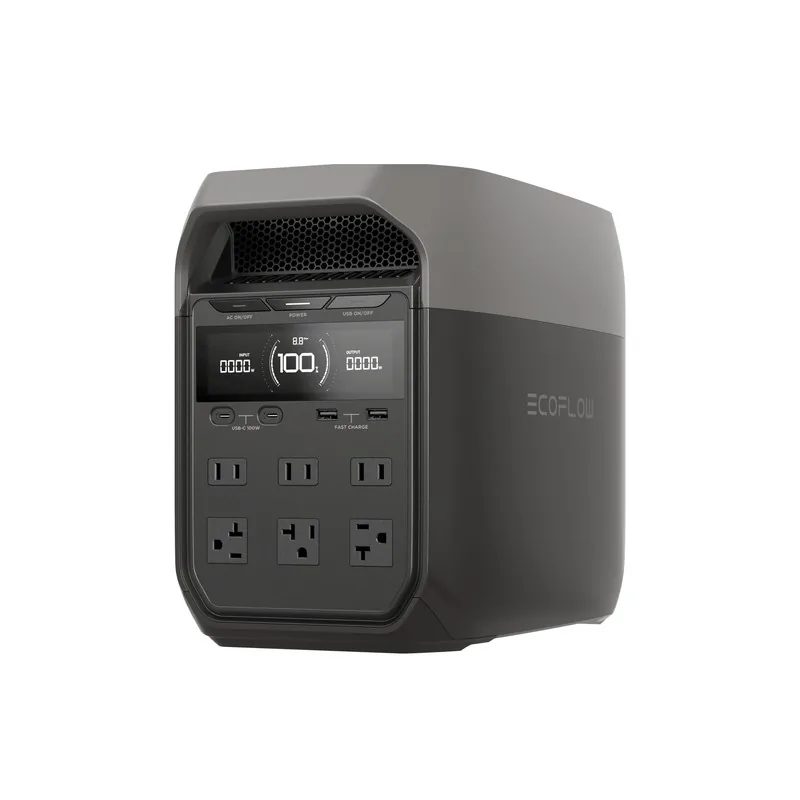
1,024 Wh · 1,800 W rated AC · up to 500 W solar · 27.6 lb (EcoFlow)
This is the box we point most households to. It covers a night of fridge, router, phones and lights, and it switches over fast enough that the Wi-Fi usually stays up when the grid drops.
The part that makes it a good first buy: you can clip on an EcoFlow extra battery later if one night turns out not to be enough.
Who it’s for: Families who want one dependable box for the essentials, with room to grow.
Who should skip it: Anyone who wants to run a microwave and coffee maker back to back. The Anker SOLIX C1000 Gen 2 has more output in the same size class.
Cons: Heaviest of the 1 kWh boxes we like. Its boost mode only helps simple heating gadgets, so plan around the 1,800 W rating.
Verdict: Buy. The safest single purchase for an overnight outage.
Check price on AmazonCheck price at EcoFlow
Want more output instead? The Anker SOLIX C1000 Gen 2 has the same 1,024 Wh tank with 2,000 W rated AC and up to 600 W of solar (Anker). It can’t take an add-on battery.
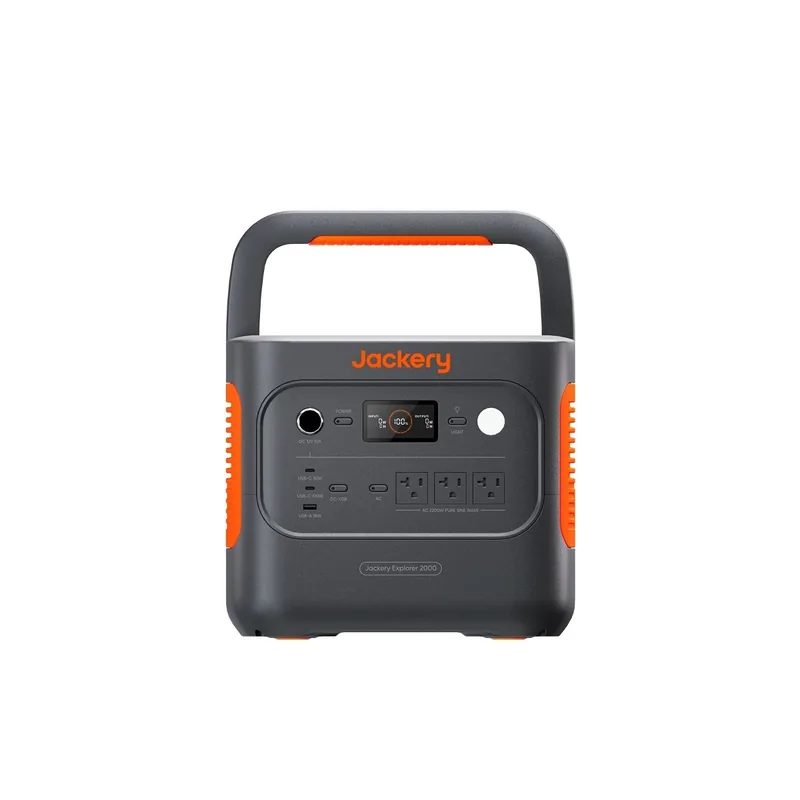
Jackery Explorer 2000 v2
2,042 Wh · 2,200 W rated AC · up to 400 W solar · 39.5 lb (Jackery)
Twice the tank of the 1 kWh boxes, which is what turns “we made it through the night” into “we made it to Sunday.” It runs quietly, and Jackery rates its backup switchover at 20 ms, which is fine for a router.
It makes the most sense if you expect to recharge from the wall or a friend’s house between outages, because its solar input is modest for its size.
Who it’s for: Households that want a full day or two of essentials without thinking about solar.
Who should skip it: Anyone planning to lean on solar. The BLUETTI below takes far more panel power.
Cons: About 40 lb. The solar plug is Jackery’s own, so other brands’ panels need an adapter.
Verdict: Buy. The easiest two-day box if wall charging is your plan.
BLUETTI Elite 200 V2 + BLUETTI 350W panel
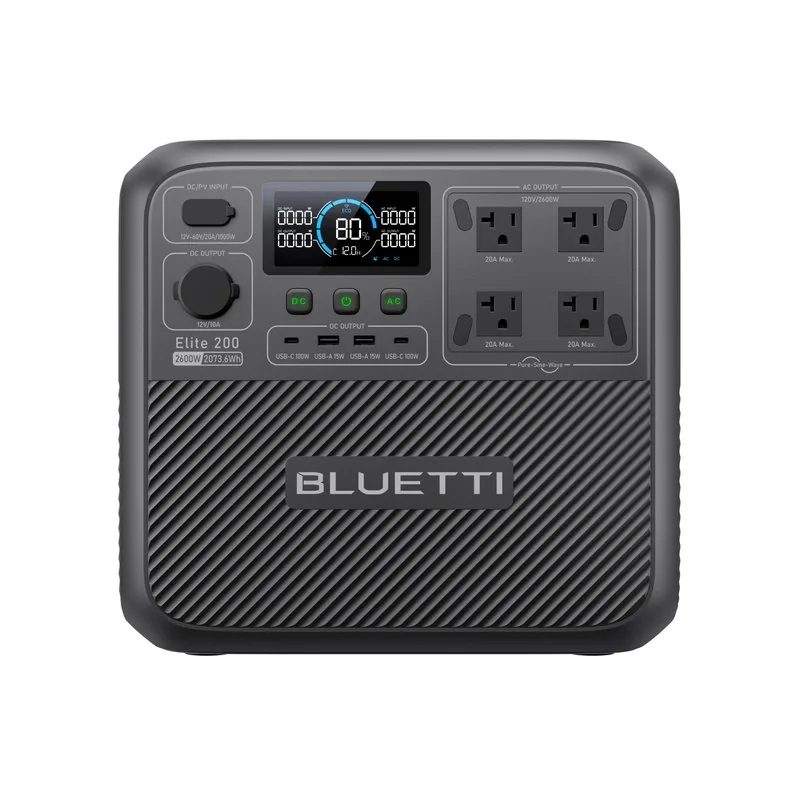
2,073.6 Wh · 2,600 W rated AC · up to 1,000 W solar · 44.5 lb (BLUETTI). Panel: 350 W, 46.5 V open-circuit, MC4 (BLUETTI)
If the outage might stretch past two days, the answer is solar, and this station takes more of it than anything else on this page. One 350 W panel on a sunny day puts back a real share of what the fridge used overnight.
BLUETTI names the Elite 200 V2 as a match for the 350 W panel, which takes the guesswork out of the pairing.
Who it’s for: People in places where outages run long, or anyone who needs overnight power for a CPAP night after night.
Who should skip it: Anyone who needs to carry it. At 44.5 lb it lives in one room.
Cons: Heavy, and the panel adds about 30 lb more. BLUETTI’s panels showed as pre-order on Amazon when we checked, so the link goes to BLUETTI’s own store.
Verdict: Buy from BLUETTI. The kit for long outages, if you have a sunny spot to set the panel.
Have an MC4 panel and a station with an XT60 solar port? A 10 ft, 12 AWG MC4-to-XT60 cable bridges the gap. Check your station’s port first, since some need their own brand’s cable.
Check the MC4-to-XT60 cable on Amazon
More cables and add-ons are on our power station accessories page, and every panel we recommend is on the best portable solar panels guide.
Ready to pick your station?
These two guides go deeper than this page: every current model side by side, with a Buy or Skip for each.
Compare all picksBest Solar Generators and Power Stations (2026) Fridge, CPAP and multi-day kitsBest Solar Generator for Home BackupFree: the Outage Prep Checklist (PDF)
Two printable pages: water, food, light, medical, power, comms, fridge, and cold or heat, plus what to do in the first 10 minutes and the gear we’d buy. Pop in your email and we’ll send it over. Kit will ask you to confirm first.
Or download the checklist directly (PDF). No email needed.
Fridge, cold and heat: the rules worth taping up
These come from Ready.gov and FoodSafety.gov, and they’re the ones people forget at 2 a.m.
- A closed fridge keeps food cold for about 4 hours. A full freezer holds about 48 hours, or about 24 if it’s half full.
- Food that sat at 40°F or warmer for more than 2 hours goes in the trash. When in doubt, throw it out, and never taste-test.
- Gas generators, camp stoves and charcoal grills stay outside, at least 20 feet from windows, doors and an attached garage. A battery station has no exhaust, so it can sit in the kitchen.
- Never heat the house with a gas oven or stovetop. Put battery-backed carbon monoxide alarms on every level.
- When it’s very hot or very cold, the right move is often a community cooling or warming center. Your county lists them.
- Unplug electronics when the power drops. Power can come back with a surge.
Medical devices and medicines
If anyone in your house relies on a CPAP, oxygen concentrator, nebulizer or medicine that needs a fridge, this part of the plan matters most. We can help with the battery side; the medical side belongs to your doctor and the device maker.
- Ask your doctor or the device maker for a power-outage plan, and how long a refrigerated medicine stays good once it warms up.
- Look up the device’s real watts in its manual. A CPAP with a heated humidifier or heated tube can draw several times what the blower alone does.
- Run the device on your station for one full night before you need it, so you know where you stand.
- Ask your utility whether it keeps a list of customers who depend on powered medical equipment.
- Keep a week of daily medicines on hand, with copies of prescriptions.
This is general preparedness information, not medical advice. Check with your doctor or the device maker about your own equipment.
Light and staying in touch
A dead flashlight is the most common outage surprise. Give every person their own light and keep it in the same drawer. Our sister site has picks for the best flashlight for a power outage, a guide to headlamps that leave your hands free, and a walk-through on how to build a full flashlight kit.
For news, a battery or hand-crank radio works when cell service is spotty, and a NOAA Weather Radio with tone alert will wake you for warnings. Charge phones and power banks from the wall before the storm, so your station doesn’t have to do that job later. Our note on charging the station before the storm has the timing.
FAQ
What should be in a power outage kit?
Water, food that needs no fridge, a light for each person, a week of medicines, a charged power source, a radio, and a way to keep the fridge cold longer. The free PDF on this page lists it all on two pages.
What size power station do I need for an outage?
For one night of fridge, router, phones and lights, look at about 1 kWh. For a day or two, about 2 kWh, or 1 kWh plus a solar panel. Use the size calculator with your own appliance watts to be sure.
Can I run a power station indoors?
Yes. Battery power stations make no exhaust, so they are fine inside. Gas generators are the opposite: they belong outside, 20 feet or more from the house.
How long will my fridge stay cold without power?
About 4 hours with the door shut, according to FoodSafety.gov. A full freezer holds about 48 hours. A thermometer inside each takes the guessing out of it.
What happens after I sign up?
Kit sends a quick confirmation email first. Once you confirm, the checklist link arrives. We may also send the occasional practical outage or solar tip, and every email has an unsubscribe link. The direct PDF link works with no email at all.
Keep going
- Best Solar Generators and Power Stations (2026): every current pick compared
- Best Solar Generator for Home Backup: fridge, CPAP and multi-day kits
- Portable Power Station Size Calculator: your loads, your numbers
- Best Portable Solar Panels: what pairs with which station
- Power station accessories: cables, batteries and add-ons
Where the facts come from: Ready.gov Build a Kit, Ready.gov Power Outages and FoodSafety.gov. Station and panel specs are from EcoFlow, Anker, Jackery and BLUETTI. Stock checked on Amazon and the makers’ stores on Nov 19, 2026; re-check before you buy. Wiring a station into your home’s circuits is a job for a licensed electrician with a transfer switch or inlet.