Buy this one first
Iron Forge 25 ft 12/3 lighted extension cord
A thin household cord is the weak spot in a lot of outage setups. This heavy 12-gauge one lets the station sit out in the open while the fridge stays put. Why this cord
✓ In stock on Amazon when we checked Nov 20, 2026
Check the 25 ft cord on Amazon
Affiliate links: we may earn a commission, and you pay the same.
Disclosure: As an Amazon Associate I earn from qualifying purchases. I also earn a commission from some other retailers, including BLUETTI and EcoFlow (through CJ) and Anker. You pay the same.
A portable power station is only half of an outage plan. The other half is the small stuff: a cord long enough to reach the fridge, light for the hallway, a way to see what your devices actually pull. Most of it is cheap. Forgetting it is what makes the first dark night frustrating.
Everything with a buy button below could be ordered when we checked on Nov 19, 2026. If you haven’t picked a station yet, start with the power kit quiz or the size calculator, then come back here.
The short list
| Accessory | What it solves | Who needs it | Where to get it |
|---|---|---|---|
| Inlet box or transfer switch | Feeding house circuits safely | Anyone who wants to power wired-in circuits | Licensed electrician |
| 25 ft 12/3 outdoor extension cord | Reaching the fridge from where the station sits | Most homes | Amazon |
| 6-outlet surge protector | The wall side: charging in storms, gear when the grid comes back | Most homes | Amazon |
| Rechargeable lantern | Room light without draining the station | Everyone | Amazon |
| Plug-in watt meter | Learning what your stuff really draws | Everyone, before an outage | Amazon |
| MC4-to-XT60 cable, 10 ft or 2 ft | Getting panel power to the station | Stations with an XT60 solar input | Amazon |
| Expansion battery | More runtime from the same station | Original Anker C1000 and EcoFlow DELTA 3 owners | Amazon or EcoFlow |
| Hook-and-loop cable ties | Keeping cords out from underfoot | Everyone | Amazon |
Getting power into the house safely
Most people run a cord from the station to the fridge and a power strip, and that’s fine. If you’d rather power the furnace fan, a well pump or a few wired-in lights, there are only two safe ways to do it.
- A power inlet box with an interlock. An outdoor-rated inlet on the wall, wired to your panel with a breaker interlock so the house can’t be fed from the grid and the station at the same time.
- A manual transfer switch. A small subpanel for the circuits you pick, with a switch that flips them from grid to backup.
Both have to be installed by a licensed electrician, and many areas need a permit. Check that your station’s output and plug match what the electrician installs. Ask about this before the storm season, since electricians get booked solid once one is in the forecast.
Never backfeed. Don’t plug a station or generator into a wall outlet to power the house, and never use a double-male “suicide” cord. It can energize the lines outside and kill a utility worker, and it can start a fire in your walls.
Cords and surge protection
Iron Forge 25 ft 12/3 lighted extension cord
Your station shouldn’t sit wedged behind the fridge. It needs air around the vents, and you want to see its screen. A 25 foot cord lets it sit in the open while the fridge stays put.
Go thicker than you think. This one is 12 gauge with three wires and a lighted end so you can see it’s live. It’s rated 15 A and 1,875 W at 125 V, which covers anything a portable station can push. The SJTW jacket is made for outdoor use, and it’s UL listed.
Get it if: You need to reach a fridge, a sump pump or a freezer in the garage.
Skip it if: Everything you power sits right next to the station.
Verdict: Buy. A thin household cord is the weak link in a lot of outage setups.
Tripp Lite TR-6 surge protector
Here’s when you actually need one. Most stations protect their own outlets. They shut off if you overload them. A separate surge protector earns its keep on the wall side: while the station charges from a wall outlet during a storm, and for your TV and computer when the grid comes back.
The TR-6 has six outlets, a 6 ft cord, a 2,420 joule rating and UL 1449 listing. It’s a plain, no-frills strip.
If you want to plug a strip into the station’s own AC outlets, check the station’s manual first for what it allows.
Get it if: You charge from the wall during storms, or you want one strip that can handle a few devices.
Skip it if: Your electronics already sit on good surge strips.
Verdict: Buy one for the charging outlet. It’s cheap protection for a pricey battery.
Light
Goal Zero Lighthouse 600 lantern
Running lamps off the station works, but a lantern you can carry room to room is handier. It also saves the station’s capacity for the fridge.
The Lighthouse 600 puts out up to 600 lumens and charges from USB, a small solar panel or its own hand crank. It has a 5,200 mAh battery and weighs about 1.1 lb. You can also charge a phone off it in a pinch.
Get it if: You want one light the whole family can share.
Skip it if: You already own good rechargeable lanterns.
Verdict: Buy. The hand crank is the backup to your backup.
For flashlights and headlamps, our sister site has done the testing. Start with the best flashlights for a power outage and best headlamps, or use their checklist to build a full flashlight kit.
What about fans?
We don’t have a fan pick right now. The rechargeable and DC fans we looked at were out of stock or hard to verify. A regular box fan you already own runs fine on a station. Check its label for watts, then put that number in the calculator. We use 55 W as a starting guess.
Know your watts
P3 Kill A Watt EZ (P4460) watt meter
Guessing is how people end up with a station that’s too small. Plug this into the wall, plug your fridge or CPAP into it, and it shows the real watts. Leave it plugged in for a day and you’ll see the kWh used over that time, which is the number that sizes a battery.
Do this on a normal day, before an outage. A fridge’s label watts and its actual daily use are very different numbers.
Get it if: You want to size a station from your own appliances instead of averages.
Skip it if: You only plan to charge phones and run lights.
Verdict: Buy. It’s the cheapest way to avoid buying the wrong station.
Solar cables
Before you order any cable, look at the label beside your station’s solar input and name the plug: MC4, XT60, XT60i or Jackery’s DC8020. Watts don’t matter if it won’t plug in. Our connector charts and the Wrong Plug, Right Watts guide show which is which.
10 ft MC4-to-XT60 cable (12 AWG)
Panels want full sun. Stations don’t, since heat slows charging. Ten feet of cable lets the panel sit out on the lawn while the station stays in the shade of the porch. The 12 AWG wire loses less over that run than the skinny leads in budget kits.
Get it if: Your station has a true XT60 solar port and your panel ends in MC4.
Skip it if: You have a Jackery (DC8020) or a station that wants XT60i specifically.
Verdict: Buy if your port is XT60. It’s a generic brand from a third-party seller, shipped by Amazon.
2 ft MC4-to-XT60 cable (12 AWG)
If your panel’s MC4 leads already reach the station, you only need the last bit changed over to XT60. This short adapter does that without a coil of spare cable on the floor.
Get it if: Your panel leads are long enough and you just need the right plug.
Skip it if: You need distance. Get the 10 ft version.
Verdict: Buy if your port is XT60. Measure first, because two feet goes fast.
Need a panel? Most brand folding panels were sold out or on preorder when we checked. Our portable solar panel guide tracks the ones that ship now.
More battery
Expansion batteries fit one brand and usually only certain models. The Anker SOLIX C1000 Gen 2 can’t take one at all. Before you buy, ask yourself whether a second, separate station would do more for you. Two boxes in two rooms often beats one big stack.
Anker SOLIX BP1000 expansion battery
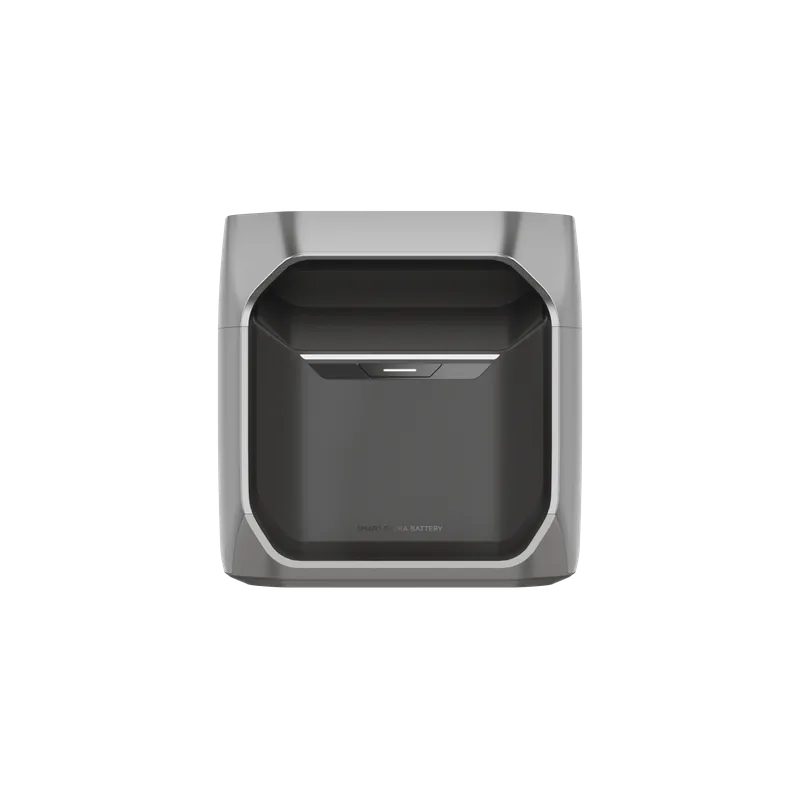
This snaps onto the original Anker SOLIX C1000 and roughly doubles its capacity. Each piece stays light enough to carry on its own. If you own a first-generation C1000, it’s the simplest way to stretch it.
Get it if: You own the original Anker SOLIX C1000. The original was also in stock on Amazon, so you could buy the pair.
Skip it if: You own the C1000 Gen 2. It doesn’t work with this battery.
Verdict: Buy for an original C1000. Amazon lists it as non-returnable because of battery shipping rules, so double-check the model name.
Check BP1000 price on Amazon Check C1000 price on Amazon
EcoFlow DELTA 3 with Extra Battery
The DELTA 3 is a 1,024 Wh station that can grow. EcoFlow sells it bundled with the matching extra battery, which gets you to about 2 kWh in two pieces you can lift one at a time. The bundle was available on EcoFlow’s own store when we checked.
Get it if: You’re buying new and want about 2 kWh without a single 40-plus lb box.
Skip it if: You already own another brand. It only works with EcoFlow’s DELTA family.
Verdict: Buy from EcoFlow. Check their compatibility list before buying the battery alone later.
Cable ties
VELCRO Brand One-Wrap ties, 8 in, 100 pack
An outage turns a living room into a tangle of cords. These reusable hook-and-loop straps bundle a cord, hold it to a table leg and come off again when the power’s back. A hundred of them will last for years.
Get it if: You’ll run more than one cord across a floor.
Skip it if: You already have a drawer full of them.
Verdict: Buy. People in socks trip over cords in the dark.
If someone in the house relies on medical equipment
- Write down the device’s watts from its label or power adapter. Then run the calculator’s medical devices preset with that number.
- Plan for more runtime than you think you need, and keep the station charged to full during storm season.
- Test it before you need it. Run the device off the station for a night while the power’s still on.
- Many CPAP makers sell DC cords that run the machine without the station’s AC inverter. Ask about one for your model.
- Register with your utility’s medical-needs list if it has one, and have a plan B for a longer outage.
Check with your doctor or the device maker before you rely on a battery for any medical equipment. They know what your device needs. We don’t.
The complete outage kit
Here’s how it fits together. Pick the kit that matches what you need to keep running, then add the cords and light.
Starter kit: phones, lights and an evening of Wi-Fi
For short outages and small loads. It all fits in one tote. By our estimate it runs a typical router and modem for around 11 hours.
- Station: BLUETTI Elite 30 V2 (288 Wh, 600 W, 9.5 lb)
- Light: Goal Zero Lighthouse 600 lantern
- Watt meter: Kill A Watt EZ, to check your router and modem
- Ties: VELCRO One-Wrap
Fridge kit: cold food overnight, refilled by solar
For a fridge, Wi-Fi and lights. On our estimates a 1 kWh station runs a fridge plus Wi-Fi for roughly half a day, and the panels top it back up when the sun is out.
- Station + solar: EcoFlow DELTA 3 with two 100 W rigid panels (EcoFlow bundle; see our DELTA 3 review)
- Cord: Iron Forge 25 ft 12/3
- Surge: Tripp Lite TR-6 for the charging outlet
- Watt meter: Kill A Watt EZ
- Light: Goal Zero Lighthouse 600
- Ties: VELCRO One-Wrap
Check the DELTA 3 + panels at EcoFlow Check the cord on Amazon Check the TR-6 on Amazon
Need more than one day? Look at the 2 kWh stations in our best solar generators guide, or add the DELTA 3 Extra Battery above.
Covers and stands
We aren’t linking a cover. Fit changes from model to model, and we haven’t found listings we trust. If you get one, buy it by your exact model name and keep the vents clear while charging. Think of it as dust and splash protection, not rain gear.
For panels, the built-in kickstand is enough. Weigh it down when it’s windy, and turn it toward the sun a couple of times a day.
What changed
Nov 19, 2026 (evening): New name and a wider scope. We added safe house hookups, cords, surge protection, lighting, a watt meter, cable ties, a medical section and two outage kits. The BLUETTI 200W panel moved to preorder, so it’s off this page.