Best overall on this list
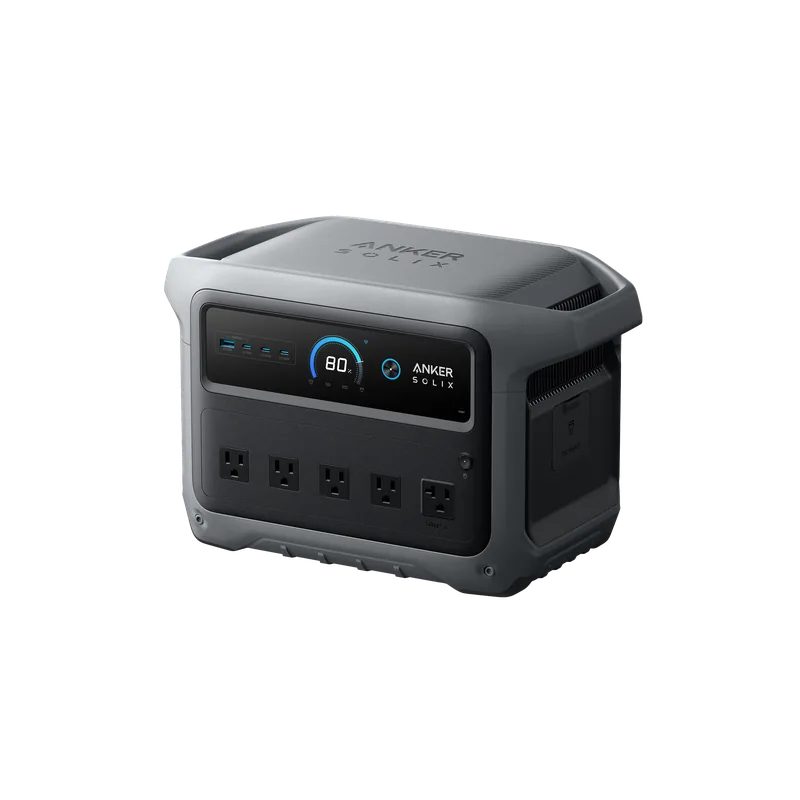
Anker SOLIX C1000 Gen 2
The strongest box here. With 2,000 W of output, a drip coffee maker is usually no problem, and it refills off the wall in under an hour on fast charge. Full review
✓ Available to order on Amazon when we checked Nov 20, 2026
Check C1000 Gen 2 price on AmazonCheck price at Anker
Affiliate links: we may earn a commission, and you pay the same.
Disclosure: As an Amazon Associate I earn from qualifying purchases. I also earn a commission from some other retailers, including BLUETTI and EcoFlow (through CJ). You pay the same.
The power blinks, the fridge goes quiet, and somebody asks where the flashlight is. What you actually need in that moment is small: phones charged, the Wi-Fi up, a lamp on, maybe a CPAP through the night.
You can cover that for under $500. Prices have shifted a lot this fall, though, and two boxes that used to be on this list are gone. One isn’t sold on Amazon anymore, and the other only takes preorders right now at a price above our cap. So we rebuilt the list around five portable power stations you can actually order today. (Search engines call these “solar generators.” Same thing. The solar part is a panel you add later.)
Quick translation before we start: Wh is how much energy the battery holds. W is how much it can push out at once. Too few Wh and you run dry overnight. Too few W and the coffee maker trips it off.
- Quick picks
- Comparison table
- Anker SOLIX C1000 Gen 2
- EcoFlow DELTA 3 Classic
- DJI Power 1000 V2
- BLUETTI Elite 30 V2
- EcoFlow RIVER 3
- How to pick the right size
- FAQ
- Where the numbers come from
Shopping during the holiday sales? Our Black Friday power station deals guide covers when the real discounts tend to land and how to spot a padded “was” price.
Quick picks
- Best overall: Anker SOLIX C1000 Gen 2. 1,024 Wh and 2,000 W, the most muscle you’ll find at this price. Buy.
- Best value for a 1 kWh box: EcoFlow DELTA 3 Classic. Same capacity for less money, and it refills fast off the wall. Buy.
- Most output for the money: DJI Power 1000 V2. 2,600 W steady, but solar needs an extra adapter. Buy if you’re charging from the wall.
- Best small, cheap backup: BLUETTI Elite 30 V2. 288 Wh and 600 W in a 9.5 lb box. Buy.
- Tiny kit or gift only: EcoFlow RIVER 3. Fine for phones and a router, but the BLUETTI does more for similar money. Skip for most people.
No price cap? Bigger boxes are in our main guide: Best Solar Generators and Portable Power Stations (2026).
Comparison table
“Rated” is what the station can run all day. Boost modes like X-Boost or Power Lifting only help simple heating gadgets and aren’t the same thing. Plan around the rated number.
| Model | Capacity | Rated AC | Peak or boost | Solar input | Weight | Price check (Nov 19, 2026) | Verdict |
|---|---|---|---|---|---|---|---|
| Anker SOLIX C1000 Gen 2 | 1,024 Wh | 2,000 W | 3,000 W peak | 600 W | 24.9 lb | Under $500 on Amazon | Buy |
| EcoFlow DELTA 3 Classic | 1,024 Wh | 1,800 W | 3,600 W surge; X-Boost 2,600 W | 500 W | Check the listing | $459 at EcoFlow | Buy |
| DJI Power 1000 V2 | 1,024 Wh | 2,600 W | Check the listing | Needs DJI’s MPPT adapter (sold separately) | About 31 lb (14.2 kg) | Under $400 on Amazon | Buy (wall charging) |
| BLUETTI Elite 30 V2 | 288 Wh | 600 W | Power Lifting 1,500 W | 200 W | About 9.5 lb (4.3 kg) | $299.99 at BLUETTI | Buy |
| EcoFlow RIVER 3 | 245 Wh | 300 W | X-Boost 600 W | Check before buying | Check the listing | Around $300 on Amazon | Skip for most |
Store prices are what the maker’s own U.S. store showed when we checked on Nov 19, 2026. Amazon prices change too often to print, so the table gives a range and the buttons show today’s price.
Best overall: Anker SOLIX C1000 Gen 2
If you’re buying one box and want it to handle a real morning, start here. Two thousand watts means a drip coffee maker or a small microwave is usually fine (check the label on yours), and 1,024 Wh will carry a router, phones and a couple of lamps well into the next day.
Recharging is the other big win. Anker rates it at a full charge in 49 minutes off the wall once you switch on the fast mode in the app. That matters when a storm warning gives you an afternoon, not a weekend. It also takes up to 600 W of solar and switches over in about 10 ms if the grid drops, so a modem plugged into it usually won’t even reboot.
Who it’s for: Households that want one do-it-all battery for outages, with enough punch for a kitchen appliance or two.
Who should skip it: Anyone who wants to add batteries later. Anker built Gen 2 without an expansion port to keep it lighter, so 1,024 Wh is the ceiling.
Cons: No expansion. Anker lists charging at 32°F to 104°F, so in a cold garage you’ll want to bring it inside to recharge. At 24.9 lb it’s a two-hand carry up the stairs.
Verdict: Buy. It’s the strongest box on this list and it usually sits just under the $500 line.
Check price on Amazon · Check price at Anker
Best value 1 kWh: EcoFlow DELTA 3 Classic
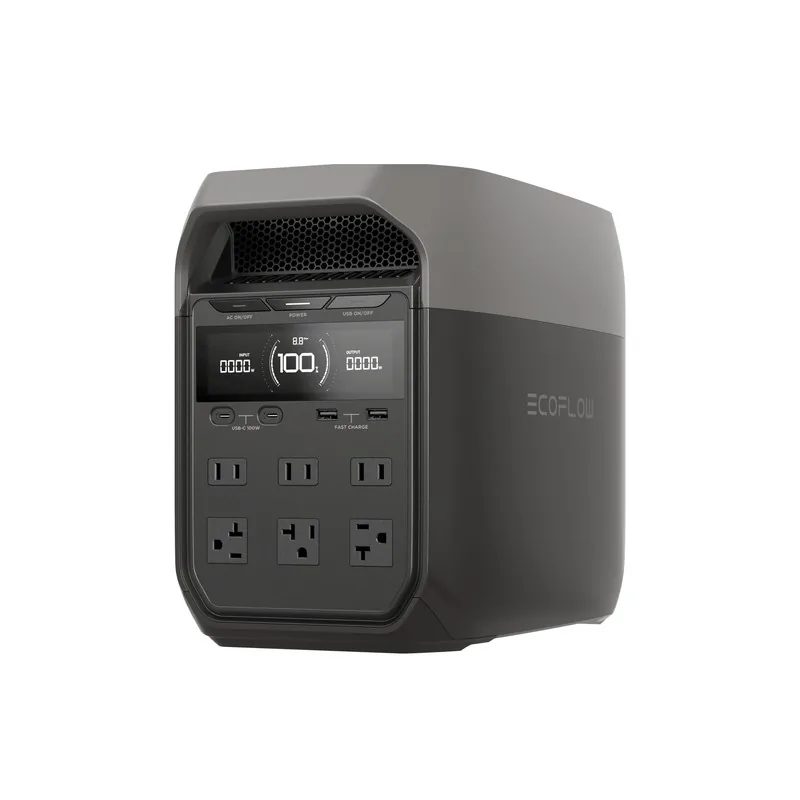
Same 1,024 Wh as the Anker for less money. EcoFlow’s own store had it at $459 when we checked on Nov 19, 2026, and Amazon was in the same neighborhood. You give up some steady output (1,800 W instead of 2,000 W), which most outage kits never touch anyway.
The reason to pick it is speed and the app. It goes from empty to 80% in about 45 minutes on wall power, and EcoFlow’s Storm Guard mode in the app switches it into backup mode on its own before severe weather hits. If you tend to forget about the battery until the wind picks up, that’s a handy safety net. Switchover is 10 ms, and it takes up to 500 W of solar.
Who it’s for: Folks who want a full-size outage battery at the lowest price on this list and like the idea of the app handling storm prep.
Who should skip it: Anyone who’ll want more capacity later. Look up EcoFlow’s extra-battery compatibility for this exact model before you buy rather than assuming it.
Cons: The “5-year warranty” is three years standard plus two more after you register in the EcoFlow app, so do that the day it shows up. The X-Boost 2,600 W number is for heaters and kettles running a little slower, not true extra power.
Verdict: Buy. For most homes this is the smartest dollar-per-Wh pick under $500.
Check price on Amazon · Check price at EcoFlow
Most output for the money: DJI Power 1000 V2
Yes, the drone company. This one surprised us on price. DJI’s own store lists it at $699 and shows it sold out, but Amazon had it in stock for under $400 when we checked on Nov 19, 2026. For that you get 1,024 Wh and 2,600 W of steady output, the most on this page.
It’s also quiet. DJI rates it as low as 26 dB while charging, which is about a whisper, so it won’t keep anyone up in a bedroom or a camper. Two 140 W USB-C ports will fast-charge a laptop without its brick. From empty it hits 80% in about 37 minutes on wall power.
Who it’s for: People who’ll charge from the wall before a storm and want the most watts per dollar, or anyone with DJI drones who’d use the fast drone charging.
Who should skip it: Anyone planning to plug a solar panel straight in. Solar and car charging both need a separate DJI adapter module, so price that in.
Cons: At roughly 31 lb it’s the heaviest box here. The warranty is three years by default, with two more after you connect it in the DJI Home app (DJI says the full five years applies to its own store, so check the terms if you buy elsewhere). That big price gap with DJI’s list price could close fast.
Verdict: Buy if you’ll charge from the wall. If solar is part of the plan from day one, the Anker or EcoFlow is simpler.
Best small, cheap backup: BLUETTI Elite 30 V2
Not everybody needs a 25 lb battery. If your list is phones, a router, a fan and a lamp, this little BLUETTI does it at about a quarter of the weight. BLUETTI’s store had it at $299.99 on Nov 19, 2026, and Amazon was lower that day.
It punches above its size on output: 600 W steady, double what a lot of 300 Wh boxes give you. Power Lifting lets simple heating loads like a small kettle run up to 1,500 W by giving them lower voltage, so expect them to work slower. It refills to 80% in about 45 minutes, takes up to 200 W of solar, and has a 10 ms UPS switchover for a modem or CPAP. Below 30 dB, it’s quiet enough for a nightstand.
Who it’s for: Apartments, a CPAP backup (check your machine’s watts), or a starter kit when money’s tight.
Who should skip it: Anyone hoping to keep a fridge cold. 288 Wh isn’t a fridge battery.
Cons: Small tank. Nine ports sounds like plenty, but count the AC outlets before you buy if you’ll plug in several wall chargers. It comes in a few colors on Amazon at different prices, so compare before you click buy.
Verdict: Buy. It’s the best of the small boxes right now.
Check price on Amazon · Check price at BLUETTI
Tiny kit or gift: EcoFlow RIVER 3
We’re including RIVER 3 because people search for it, and it’s a real, in-stock box from a good brand. Our honest take is that it’s outclassed right now. It holds 245 Wh and puts out 300 W (X-Boost stretches simple heating loads to 600 W). The BLUETTI above holds more and pushes twice the steady watts for about the same money.
Where it still makes sense: a small kit for a teen’s car, a camping gift, or a second box just for the router and phones. It’s compact, and EcoFlow quotes a sub-20 ms UPS switchover for small electronics.
Who it’s for: Someone who wants the smallest EcoFlow and only plans to charge phones, a router or a laptop.
Who should skip it: Pretty much anyone shopping for outage backup. Spend the same on the Elite 30 V2, or save up for a 1 kWh box.
Cons: 300 W rules out a coffee maker or hair dryer. RIVER 3 can’t take an add-on battery, so what you buy is what you get. Check the solar input before pairing it with a panel.
Verdict: Skip for most people. Buy it only for a small gift or a car kit.
How to pick the right size
Start with what has to stay on
Grab the chargers and labels for the stuff you’d hate to lose: modem, router, phone bricks, CPAP, a lamp, maybe a TV. Add up their watts if they’d all run at once. That total needs to fit under the station’s rated watts with room to spare.
Then guess the hours
Here’s a rough rule: hours ≈ Wh × 0.85 ÷ the watts you’re running. The 0.85 accounts for energy lost turning battery power into wall power. Cold weather, old batteries and devices that cycle on and off will all move the real number.
| Steady load | 288 Wh box | 1,024 Wh box |
|---|---|---|
| 15 W (modem and router) | about 16 hours | about 58 hours |
| 60 W (a CPAP with the humidifier off, check yours) | about 4 hours | about 14.5 hours |
| 100 W (a fan, two lamps, phone charging) | about 2.4 hours | about 8.7 hours |
That’s simple math from the rule above, not a test. Swap in your own device’s watts.
Want it done for you? Our portable power station size calculator adds up your devices and suggests a battery size.
Fridge on the list? Go 1 kWh
Fridges kick hard when the compressor starts and then cycle all day. The small boxes here can’t keep up. The 1,024 Wh models can buy you a good stretch. For the details, see How Long Will a Solar Generator Run a Fridge? and How Much Solar Generator Do I Need?
Plan how you’ll refill it
The wall is your best friend, so charge the station before the storm. Solar is your backup on day two if the sun shows up. Panels are sold separately and plugs vary by brand, so read Wrong Plug, Right Watts and match a panel with Best Portable Solar Panels for Power Stations.
Know where the ceiling is
Nothing under $500 runs central air, a well pump or a whole house. If that’s the goal, look at Best Solar Generator for Home Backup. Torn between brands? Jackery vs EcoFlow vs Bluetti vs Anker breaks them down.
FAQ
Will a $500 power station run my refrigerator?
The 1,024 Wh boxes here (Anker C1000 Gen 2, EcoFlow DELTA 3 Classic, DJI Power 1000 V2) have the output for most kitchen fridges, and how long they last depends on your fridge’s real draw. The 245 to 288 Wh boxes aren’t built for it. Our fridge runtime guide walks through it.
What happened to the Jackery and the RIVER 3 Plus?
They’re good boxes, but you can’t buy them new right now. Jackery’s store shows the Explorer 300 v2 sold out, and the RIVER 3 Plus isn’t available on Amazon. We’d rather list five you can order today than pad the page. We’ll add them back if they return at a fair price.
Is X-Boost or Power Lifting the same as surge?
No. Surge is a split-second burst that helps a motor start. X-Boost and Power Lifting let heating gadgets like a kettle run above the rated limit by feeding them lower voltage, so they heat slower. Neither one raises the rated output.
Can I charge one with solar during an outage?
Yes, with a panel, the right cable and some sun. None of these come with a panel. Check each station’s solar limit first, since extra panel watts past that limit just go to waste. The DJI needs its separate adapter module before any panel will work.
Is it safe to use indoors?
Yes. There’s no engine, so there are no fumes, which is the big difference from a gas generator that has to stay outside. Keep it dry, give it some airflow and follow the manual’s temperature range.
Where the numbers come from
This is a buyer’s guide built from each maker’s specs, not a hands-on lab test. Specs come from the brand’s own U.S. product or support pages, and store prices are what those stores showed on Nov 19, 2026. Amazon stock was checked the same day on each product’s own Amazon page. We don’t print exact Amazon prices because they change constantly, so use the buttons for today’s price.
- Anker SOLIX C1000 Gen 2: ankersolix.com/products/c1000-gen2
- EcoFlow DELTA 3 Classic: us.ecoflow.com/products/delta-3-classic-portable-power-station
- DJI Power 1000 V2: us.store.dji.com/products/dji-power-1000-v2
- BLUETTI Elite 30 V2: bluettipower.com/products/elite-30-v2-portable-power-station
- EcoFlow RIVER 3: EcoFlow US RIVER 3 support FAQ
Prices and stock move fast during sales and storm season. Take a quick look at the listing before you buy.
Disclosure: As an Amazon Associate I earn from qualifying purchases. I also earn a commission from some other retailers, including BLUETTI and EcoFlow (through CJ). You pay the same.