Our top pick
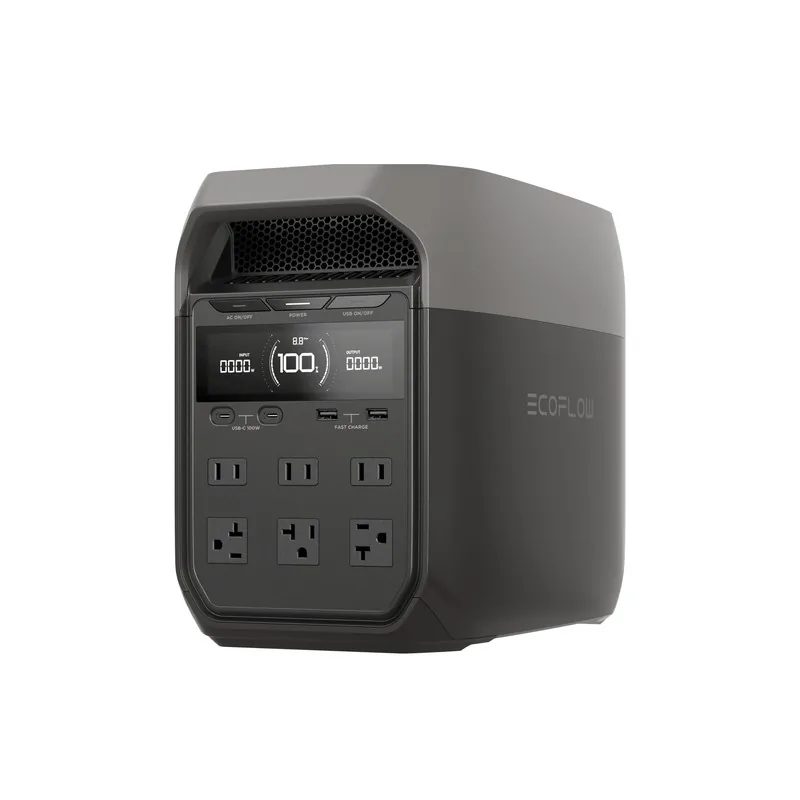
EcoFlow DELTA 3
The one we’d hand most families. It covers the fridge-and-router night now, and you can clip on a second battery later. Why it wins
✓ In stock on Amazon when we checked Nov 20, 2026
Check DELTA 3 price on AmazonCheck price at EcoFlow
Affiliate links: we may earn a commission, and you pay the same.
Disclosure: As an Amazon Associate I earn from qualifying purchases. I also earn a commission from some other retailers, including BLUETTI and EcoFlow (through CJ). You pay the same.
Most people shopping for a solar generator want one of two things. Either it’s a box that gets the family through a night without power, or it’s something bigger that keeps the fridge cold through a long outage. Those are different purchases, and the right one depends on what you plug in, not on the brand.
We rebuilt this list in November because the lineup had gone stale. One favorite sold out at its maker’s store, and another stopped shipping from Amazon until January. Every pick below can be ordered today, and each one gets a straight Buy or Skip.
A quick decoder: Wh is the size of the tank. W is how hard it can pour. A 1,000 Wh box running a 100 W load lasts roughly eight or nine hours once you account for inverter losses.
Quick picks
- EcoFlow DELTA 3: best all-rounder you can add batteries to later. Buy.
- Anker SOLIX C1000 Gen 2: the most output in a 1 kWh box. Buy.
- DJI Power 1000 V2: lots of watts for the money if you charge from the wall. Buy.
- BLUETTI Elite 200 V2: the big solar sponge for longer outages. Buy from BLUETTI.
- Jackery Explorer 2000 v2: about 2 kWh you can still carry. Buy.
- EcoFlow RIVER 3: small and cute, but outclassed. Skip for most.
Working with a budget? Our best portable power stations under $500 list covers the cheaper end. Shopping the November sales? The Black Friday power station guide shows how to tell a real markdown from a padded one.
Side-by-side comparison
“Rated AC” is what the box can run all day. Boost modes only help simple heating loads, so plan around the rated number.
| Model | Capacity | Rated AC | Solar input | Weight | Add batteries? | Price check (Nov 19, 2026) | Verdict |
|---|---|---|---|---|---|---|---|
| EcoFlow DELTA 3 | 1,024 Wh | 1,800 W | 500 W | 27.6 lb | Yes | $599 at EcoFlow | Buy |
| Anker SOLIX C1000 Gen 2 | 1,024 Wh | 2,000 W | 600 W | 24.9 lb | No | Under $500 on Amazon | Buy |
| DJI Power 1000 V2 | 1,024 Wh | 2,600 W | Needs DJI adapter | About 31 lb | Check before buying | Under $400 on Amazon | Buy (wall charging) |
| BLUETTI Elite 200 V2 | 2,073.6 Wh | 2,600 W | 1,000 W | 44.5 lb | No | $899 at BLUETTI | Buy (from BLUETTI) |
| Jackery Explorer 2000 v2 | 2,042 Wh | 2,200 W | 400 W | 39.5 lb | No | $999 at Jackery | Buy |
| EcoFlow RIVER 3 | 245 Wh | 300 W | 110 W | 7.8 lb | No | Around $300 on Amazon | Skip for most |
Store prices are what each maker’s U.S. store showed when we checked on Nov 19, 2026. Amazon prices move too often to print, so we give a range and the buttons show today’s price.
Best overall: EcoFlow DELTA 3
If you only buy one, this is the safest bet. It holds 1,024 Wh, runs 1,800 W steady, and it’s the only box on this page you can grow later by clipping on an EcoFlow extra battery. Buy the station now and add a second tank next year if you find yourself running short.
It refills from empty in about 56 minutes on wall power, takes up to 500 W of solar, and switches over in under 10 ms when the grid drops, so the router usually doesn’t blink. EcoFlow’s store had it at $599 when we checked on Nov 19, 2026.
Who it’s for: Families who want one dependable outage box for the router, phones, lights and a few hours of fridge, with room to expand.
Who should skip it: Anyone who needs serious kitchen power. If you want to run a microwave and a coffee maker back to back, the Anker below has more headroom.
Cons: At 27.6 lb it’s the heaviest of the 1 kWh boxes here. The extra battery that matches it was out of stock on Amazon when we looked, so check EcoFlow’s store if expansion is the reason you’re buying. X-Boost only helps heating gadgets.
Verdict: Buy. It’s the pick for most homes because it can grow with you.
Check price on Amazon · Check price at EcoFlow
Most output in a 1 kWh box: Anker SOLIX C1000 Gen 2
Same tank size as the DELTA 3, but it pushes 2,000 W steady and weighs a few pounds less. That extra muscle is what lets it handle a small microwave or a drip coffee maker without tripping. Check the label on yours first.
It’s also fast. Anker rates a full refill at 49 minutes off the wall with the app’s fast mode on, and it takes up to 600 W of solar. If a storm warning only gives you the afternoon, that matters.
Who it’s for: People who want the strongest 1 kWh box and know they won’t need more capacity.
Who should skip it: Anyone planning to add batteries. Gen 2 has no expansion port at all, and Anker’s older BP1000 add-on battery doesn’t fit it.
Cons: Sealed at 1,024 Wh. Anker lists charging at 32°F to 104°F, so recharge it inside in winter. It often sells for less than the DELTA 3 on Amazon, which also means its price jumps around.
Verdict: Buy. Pick this over the DELTA 3 if punch matters more than expansion.
Check price on Amazon · Check price at Anker
Best value for wall charging: DJI Power 1000 V2
This one replaced the Jackery Explorer 1000 v2, which was sold out at Jackery’s own store when we checked. DJI’s box holds the same 1,024 Wh and puts out 2,600 W steady, the most of any 1 kWh station here, and Amazon had it under $400 the day we looked.
It’s quiet, too. DJI rates it as low as 26 dB while charging, so it can sit in a bedroom without bugging anyone. Two 140 W USB-C ports run a laptop without its brick.
Who it’s for: Folks who’ll top it up from the wall before a storm and want the most output per dollar.
Who should skip it: Anyone who wants to plug a solar panel straight in. Solar and car charging both need DJI’s separate adapter, so add that to the price.
Cons: About 31 lb, the heaviest 1 kWh box on this page. The full five-year warranty needs the DJI Home app, and DJI ties it to its own store, so read the terms if you buy elsewhere. A price this far under DJI’s list could disappear quickly.
Verdict: Buy if you’ll charge from the wall. For solar on day one, get the DELTA 3 or the Anker instead.
Longest outages and most solar: BLUETTI Elite 200 V2
Twice the tank of the 1 kWh boxes at about 2,080 Wh, 2,600 W steady, and the biggest solar input on this page at 1,000 W. With enough panels in good sun, you can put back most of a day’s use before dinner. That’s what makes it a real multi-day outage tool.
One catch: Amazon’s listing wasn’t promising delivery until January when we checked, so we’ve pointed the button at BLUETTI’s own store, which had it in stock at $899 on Nov 19, 2026. BLUETTI rates the battery for 6,000+ cycles to 80%, the longest life claim here.
Who it’s for: Homes that lose power for a day or more and plan to recharge from a decent set of panels.
Who should skip it: Anyone who has to carry it far. At 44.5 lb it’s a two-hand lift, and stairs are a chore. It’s also sealed, so about 2 kWh is all you get.
Cons: Heavy. It’s 120 V only, so no well pump or central air. Panels are extra, and you’ll want two or more to make the most of the solar input.
Verdict: Buy, from BLUETTI’s store. It’s the best long-outage box here if you can lift it.
About 2 kWh you can still carry: Jackery Explorer 2000 v2
Want about 2 kWh in the lightest box you can get? Jackery fits 2,042 Wh and 2,200 W steady into 39.5 lb, five pounds less than the BLUETTI. That’s still heavy, but one adult can manage it from the garage to the kitchen.
Jackery’s store listed it at $999 when we checked on Nov 19, 2026, and Amazon showed it in stock. It’s simple to live with: few settings, a clear screen, and it switches to battery in under 20 ms.
Who it’s for: People who want a full day of fridge-and-router backup and value a lighter box over solar speed.
Who should skip it: Solar-heavy setups. It tops out at 400 W of solar input, less than half the BLUETTI.
Cons: Sealed at 2,042 Wh. Jackery rates the battery to 70% after 4,000 cycles, a lower bar than the 80% most rivals quote. Its solar plug is Jackery’s own, so check your panel’s connector or plan on an adapter.
Verdict: Buy. Best pick when weight matters more than solar.
Small and cheap: EcoFlow RIVER 3 (skip for most)
RIVER 3 is a nice little box at 7.8 lb, with 245 Wh and 300 W steady. It’ll keep phones, a router and a laptop going for an evening. EcoFlow quotes a switchover under 20 ms for small electronics.
Our problem is the competition. For about the same money, the BLUETTI Elite 30 V2 on our under-$500 list holds a bit more and runs twice the steady watts.
Who it’s for: A teen’s car kit, a camping gift, or a second box just for the Wi-Fi.
Who should skip it: Anyone expecting it to run a fridge or a CPAP all night. It can’t.
Cons: 300 W is a low ceiling. Solar tops out at 110 W. EcoFlow’s U.S. store no longer has a RIVER 3 product page, so Amazon is the place to buy it.
Verdict: Skip for most people. Buy it only as a small gift or a second box.
How to size one in five minutes
Write down what you’d actually plug in during an outage and how many hours a day each thing runs. Multiply watts by hours and add it up. Then add about a fifth on top, because turning battery power into wall power wastes some of it. That’s your daily Wh.
Here’s how that plays out. A 100 W load for eight hours is 800 Wh, which eats most of a 1 kWh box. The fridge is the big unknown: it cycles on and off, so the sticker watts tell you less than a plug-in meter would. If you can, meter yours for a day before you pick a size.
Want it done for you? Our How Much Solar Generator Do I Need? guide walks through fridge and CPAP math step by step.
Things nobody tells you until you own one
All of these are 120 V
None of these six can run a 240 V well pump, a dryer or central air. If that’s the job, you’re shopping for a home battery or a transfer-switch setup, not a portable box.
Panels cost extra
Every pick here is the station alone. Match the panel to the station’s solar input limit and plug type. Our portable solar panel guide covers which panels fit, and Wrong Plug, Right Watts sorts out the connectors. To see how many panels each of these stations can take in series or parallel, use our power station connectors and panel pairing guide.
Charge it before the storm
A full battery is worth more than a big one. Plug it in when the forecast turns, and top it up every few months if it sits in a closet. More on that in Charge the Station Before the Storm.
Battery life claims aren’t all the same
EcoFlow and Anker quote 4,000 cycles to 80%. Jackery quotes 4,000 to 70%. BLUETTI says 6,000+ to 80%. Those are different finish lines, so don’t compare the cycle number alone. For an outage box that gets used a few times a year, any of them will outlast your interest in it.
What changed in this update
Nov 19, 2026: Jackery Explorer 1000 v2 is out (sold out at Jackery’s store), and DJI Power 1000 V2 is in. BLUETTI Elite 200 V2 stays, but its button now goes to BLUETTI because Amazon was quoting January delivery. Prices are refreshed, and every pick has a verdict.
Where the numbers come from
Specs come from each maker: EcoFlow DELTA 3, Anker SOLIX C1000 Gen 2 user guide, DJI Power 1000 V2, BLUETTI Elite 200 V2, Jackery Explorer 2000 v2 and EcoFlow RIVER 3 support. Stock was checked on Amazon and the makers’ stores on Nov 19, 2026. Re-check the listing before you buy, because stock changes fast this time of year.