How Many Solar Panels Do I Need For a 2000 Sq Ft Home?
Short answer: about 15 to 24 panels of 400 W for an average-use home, depending on where you live. Square feet do not set the number; your kWh do. Here is the math.
Worked calculation
- Your use. The average U.S. home bought 863 kWh a month in 2024 (EIA Table 5A). 863 × 12 = 10,356 kWh a year. Use your own bill if you have it.
- Your sun. NREL PVWatts estimates what 1 kW of panels makes per year where you live. Our runs: Dallas 1,506 kWh, Phoenix 1,755, Chicago 1,308, Seattle 1,088.
- Losses. Those runs assume 14% system losses (PVWatts default: wiring, dirt, inverter and so on). That is an assumption; your installer’s model may differ.
- System size. 10,356 ÷ 1,506 = about 6.9 kW in Dallas.
- Panels. 6.9 kW ÷ 0.4 kW per panel = 17.2, so 18 panels of 400 W.
By region
| City | Sun-hours/day (PVWatts) | kWh per 1 kW per year | System for 10,356 kWh | 400 W panels |
|---|---|---|---|---|
| Phoenix | 6.54 | 1,755 | 5.9 kW | 15 |
| Dallas | 5.45 | 1,506 | 6.9 kW | 18 |
| Chicago | 4.51 | 1,308 | 7.9 kW | 20 |
| Seattle | 3.95 | 1,088 | 9.5 kW | 24 |
PVWatts v8 runs re-checked Oct 23, 2026 (same results as Oct 22): 1 kW, standard module, fixed roof mount, 20° tilt, facing south, 14% losses. 400 W is an example panel size; use the wattage on your quote. A Texas-average home (1,096 kWh/mo, EIA) in Dallas needs about 8.7 kW, or 22 panels. In Texas? See the best solar companies in Dallas.
What changes the count
- Roof direction and tilt. The runs above face south. East- or west-facing roofs make less per panel, so you need more.
- Shade. Trees and chimneys cut output; PVWatts lets you raise the losses figure to model it.
- Panel wattage. Bigger panels, fewer of them. Divide system kW by the panel’s kW.
- An EV, pool pump or electric heat. These add kWh, so they add panels. Use your real bill, not the average.
Roof space check: does it fit?
One example 400 W panel, the Qcells Q.PEAK DUO BLK ML-G10+, measures 74.0 × 41.1 inches (Qcells datasheet), about 21 square feet. So:
- 15 panels ≈ 317 sq ft
- 18 panels ≈ 380 sq ft
- 24 panels ≈ 507 sq ft
That is panel area only. Fire-code setbacks, vents and gaps between rows take more, and they vary by town, so your installer’s layout is the real test. A 2,000 sq ft house usually has more roof than that, but not all of it faces the sun.
FAQ
Does a 2,000 sq ft home always need the same number of panels?
No. Two 2,000 sq ft homes can use very different kWh. A gas furnace, an EV or a pool pump moves the number more than the floor plan.
What are sun-hours?
The day’s sunlight squeezed into hours of full-strength sun. PVWatts reports it as kWh per square meter per day: Dallas gets about 5.45.
What if I use bigger panels?
Fewer panels. Divide the system kW by the panel’s kW: 6.9 kW of 450 W panels is about 16 panels.
Will this cover 100% of my bill?
The math sizes the panels to make roughly your yearly kWh. Your bill also depends on your utility’s net metering rules and fixed charges.
More on the method: how many solar panels do I need.
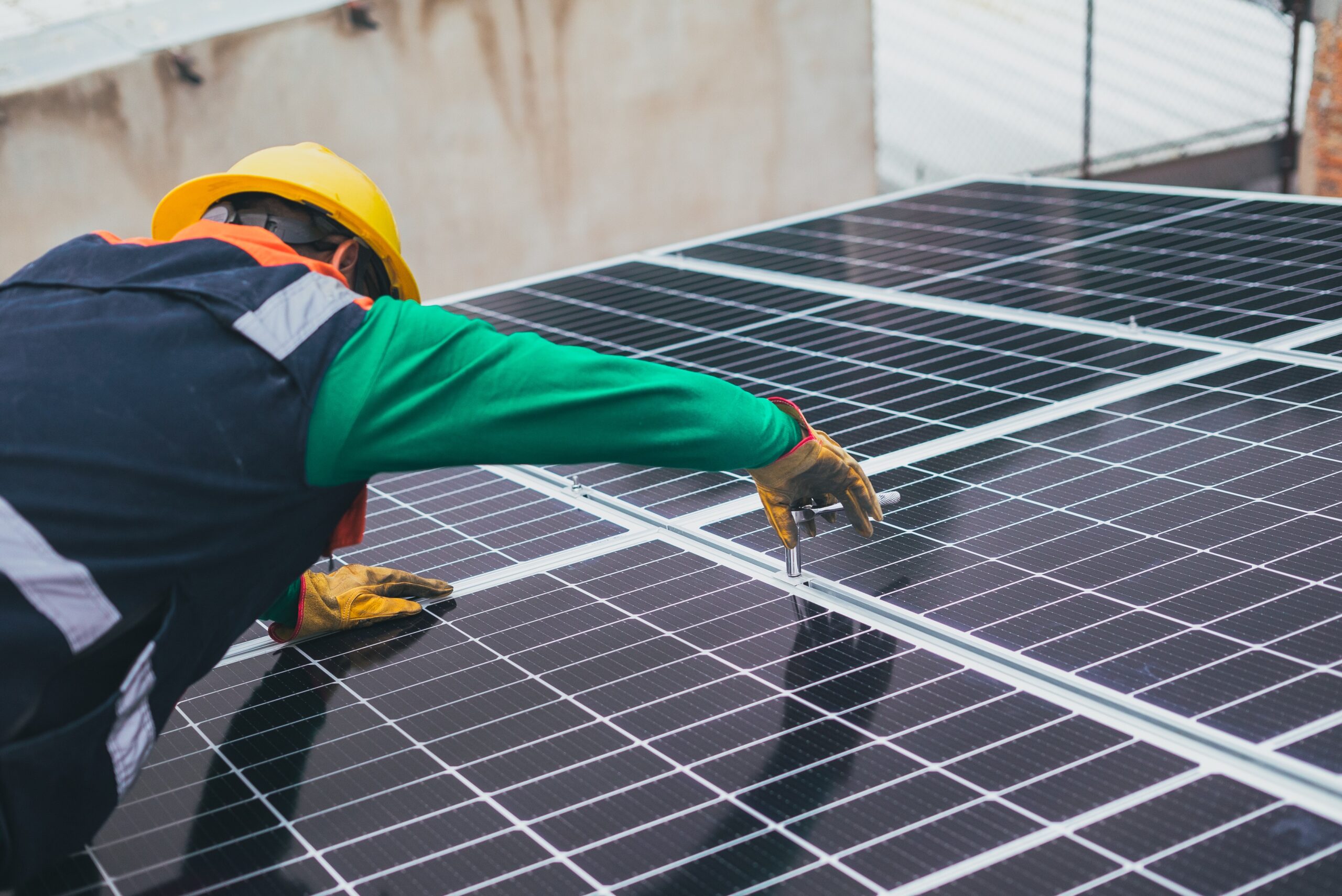
The amount of solar panels needed for your home depends on several factors, such as its energy usage and geographic location. To get an exact calculation, have a professional solar installer perform an analysis on your house. Alternatively, use a solar calculator to estimate system size and cost.
How Many Kilowatts Do You Use?
Your monthly energy usage can have a major impact on how many solar panels you require. Calculating this figure can be tricky due to factors like home size, location and what appliances are in your residence.
First, you should assess everything that consumes energy in your house. Take into account items like your water heater, air conditioner, electric appliances, lights and refrigerator to get an accurate measure of how much power is consumed each month and how many kilowatts are required to run them efficiently.
Second, check your utility bill to determine how much energy you consume daily. This information can be found under the kilowatt hours (kWh) section of your statement.
Third, you should factor in how kWh values fluctuate over time. Your usage may fluctuate throughout the day due to various factors like weather conditions.
Fourth, you should also take into account how much of your kWh value is consumed by appliances in your house. For instance, if your kitchen uses a lot of electricity for cooking, then you will require more kilowatts than if only one or two small appliances are present.
Finally, take into account the location of your roof and how many sunny days there are each year. The more sunshine-rich days your area experiences, the greater amounts of solar energy can be produced.
If your home is 2000 sq ft with plenty of sunshine and you want to save money on energy bills, installing a larger solar system could be the better option. Not only will you save more money than with a smaller system, but over time the investment in the bigger one will pay for itself.
For the actual number, use the worked calculation at the top of this page.