Can a Tesla Powerwall Run an Air Conditioner?
Short answer: yes, usually. One Powerwall 3 puts out up to 11.5 kW of continuous power and can start motor loads rated up to 185 LRA (locked-rotor amps), per Tesla’s Powerwall 3 datasheet. That covers the running watts of a typical 2- to 5-ton central AC. The real gate is the startup surge, so check the LRA on your outdoor unit’s label. Your AC does not care how cool the battery looks; it cares about amps.
AC size vs. Powerwall 3 limits
| AC size | Running / startup watts | Under 11.5 kW continuous? |
|---|---|---|
| 2 ton | 2,000–2,500 W / 3,500–4,500 W | Yes |
| 3 ton | 3,000–3,500 W / 5,000–6,000 W | Yes |
| 4 ton | 4,000–5,000 W / 6,500–8,000 W | Yes |
| 4 ton (48,000 BTU) | 6,500 W / 8,500 W | Yes |
| 5 ton (60,000 BTU) | 9,200 W / 11,900 W | Yes, with little room for the rest of the house |
Sources: 2-, 3- and 4-ton rows, Champion chart; BTU rows, Kohler sizing form. Wattages are generator makers’ typical figures, not Tesla’s. Your unit’s nameplate wins. Powerwall 3 limits: 11.5 kW continuous, 185 LRA load start, 13.5 kWh energy (datasheet). Checked Oct 23, 2026.
Startup surge: when you need a soft starter
A compressor gulps a burst of current for a split second as it starts. That burst is what the LRA number on the label describes. A soft starter ramps the start up more gently, so the burst is smaller. If your label’s LRA is at or under the Powerwall 3’s 185 LRA rating, you are usually fine without one. If it is over, ask your installer or HVAC tech about a soft starter, more Powerwall capacity, or leaving the AC off the backup circuit. We are not naming a brand: the right kit depends on your compressor.
How long will it run the AC?
Rough math: 13.5 kWh divided by the AC’s running watts. A 3-ton unit at 3,000–3,500 W running nonstop would use one Powerwall 3 in about 3.9–4.5 hours. A 2-ton at 2,000–2,500 W: about 5.4–6.8 hours. Real compressors cycle on and off, which stretches that; the fridge, lights and Wi-Fi share the same 13.5 kWh, which shrinks it. For the whole-house version of this math, see how long a Powerwall will power a house.
One Powerwall vs. two for whole-home AC
Each Powerwall 3 is rated 11.5 kW continuous and 13.5 kWh, and the datasheet allows up to 4 units in one system. A second unit mostly buys you hours: 27 kWh instead of 13.5. If you want the AC, the fridge and the rest of the house all running through a long outage, see how many Powerwalls you need.
FAQ
Can one Powerwall 3 run a 3-ton AC?
Usually. A 3-ton unit’s running watts (3,000–3,500 W on Champion’s chart) sit well under the 11.5 kW continuous rating. Confirm the LRA on the unit’s label is 185 or less.
What if my AC’s LRA is over 185?
Then one Powerwall 3 may not start it. Ask your installer about a soft starter, adding Powerwall capacity, or keeping the AC off the backup circuit.
Does Powerwall 3 need a separate inverter?
No. Tesla describes Powerwall 3 as a fully integrated solar and battery system, with the solar inverter built in (up to 20 kW DC of solar per the datasheet).
Will the AC run all night on battery?
Probably not alone. 13.5 kWh lasts a few hours of nonstop compressor time. Raise the thermostat a few degrees, pre-cool before sunset, or add capacity.
Where is the label with LRA?
On the outdoor condenser’s data plate. Look for “LRA” next to the compressor ratings. If you cannot find it, an electrician or HVAC tech can read it in a minute.
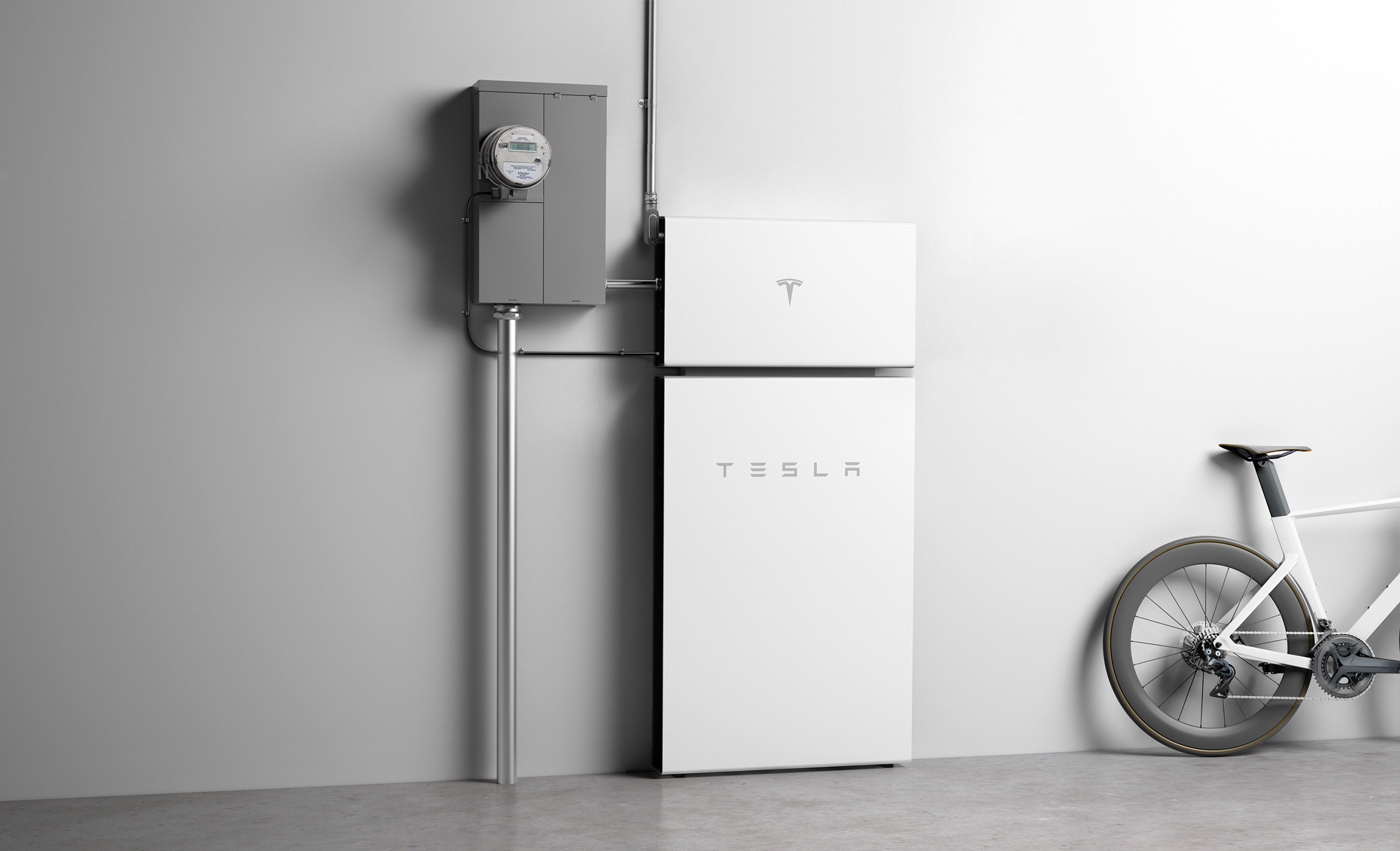
When you invest in a Tesla Powerwall, it can be combined with solar panels and stored excess electricity produced by the sun. This allows your home to utilize stored energy even when there’s no sunlight and may save additional money on its electricity bill. However, if your utility doesn’t purchase solar power at full retail rate or doesn’t offer Time of Use rates, then installing the Powerwall may not reduce any costs on your energy bills.
When selecting a battery, the type and capacity are all factors to consider. A lithium ion battery like the Tesla Powerwall 2 may be more costly than traditional lead acid batteries but offers more power and an extended lifespan.
Does the Tesla Powerwall increase my home’s value?
Yes, the Tesla Powerwall can add value to your property by cutting energy costs and providing peace of mind during power outages. Furthermore, it helps lower carbon footprint by using less electricity from the grid.
Does a Tesla Powerwall Work with My Current Air Conditioning Unit?
Yes, the Powerwall can back up your air conditioning unit if it’s currently installed. But first it needs to be charged; this may take some time so consider your budget and electrical demands when selecting the ideal battery system for you.
Can a Tesla Powerwall run my central air conditioning unit?
Often, yes. Check the LRA on your condenser label against Powerwall 3’s 185 LRA rating (see the table at the top), and have an electrician confirm the setup.
Does a Tesla Powerwall Need an Inverter?
No separate one for Powerwall 3. Tesla calls it a fully integrated solar and battery system with the inverter built in (see the FAQ above).
A Powerwall can also run appliances like fridges, washers and lights. While these are typically low amperage loads that can be backed up with one single Powerwall, you’ll need multiple ones in order to backup all of your household. Be sure to select the size of each Powerwall according to how big your appliances are.