Do Solar Panels Make Your House Hotter?
Short answer: no. Rooftop panels shade the roof, so less sun bakes the shingles above your ceiling. A UC San Diego study measured ceilings under panels up to 2.5 K (about 4.5°F) cooler than under bare roof on a clear day. Think of it as a very expensive beach umbrella that also makes electricity.
What the study found
- Daytime: ceilings under the panels were up to 2.5 K cooler than under the exposed roof (thermal camera, clear April day, San Diego).
- Night: reversed. The ceiling under the panels was warmer, because the panels act a little like insulation.
- Modeled for that building: 38% less annual cooling load (5.9 kWh per square meter), and no benefit or harm for the annual heating load.
Source: Dominguez, Kleissl & Luvall, “Effects of solar photovoltaic panels on roof heat transfer,” Solar Energy 85(9), 2244–2255 (2011), doi:10.1016/j.solener.2011.06.010 (free copy at eScholarship, UC San Diego). A 2.5 K difference equals 4.5°F. The study measured one building at UC San Diego, not a house, in one mild climate, so treat the numbers as an example, not a promise. Checked Oct 23, 2026.
Attic heat vs. living-space heat
The panels shade only the part of the roof they cover. Bare roof around them still heats the attic, and that heat can creep into rooms below. If a hot attic is your real problem, ventilation and insulation do more than panels. Our attic fan reviews compare options: QuietCool 40-watt, Natural Light SAF32B and Remington 20-watt.
Do panels lower cooling bills?
They can help a little, on top of the electricity they make. The study’s model found a 38% lower cooling load for the roof under the panels on that building. It did not measure a house’s AC bill, so we will not promise you a number. Your savings depend on your roof, insulation and climate.
FAQ
Do solar panels make the attic hotter?
No. The study above found the opposite during the day: shaded roof, cooler ceiling. Attic heat still comes from sun on unshaded roof, so ventilation matters.
Do the panels themselves get hot?
Yes. Panels warm up in the sun and lose a little output as they do; that is the temperature coefficient on the spec sheet. That heat mostly vents off the back, not into your house.
Why is it warmer at night under the panels?
The panels slow heat escaping from the roof to the night sky. The study found this did not change the yearly heating load.
Will panels lower my AC bill?
They can trim the cooling load by shading, on top of the electricity they make. The 38% figure is for one modeled building in San Diego; your house will differ.
Planning a system? Start with how many solar panels you need, or see how many panels a typical home needs.
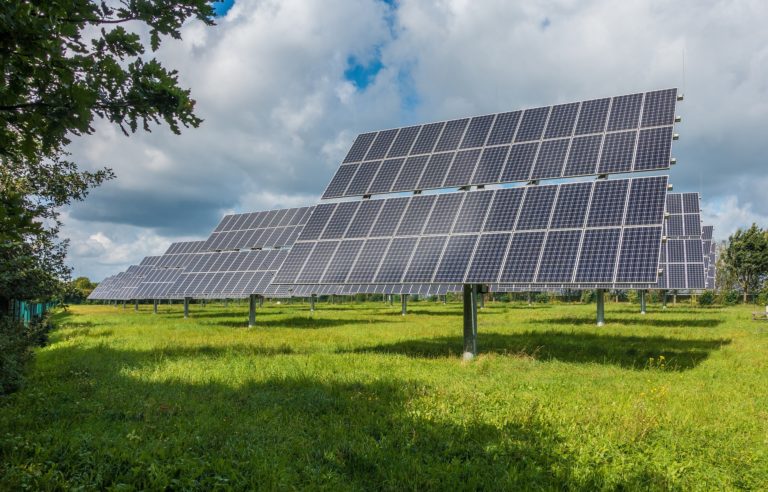
Solar panels are one of the most energy efficient ways to power your home. Not only do they help save you money on electricity bills, but they also do an excellent job at reducing your carbon footprint.
But how do solar panels function?
Sunlight strikes solar panels and causes an electron flow in their silicon, creating an electric current. This current can then be sent to your home’s electric distribution box and used to power essential items like lights, televisions and laptops.
However, your solar panel’s efficiency drops when temperatures rise. That is because photovoltaic cells cannot convert as much of the sun’s energy into electrical current at higher temperatures.
That is why investing in an efficient solar panel system is the best way to avoid your panels from overheating. The most reliable solar panels are made from monocrystalline or polycrystalline silicon, a widely available and long-lasting material.
The ideal solar panels have a temperature coefficient that predicts how its efficiency will decrease as temperatures rise. Above 25°C (77°F) cell temperature, output drops a little per degree. Panels keep working; they just work slightly less hard.
But how much of that decrease is caused by the panels?
When mounted on your roof, they create an opening for hot air from above to escape and cool your attic and roof down. This helps maintain a consistent temperature throughout your home – warmer in the evenings and cooler during daytime hours – so you’ll stay comfortable all year round!
UC San Diego researchers found that panels reduce the heat entering a roof during the day (Dominguez et al., 2011; source above).
Solar panels may not cause as much of a heat island effect in your home because they use less energy than other cooling methods. Furthermore, you are able to better control your heating and cooling costs, as well as increasing the efficiency of your HVAC systems.
Many people worry that solar panels will make their homes hotter, but this isn’t necessarily true. In fact, some studies suggest they may actually help cool your house slightly.
But that doesn’t guarantee a cool home in summertime. You still need to turn on your air conditioning and heater in order to stay comfortable indoors.
Make sure your attic and windows are adequately insulated during summer months to avoid your house becoming too hot. High-quality attic insulation will help retain heat inside and prevent it from escaping out, thus decreasing your energy bill.
When shopping for solar panels for your home, be sure the company you select provides warranties on their products. These may include product guarantees covering defects in panels as well as ones guaranteeing that a certain percentage of rated output will be achieved over an agreed upon period of time. This warranty can be an important factor when making a decision on which solar panel to purchase.