Winter Storm Power Station Checklist (2026): The 32°F Charging Rule, Runtimes and Indoor Safety
A storm is on the way. The grocery store is out of bread, and you’re eyeing that portable power station in the closet. Good news: it can keep your fridge, Wi-Fi and phones going. Better news: a few minutes of prep now makes it last a lot longer.
This checklist is plain talk first, then the numbers. Every spec below comes from the maker’s own product page or from our own guides.
Quick pre-storm checklist
- Charge to 100% now, while the power is on and the house is warm.
- Keep the station indoors. A battery station makes no exhaust, so a living room is fine.
- Don’t charge it below 32°F (0°C). More on that rule below.
- Make a short load list. Fridge, router, phones, lights, maybe a CPAP. Skip the space heater.
- Lay out your cables and the solar panel so you’re not digging in the dark.
- Test your carbon monoxide (CO) alarms, especially if anyone nearby will run a gas generator.
- Top off phones and a laptop straight from the wall, so the station isn’t doing that job later.
The 32°F charging rule
Most portable power stations use LiFePO4 batteries (lithium iron phosphate, often shortened to LFP). They’re tough and long-lived, but they don’t like taking a charge when they’re frozen. That’s why every maker below lists 32°F (0°C) as the bottom of the charging range.
Here’s the twist: most of them can still run your stuff in colder air than they can charge in. Using it on a cold porch is one thing. Plugging it into a solar panel on a 20°F morning is another.
| Station | Charging temp range | Discharge / use temp range | Source |
|---|---|---|---|
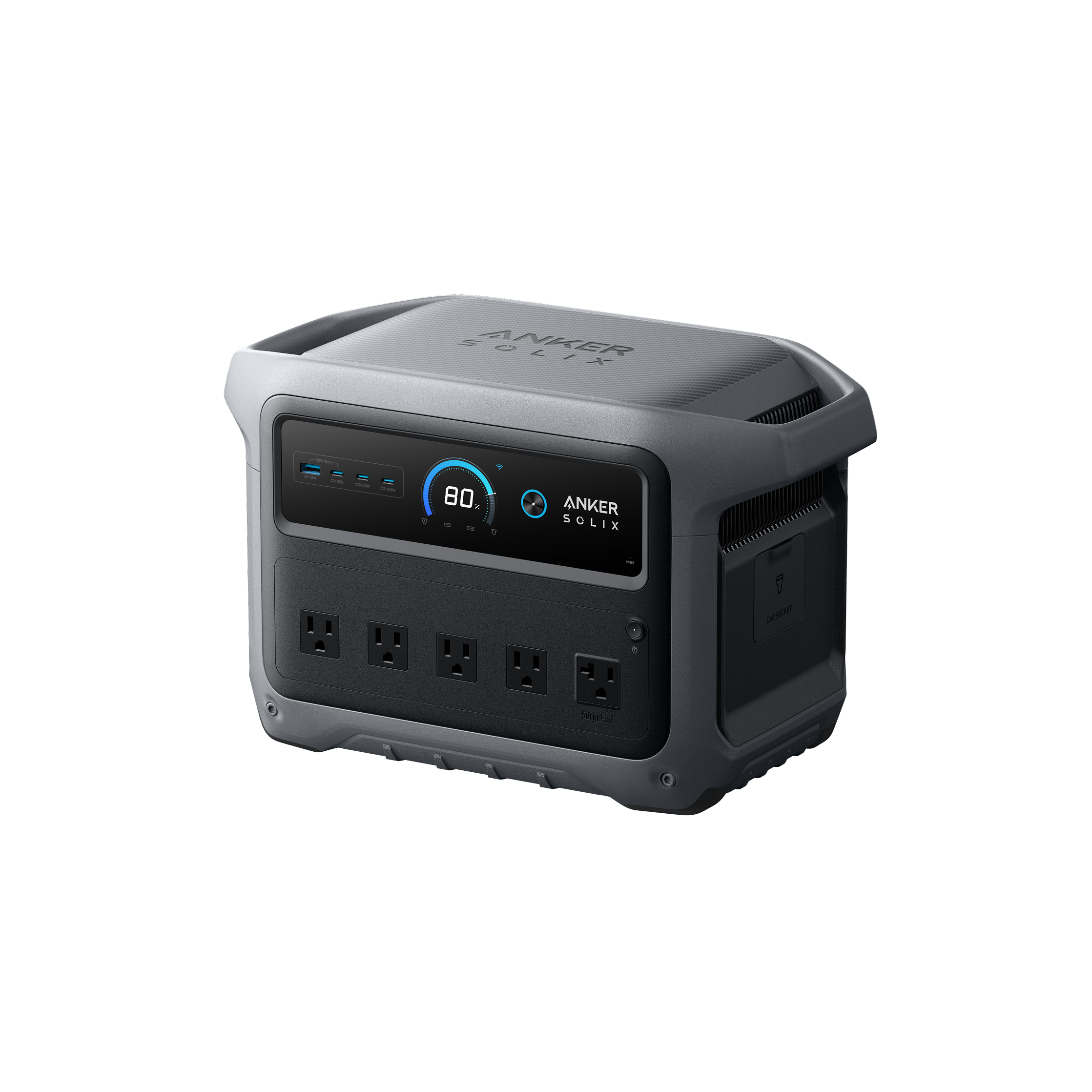
| Anker SOLIX C1000 Gen 2 | 32°F to 104°F (0°C to 40°C) | -4°F to 104°F (-20°C to 40°C) | Anker spec page |
| Jackery Explorer 1000 v2 | 32°F to 113°F (0°C to 45°C) | 14°F to 113°F (-10°C to 45°C) | Jackery spec page |
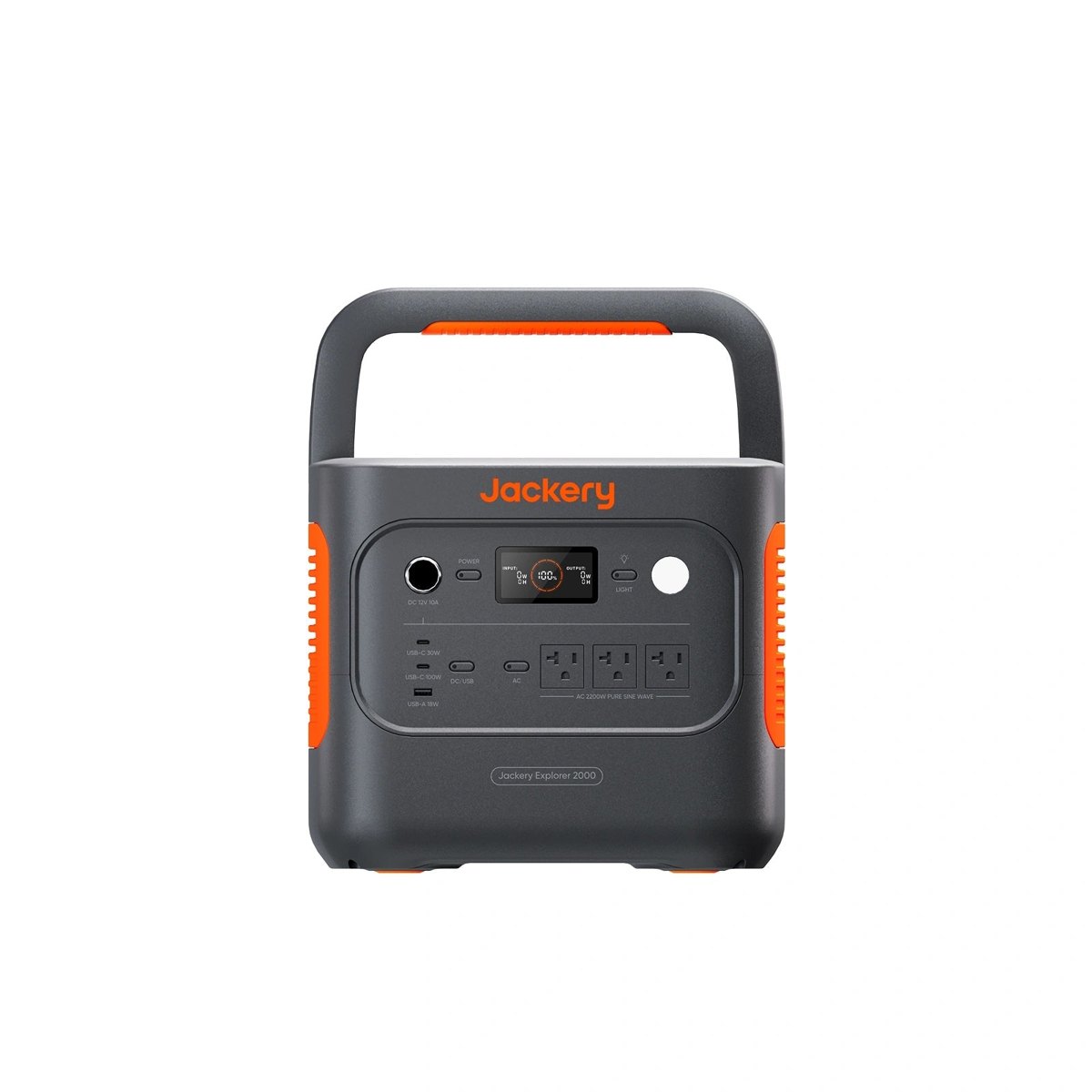
| Jackery Explorer 2000 v2 | 32°F to 113°F (0°C to 45°C) | 14°F to 113°F (-10°C to 45°C) | Jackery spec page |
| EcoFlow RIVER 3 / RIVER 3 Plus | 32°F to 113°F | 14°F to 113°F (best: 68°F to 86°F) | EcoFlow spec page |
| EcoFlow DELTA 3 | Not listed | Not listed | EcoFlow product page |
| EcoFlow DELTA Pro 3 | 32°F to 113°F (0°C to 45°C) | 14°F to 113°F (-10°C to 45°C) | EcoFlow spec page |
| BLUETTI Elite 200 V2 | 32°F to 104°F (0°C to 40°C) | -4°F to 104°F (-20°C to 40°C) | BLUETTI Elite 200 V2 manual (spec table, checked Oct 17, 2026) |
One more cold detail from Anker: the C1000 Gen 2’s 49-minute UltraFast charge only kicks in when the battery is above 68°F (20°C), and you turn it on in the app. Between 32°F and 68°F, Anker says charging is much slower. Normal wall charging is up to 1,200W.
Big home-backup boxes: read the single-box numbers first
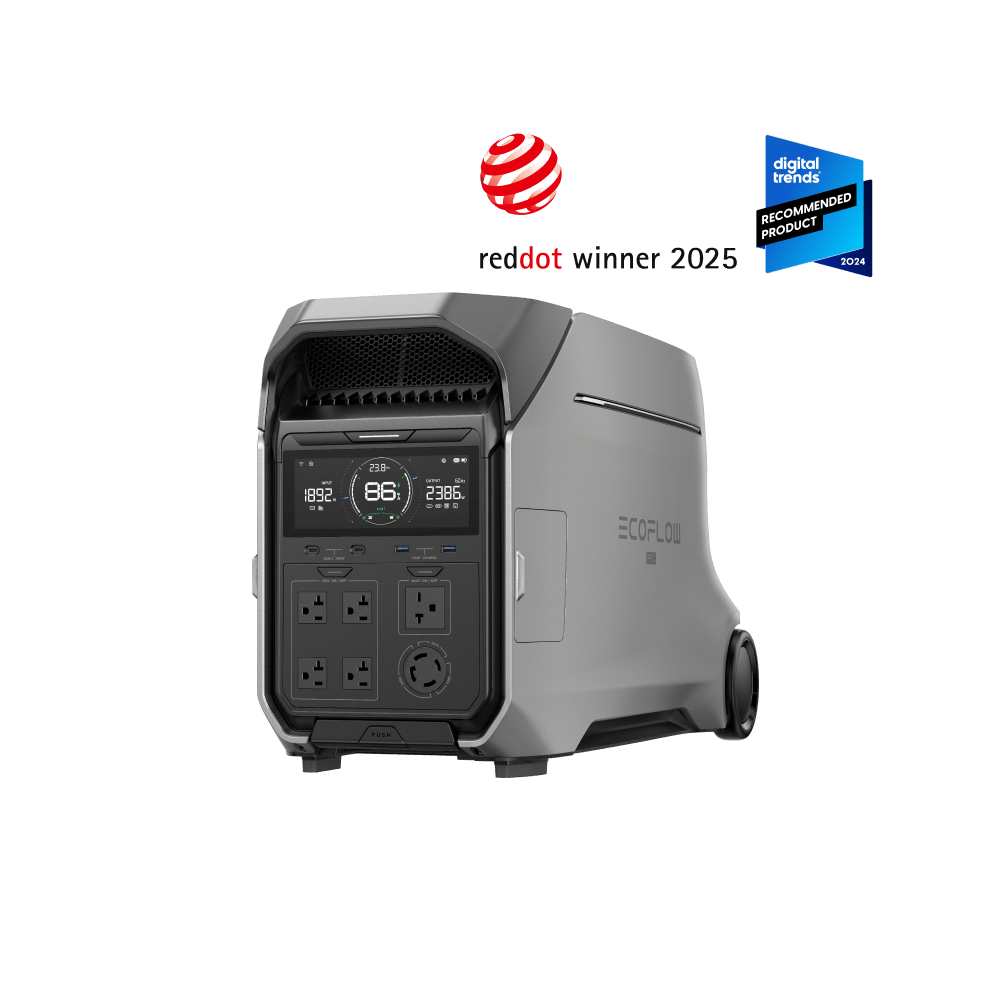
The EcoFlow DELTA Pro 3 is the big one on our list. One box: 4,096Wh of LFP battery, 4,000W AC output, and a net weight of 113.54 lb. That’s a two-person lift, or use its wheels.
You’ll also see “system” numbers in EcoFlow’s ads. Those mean several units and extra batteries wired together with a home panel. That’s a bigger, pricier setup, not what one box does.
And about water: EcoFlow rates the DELTA Pro 3’s battery pack IP65 (sealed against dust and water spray). The main unit is IP20, which means no real water protection. EcoFlow says to use it in a well-ventilated indoor spot or a sheltered space. Treat it like an indoor appliance.
Runtime table for common outage loads
Here’s the quick math. You can do it on a napkin:
Hours ≈ (battery Wh × 0.85) ÷ average watts
Why 0.85? Some energy gets lost as heat when the station turns battery power into wall-style AC power. The station also uses a little to run itself. So 0.85 is a rough estimate, not a promise. Cold air can cut it further.
Also, the volts × amps on an appliance label is a ceiling, not an average. A fridge compressor cycles on and off, so its average is far lower than its peak. For reference, Jackery’s own example says a 100W fridge runs about 14.6 hours on 2,048Wh. Our 0.85 math says about 17. Different assumptions, same ballpark. Plan with the lower number.
| Load (example average watts) | ~1,000Wh class | ~2,000Wh class | ~4,000Wh class |
|---|---|---|---|
| Fridge (~100W average) | ~8.5 h | ~17 h | ~34 h |
| Wi-Fi router + modem (~20W) | ~42 h | ~85 h | ~170 h |
| Phone charging (~10W per phone) | ~85 h | ~170 h | ~340 h |
| CPAP, no humidifier or heat (~40W example) | ~21 h | ~42 h | ~85 h |
| LED lights (3 bulbs, ~30W) | ~28 h | ~57 h | ~113 h |
| Laptop (~60W) | ~14 h | ~28 h | ~57 h |
| Space heater on high (~1,500W) | ~0.6 h | ~1.1 h | ~2.3 h |
CPAP note: check your own machine’s watts on its label or manual. The humidifier and heated tube use a lot more power than the blower alone. This is a power estimate only, not medical advice.
Why the space heater wins the race to zero: 1,500W is about 15 fridges’ worth of average draw. A 1,000Wh station is gone in well under an hour. Also, the station’s output limit has to cover it. Warm a person with blankets instead.
Want the math done for you? Try our portable power station size calculator, or read how long a solar generator will run a fridge.
Safe indoors vs a gas generator
A battery power station has no engine and makes no exhaust. That’s why you can run one in the living room or bedroom.
A gas generator is a different animal. It makes carbon monoxide, a gas you can’t see or smell that can kill. The CDC says:
- Never use a generator inside your home or garage, even if doors and windows are open.
- Run it outdoors, more than 20 feet from windows, doors and vents.
- Install battery-operated or battery back-up CO detectors.
Source: CDC, Carbon Monoxide Poisoning Basics. Ready.gov gives the same 20-foot advice and says to put CO detectors on every level of your home (Ready.gov, Power Outages).
Cold-weather tips
- Store and charge indoors. A heated room keeps you inside the 32°F charging range.
- Let a cold station warm up before charging. If it rode in a cold car or sat in the garage, bring it in and give it time to reach room temperature.
- Keep it off a cold garage floor. Concrete pulls heat out. Set it on a shelf or a table indoors.
- Expect less from solar. Snow on a panel blocks sunlight, and winter days are short. Brush panels off and count on less charging than in summer.
- Run the panel outside and the station inside. Use the panel’s extension cable so the battery stays warm.
Shopping for a panel? See our best portable solar panels.
Pick the right size
- Best solar generators (portable power stations)
- Best solar generator for home backup
- How much solar generator do I need?
- Portable power station size calculator
- Best portable solar panels
- How long will a solar generator run a fridge?
FAQ
Can I charge my power station in a cold garage?
Not below 32°F. Every maker in our table lists 32°F (0°C) as the low end of charging. Bring it inside and let it warm up first.
Can I run a portable power station indoors?
Yes. Battery stations make no exhaust. Gas generators are the ones that must stay outdoors, more than 20 feet from windows, doors and vents.
How long will a 2,000Wh station run my fridge?
Roughly 14 to 17 hours for a fridge averaging about 100W. Jackery’s own example says about 14.6 hours. Your fridge may use more or less, so treat it as an estimate.
Can a power station run a space heater?
Briefly. A 1,500W heater would drain a 1,000Wh station in under an hour. Blankets and warm layers go much further.