Best Rooftop Solar Panels (2026): 5 Picks for Heat, Small Roofs and Warranty
No panel maker paid for a spot here, and the maker links below aren’t affiliate links. If you buy other gear through links elsewhere on this site, I may earn a commission. Read the full affiliate disclosure.
Quick answer: If your installer is REC certified, ask for the REC Alpha Pure-RX. It loses the least power on a hot roof of anything here and can come with a 25-year labor warranty. For most other homes, the Qcells Q.TRON BLK M-G2+ is the safe middle pick, assembled in the US with a 25-year product and power warranty. Want a North American factory and a 30-year power warranty? Ask about Silfab Prime SIL-440 QD. On a tighter budget, Canadian Solar TOPHiKu6 All-Black is fine for a roof install. Aptos DNA-120 has the longest product warranty on paper, but it’s the biggest panel and the weakest in heat.
You don’t buy rooftop panels off a shelf. You pick them on an installer’s quote, so this page is about which name to ask for, and which fine print to check before you sign.
What a good rooftop panel looks like in 2026
Almost every residential panel sold today is somewhere between 21% and 23% efficient. A point of efficiency matters when your roof is small, because it decides how many watts fit. It matters a lot less on a big, open roof.
Two numbers tell you more than efficiency does. The first is the temperature coefficient, which says how much power the panel gives up for every degree Celsius the cells run above 25°C (77°F). Panels on a dark roof in July run much hotter than that. Say the cells hit 65°C. At -0.24% per degree, a panel gives up about 9.6% of its rating. At -0.35%, it gives up about 14%. If you live in Phoenix or Dallas, that gap shows up on your bill.
The second is the warranty, and who stands behind it. A 30-year promise from a company that’s in court-run restructuring isn’t the same as a 25-year promise from a company that’s still shipping. More on that below.
Price is the last piece. EnergySage’s H1 2026 marketplace report (quotes from January through June 2026) put the median installed price at $2.57 per watt before incentives, with the average lowest quote at $2.38/W and the average highest at $2.94/W. For a 12 kW system at the median, that’s about $30,700. Texas quotes ran lowest among big solar states at a $2.00/W median. Illinois ran highest at $3.07/W. The panels themselves are only about 12% of a typical system’s cost on EnergySage’s breakdown, so the installer’s price moves your total much more than the brand does.
One more 2026 fact: the 30% federal credit for homeowner-owned systems is gone for anything placed in service after December 31, 2025. Our 2026 solar tax credit rules explain what changed and what leases still get.
Rooftop solar panels compared
| Panel | Power range | Max efficiency | Temp. coefficient (Pmax) | Product warranty | Power warranty | Best for | Verdict |
|---|---|---|---|---|---|---|---|
| REC Alpha Pure-RX | 450–470 W | 22.6% | -0.24%/°C | 20 yrs; 25 yrs plus labor via an REC Certified installer | 25 yrs, 92% in year 25 | Hot climates, small roofs | Buy, with a certified installer |
| Qcells Q.TRON BLK M-G2+ | 415–440 W | 22.5% | -0.29%/K | 25 yrs | 25 yrs, 90.58% in year 25 | Most homes | Buy |
| Silfab Prime SIL-440 QD | 440 W | 22.6% | -0.29%/°C | 12 yrs, 25 with registration | 30 yrs, 89.3% in year 30 | North American factory, long power warranty | Buy if your installer registers it |
| Canadian Solar TOPHiKu6 All-Black (CS6.1-54TM-H) | 435–465 W | 22.8% | -0.29%/°C | 25 yrs on rooftop installs, else 12 | 30 yrs, linear | Budget quotes | Buy on price |
| Aptos DNA-120-MF10 | 450–460 W | 21.26% | -0.35%/°C | 30 yrs | 30 yrs | Big roofs in mild climates | Skip for hot or small roofs |
1. REC Alpha Pure-RX: best for hot roofs and tight spaces
Verdict: Buy, if your installer is an REC Certified Solar Professional.
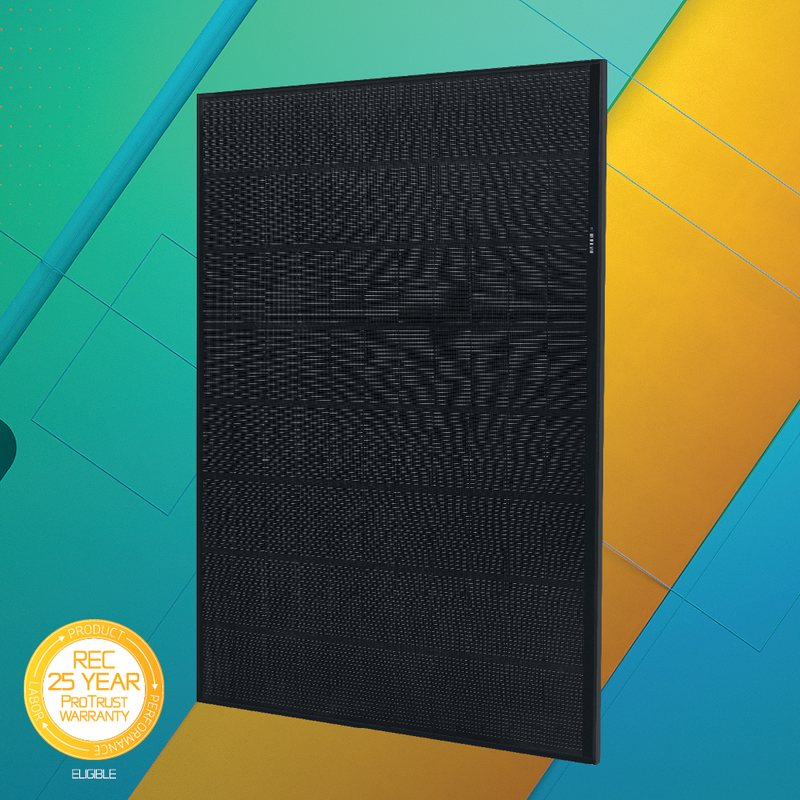
This is the panel I’d want on a south-facing roof in Texas. REC uses heterojunction cells, and the payoff is that -0.24%/°C temperature coefficient, the best of this group. The US version runs 450 to 470 watts at up to 22.6%. It’s all black, with thin wires instead of visible bus bars, so it looks clean from the street.
The warranty is where you need to pay attention. Out of the box it’s 20 years on the product and 25 years on power, with at least 92% of the rating left in year 25. If an REC Certified installer puts it on and registers it, REC ProTrust bumps the product warranty to 25 years and adds a labor warranty: 25 years on systems under 25 kW. Very few panel makers cover labor at all.
Who it’s for: hot climates, small or chopped-up roofs where every watt per square foot counts, and anyone who wants the labor coverage.
Who should skip it: anyone whose installer isn’t REC certified and still wants a premium price. Without ProTrust, you’re paying extra for a 20-year product warranty, which is shorter than the Qcells deal.
Cons: it usually costs more per watt than Qcells or Canadian Solar. Panels come from REC’s factory in Singapore, and a June 2025 fire there took the cell line down for about a month before production restarted in August 2025. REC’s share of quotes on EnergySage also fell from 43% to 17% over a year, so some installers are quoting other brands now. Ask early whether they can actually get it.
We have an older REC brand review too.
2. Qcells Q.TRON BLK M-G2+: the safe pick for most homes
Verdict: Buy.
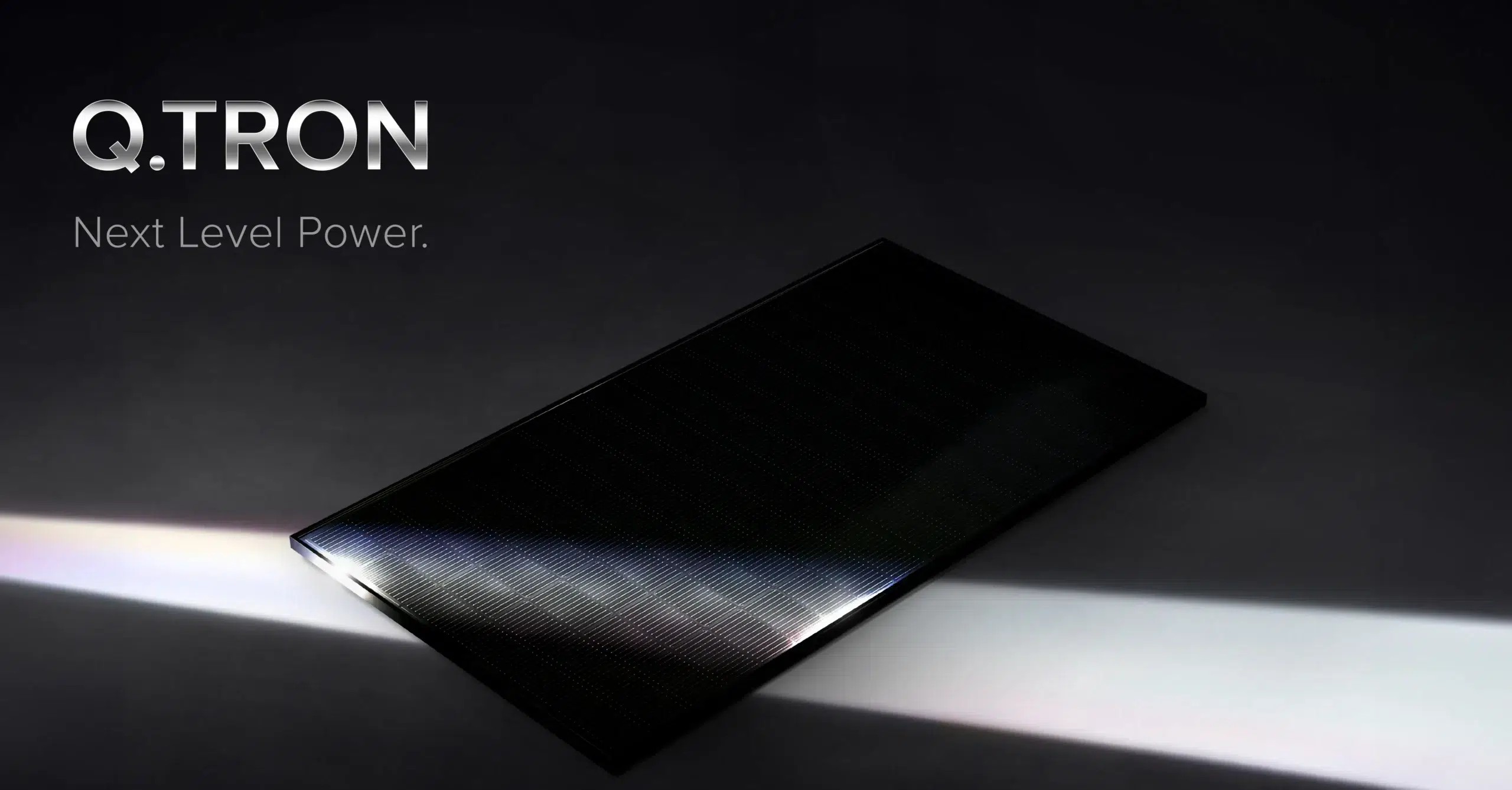
If you don’t want to think too hard about this, take the Qcells. The Q.TRON BLK M-G2+ is an all-black TOPCon panel from 415 to 440 watts, up to 22.5% efficient, and Qcells assembles it in the US at its Georgia plants. It’s backed by a 25-year product warranty and a 25-year power warranty, with at least 90.58% of the rating promised in year 25.
The heat number is -0.29%/K. That’s a step behind REC, but on a mild or mixed-climate roof you’d struggle to notice. Qcells also has a lot of installers. It tied for the most-quoted panel brand on EnergySage in the first half of 2026, so you won’t have trouble finding someone who can get it.
Who it’s for: most homeowners who want a known brand, a full 25-year product warranty and a US assembly line without paying top dollar.
Who should skip it: owners of very hot roofs who can get REC through a certified installer at a similar price.
Cons: Qcells had its own rough patch. Customs detentions of imported parts led to about 1,000 furloughs at its Georgia plants in November 2025. Qcells says everyone was back by March 2026. Not every Q.TRON variant carries US-made parts either, so if domestic content matters for your financing, get the exact model code in writing.
Our older Qcells brand review covers the company in more depth.
3. Silfab Prime SIL-440 QD: North American factory, 30-year power warranty
Verdict: Buy, if your installer registers the warranty.
Silfab builds panels in Burlington, Washington, and Fort Mill, South Carolina. The SIL-440 QD is a 440-watt N-type panel at 22.6%, with a -0.29%/°C heat number. The power warranty is the long one here: 30 years, with at least 90.8% in year 25 and 89.3% in year 30. At 46.3 lb it’s lighter than the Canadian Solar and Aptos panels here, which your installer’s back will appreciate.
Who it’s for: buyers who care where the panel is made, and anyone planning to stay in the house 25 years or more.
Who should skip it: anyone whose installer won’t confirm in writing that they’ll register the panels. Without registration, the product warranty is 12 years.
Cons: it comes in one size, 440 watts. The Fort Mill site has been in the local news. State regulators asked Silfab to stop using regulated chemicals there after two leaks in spring 2026, and in November it gave notice that it plans to restart testing its cell line. That doesn’t change a panel on your roof, but you should know about it.
4. Canadian Solar TOPHiKu6 All-Black: the budget quote that’s still fine
Verdict: Buy on price.
When a quote comes in noticeably cheaper, it often lists a Canadian Solar panel. The all-black TOPHiKu6 (model CS6.1-54TM-H) runs 435 to 465 watts, up to 22.8%, with the same -0.29%/°C heat number as Qcells and Silfab. Canadian Solar assembles this version in the US from imported parts. The power warranty runs 30 years, with no more than 1% loss in year one and no more than 0.4% a year after that.
Who it’s for: buyers putting price first who still want a big, established maker.
Who should skip it: anyone mounting panels anywhere other than a roof, like a ground mount or a carport. Canadian Solar’s 25-year product warranty on this all-black model covers rooftop installs only. Other installs get 12 years.
Cons: its 0.4% yearly loss allowance is looser than REC’s 0.25% or Qcells’ 0.33%. It’s also heavy for its size at 50.7 lb. The name is Canadian, but the company builds around the world, so check the carton or datasheet if origin matters to you.
For more low-cost brands, including small off-grid panels, see our cheap solar panel brands.
5. Aptos DNA-120-MF10: longest warranty, biggest panel
Verdict: Skip for hot or small roofs. It’s a fair pick for a big roof in a mild climate.
Aptos promises 30 years on the product and 30 years on power, which beats everyone above on paper. The DNA-120-MF10 is 450 to 460 watts, but it’s only 20.79% to 21.26% efficient, and it’s physically big at 75.1 by 44.6 inches and 51 lb. Its -0.35%/°C heat number is the weakest on this page.
Who it’s for: a large, unshaded roof in a cooler state where panel count isn’t a problem and the long product warranty is the main draw.
Who should skip it: hot-climate roofs and small roofs. You’ll fit fewer watts, and they’ll lose more in summer.
Cons: Aptos is a much smaller company than Qcells or Canadian Solar, and a 30-year warranty is only worth something if the company is still around to honor it. Fewer installers carry it, too.
Brands I’d be careful with right now
SunPower and Maxeon. The old SunPower Corporation filed for bankruptcy in August 2024. Maxeon, which made the high-efficiency panels sold under the SunPower name, has been under court-supervised judicial management in Singapore since May 29, 2026. Maxeon’s warranty page limits coverage on older SunPower panels to ones that met its install and registration cutoffs in 2024, and an installer has to file the claim. Today’s SunPower Inc. is a different company that bought the brand, and it now sells an REC-built panel. Our SunPower panels page sorts out which SunPower is which.
Panasonic. Panasonic has discontinued its solar and battery business in North America. It says it will honor warranties on installed panels and on ones not yet installed. If a 2026 quote lists Panasonic EverVolt panels, that’s leftover stock. Ask why, and get the warranty path in writing.
Names you’ll see that aren’t reviewed here yet. Hyundai and SEG Solar each took a big slice of EnergySage quotes in the first half of 2026. If one shows up on your quote, ask for the exact model datasheet and check the same four numbers: wattage, efficiency, temperature coefficient and both warranties.
How to use this in an installer quote
Get at least three written quotes for the same system size. Then do this with each one.
- Find the exact model code, not just the brand. “Qcells 430” isn’t enough. You want something like “Q.TRON BLK M-G2+ 430”.
- Download that model’s datasheet from the maker and check the temperature coefficient and both warranty lengths against the quote.
- Ask who registers the warranty. REC ProTrust and Silfab’s 25-year product warranty both depend on it.
- Ask for a second panel option on the same quote. Seeing the price difference between, say, REC and Qcells from the same installer tells you more than any national average.
- Compare price per watt before incentives. Divide the system price by its watts. If you’re far above about $2.94/W, ask why.
- Check the installer, not just the panel. The panel maker doesn’t fix your roof leak. Our guide to vetting a solar company covers licenses and workmanship warranties, and getting the best deal on solar in 2026 covers cash, loans and leases.
Not sure of your system size yet? Our panel count guide works it out from your bill. Want to compare companies first? See our best solar energy companies for 2026. And if you want panels you can fold up and carry to a power station, that’s a different shopping trip: best portable solar panels.
FAQ
What’s the most efficient rooftop solar panel I can get in 2026?
Of the panels on this page, Canadian Solar’s all-black TOPHiKu6 lists the highest top figure at 22.8%, with REC and Silfab at 22.6% and Qcells at 22.5%. Those gaps are small. On a hot roof, REC’s lower temperature coefficient usually matters more than a few tenths of a point.
Is a 25-year or a 30-year warranty better?
Longer is better only if the company is healthy enough to pay claims in year 20. Read both numbers: the product warranty covers defects, and the power warranty covers how much output you keep. Also check whether the installer has to register the panels for the longer term.
Can I buy these panels on Amazon?
Not really. These residential panels are sold through installers and solar distributors, and that’s how warranty registration and labor coverage work. That’s why this page links to the makers instead of a store.
Do premium panels pay for themselves?
Sometimes. On a small or hot roof, a better panel can mean more kWh from the same space. On a big, cool roof, a mid-priced panel and a good installer usually win. Ask for two panel options on one quote and compare the price per watt and the estimated yearly kWh.
Who honors my warranty if the installer goes out of business?
The panel maker still covers the panel itself, but most makers want an installer to inspect it and file the claim. Labor is a separate question unless you have a deal like REC ProTrust. Keep your serial numbers, datasheets and registration emails in one folder.